• Fri frakt över 249 kr
  • •
  • Snabba leveranser
  • •
  • Billiga böcker
Kundservice

Du är på sajten för privatpersoner.

Företag, bibliotek eller offentlig verksamhet?

Du handlar på classic.bokus.com, där alla dina funktioner finns intakta.
Till classic.bokus.com
Bokus logotyp. Gå till startsidan.
  • Erbjudanden
  • Nyheter
  • Student
  • Topplistor
  • Barn & ungdom
  • Bokus Play
  • E-böcker
  • Pocketböcker
  • Spel & pussel

10% rabatt på allt med kod: NYSTART10 →

Sidfot

Mina sidor

    Hjälp

    • Kundservice
    • Vanliga frågor och svar
    • Frakt och leverans
    • Retur vid ångerrätt
    • Reklamera vara
    • Betalning
    • Köpvillkor
    • Allmänna villkor
    • Information om webbplatsens tillgänglighet

    Om Bokus

    • Om oss
    • Pressrum
    • För studenter
    • För företag
    • För bibliotek och offentlig verksamhet
    • För leverantörer
    • Hållbarhet

    Populärt

    • Aktuella erbjudanden
    • Presentkort
    • Studentlitteratur
    • Nya böcker
    • Topplistor
    • Signerade böcker
    • Engelska böcker

    Inspiration

    • Boktips
    • BookTok
    • Populära bokserier
    • Barnbokskaraktärer
    • Populära författare
    Logotyp för Bokus
    Följ oss på Facebook (extern länk)Följ oss på Instagram (extern länk)Följ oss på YouTube (extern länk)Följ oss på TikTok (extern länk)
    bokus @ CookiesAnpassa cookiesIntegritetspolicyKöpvillkor
    Till Citymail hemsida (extern länk)Till Budbee hemsida (extern länk)Till Postnord hemsida (extern länk)Till Schenker hemsida (extern länk)Till Early Bird hemsida (extern länk)Till Walleys hemsida (extern länk)
    1. Historia och arkeologi
    2. Historia
    3. Europas historia

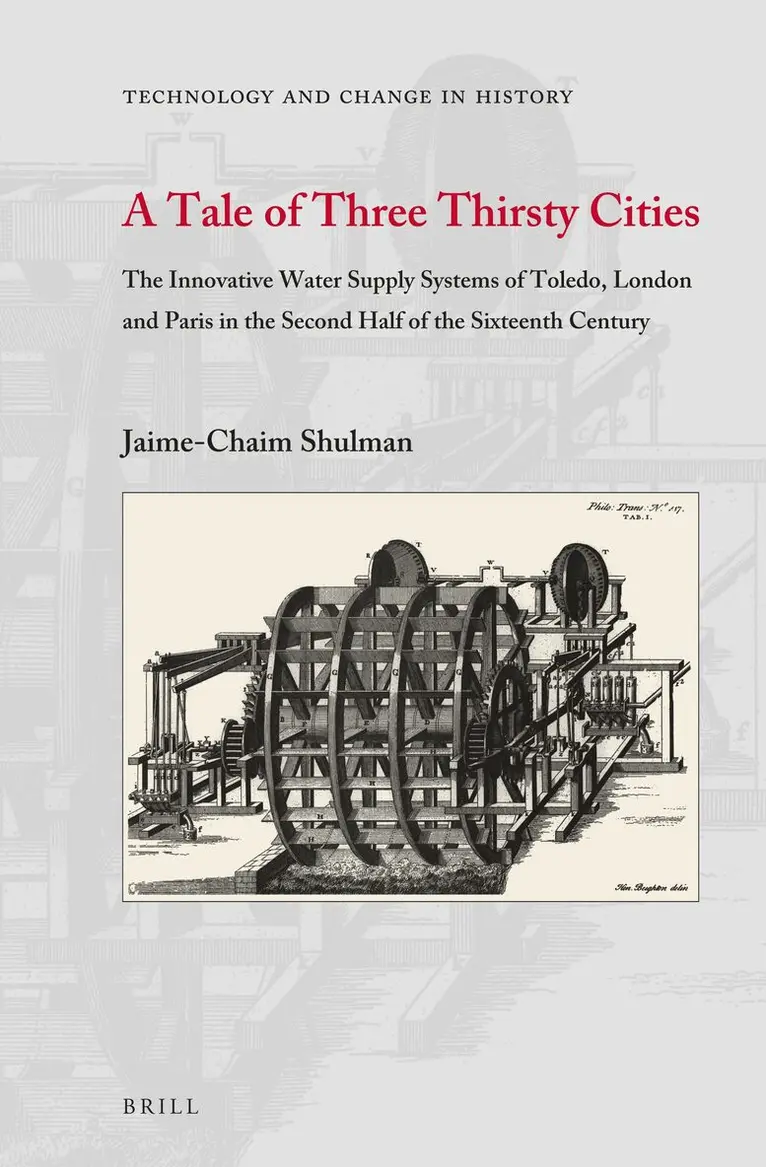
    Tale of Three Thirsty Cities

    The Innovative Water Supply Systems of Toledo, London and Paris in the Second Half of the Sixteenth Century

    AvJaime-Chaim Shulman

    Inbunden, Engelska, 2017

    Del 14 i serien Technology and Change in History

    2 511 kr

    Beställningsvara. Skickas inom 5-8 vardagar. Fri frakt över 249 kr.

    Beskrivning

    In A Tale of Three Thirsty Cities: The Innovative Water Supply Systems of Toledo, London and Paris in the Second Half of the Sixteenth Century, Chaim Shulman presents an analysis of three projects of urban water supply systems carried out between 1560s–1610s. The technical and economic differences between these projects resulted from external conditions not directly related to the water supply problem. Although the same basic technology was apparently available at the time in all cases, the geographical, engineering, entrepreneurial and cultural nature of each region differed. The inhabitants’ wellbeing improvement achieved varied accordingly. Much broader insights are drawn on the policies of the three monarchies regarding the initiative of and support for grand scale public works in general.

    Produktinformation

    • Utgivningsdatum:2017-11-16
    • Mått:155 x 235 x 29 mm
    • Vikt:778 g
    • Format:Inbunden
    • Språk:Engelska
    • Serie:Technology and Change in History
    • Antal sidor:398
    • Förlag:Brill
    • ISBN:9789004312401

    Utforska kategorier

    • Europas historia inom Historia och arkeologi
    • Socialhistoria och kulturhistoria inom Historia och arkeologi
    • Miljöteknik inom Naturvetenskap och teknik

    Mer om författaren

    Jaime-Chaim Shulman, Ph.D. (History, 2015), Tel-Aviv University, is a graduate of Harvard Business School and an Electromechanical engineer from Buenos Aires University. As an accomplished businessman and executive, he contributes a fresh approach to the study of urban public works.

    Recensioner i media

    "One of the strengths of Shulman’s study is his meticulous reconstruction of how these engines worked, who funded them, how they functioned over time and their impact, if any, on the development of water-supply technology in general. For this purpose, in an exemplary manner the author combines written, printed, and beautifully reproduced pictorial sources." - Karel Davids, Vrije Universiteit Amsterdam, in: Technology and Culture, July 2020, Vol. 61, pp. 953-955"[...] readers may enjoy the technical discussions of these machines’ creation and functioning, the tracing of their intellectual roots, and the financial and political intricacies that both promoted and undermined their accomplishments." - G. Geltner, University of Amsterdam, ​​​​​​​in: Renaissance Quarterly LXXI I , No. 4: 1471-1472 [DOI: 10.1017/rqx.2019.415]

    Innehållsförteckning

    • Abbreviations, Date Conventions and NotesList of Figures Included in the TextIntroductionThe Subject of Our ResearchMechanical’ Engineers and Know-How Migration1 Human Water Consumption in England, France and Spain in the Sixteenth and Seventeenth Centuries2 Water-lifting Technology in the Graeco-Roman World and Its Development through the RenaissanceThe Invention of Water-lifting DevicesThe Use of Water-lifting Devices in the Roman EraIslamic Technological InfluenceThe Diffusion of the Waterwheel in EuropeThe Improvement of Water Lifting Technology in Europe, Evolution or Quantum Leaps?Basic Water Raising TechnologiesDirect Water-lifting with Compartmented WaterwheelsArchimedean ScrewsCtesibius’ Double-Acting Force PumpsTheatres of MachinesComplex Water Lifting Configurations Relevant to the Present StudyWater-Raising Machines at Atmospheric PressureTransmission of Power through DistancesWaterwheels Sensitivity to Variations in the Level of the River FlowPiping NetworksThe Diffusion of False Know-HowThe Italian Strategy—Gravity Based Solutions3 ToledoSpain and Toledo in the 1560sEarly Attempts to Supply Water to ToledoWater Supply to Toledo in the Sixteenth CenturyJuanelo TurrianoThe ArtificioIconographic Representations and Exact Location of the Artificio BuildingThe Artificio’s Technology—The Operational PrincipleEscosura y Beck—The Inclined Plane TheoryThe Vertical Solution, Proposed by Ladislao RetiJuan Luis Peces Ventas’ Improvement of the Inclined Plane TheoryNicolás García Tapia’s PropositionFrancesc Xavier Jufre García’s Concept: Operating Valturio ScalesUnanswered Technical QuestionsTechnical ConclusionsThe Artificio, as Seen by Contemporary WritersThe Ingenio of Juan Fernández del CastilloLand Reclamation and Sewerage in SpainThe Spanish Attitude Towards Science and Technology during the Sixteenth and Seventeenth Centuries4 LondonTudor London in the 1580sEarly Attempts to Provide the City with a Water Supply SystemThe Elizabethan Patent SystemPeter MorrisThe London Bridge Waterworks in Contemporary SourcesTechnical OperationSupporting Evidence for Bate’s Interpretation of Morris’ Operational PrincipleThe External Appearance of the London WaterworksThe Consequences of the Installation of Waterwheels on the London BridgeThe Later Development of the London Bridge WaterworksOther InitiativesThe New RiverCompetition between the Different Water SuppliersLand Reclamation and Sewerage in England5 ParisGovernment and Municipal Authorities—Paris Administration and Development in the Late Sixteenth and Early Seventeenth CenturiesHistory of Former Water Supply UndertakingsLa SamaritaineThe Operational Principle of La SamaritaineDescription of the Original Samaritaine Building in Contemporary TraveloguesDepictions of the Original Building of La Samaritaine in Maps and Views of ParisThe Samaritaine Building after its Renovation in 1714Additional Initiatives to Solve the Water Problem in the Seventeenth CenturyPumps at Pont Notre DameThe Machine at MarlyLand Reclamation and Sewerage in France6 ConclusionsSources and BibliographySourcesStudiesWebsitesOnline Sources for Retrieved Images