• Fri frakt över 249 kr
  • •
  • Snabba leveranser
  • •
  • Billiga böcker
Kundservice

Du är på sajten för privatpersoner.

Företag, bibliotek eller offentlig verksamhet?

Du handlar på classic.bokus.com, där alla dina funktioner finns intakta.
Till classic.bokus.com
Bokus logotyp. Gå till startsidan.
  • Erbjudanden
  • Nyheter
  • Student
  • Topplistor
  • Barn & ungdom
  • Bokus Play
  • E-böcker
  • Pocketböcker
  • Spel & pussel

10% studentrabatt med kod TERM26

Sidfot

Mina sidor

    Hjälp

    • Kundservice
    • Vanliga frågor och svar
    • Frakt och leverans
    • Retur vid ångerrätt
    • Reklamera vara
    • Betalning
    • Köpvillkor
    • Allmänna villkor
    • Information om webbplatsens tillgänglighet

    Om Bokus

    • Om oss
    • Pressrum
    • För studenter
    • För företag
    • För bibliotek och offentlig verksamhet
    • För leverantörer
    • Hållbarhet

    Populärt

    • Aktuella erbjudanden
    • Presentkort
    • Studentlitteratur
    • Nya böcker
    • Topplistor
    • Signerade böcker
    • Engelska böcker

    Inspiration

    • Boktips
    • BookTok
    • Populära bokserier
    • Barnbokskaraktärer
    • Populära författare
    Logotyp för Bokus
    Följ oss på Facebook (extern länk)Följ oss på Instagram (extern länk)Följ oss på YouTube (extern länk)Följ oss på TikTok (extern länk)
    bokus @ CookiesAnpassa cookiesIntegritetspolicyKöpvillkor
    Till Citymail hemsida (extern länk)Till Budbee hemsida (extern länk)Till Postnord hemsida (extern länk)Till Schenker hemsida (extern länk)Till Early Bird hemsida (extern länk)Till Walleys hemsida (extern länk)
    1. Naturvetenskap och teknik
    2. Geovetenskap
    3. Regional planering

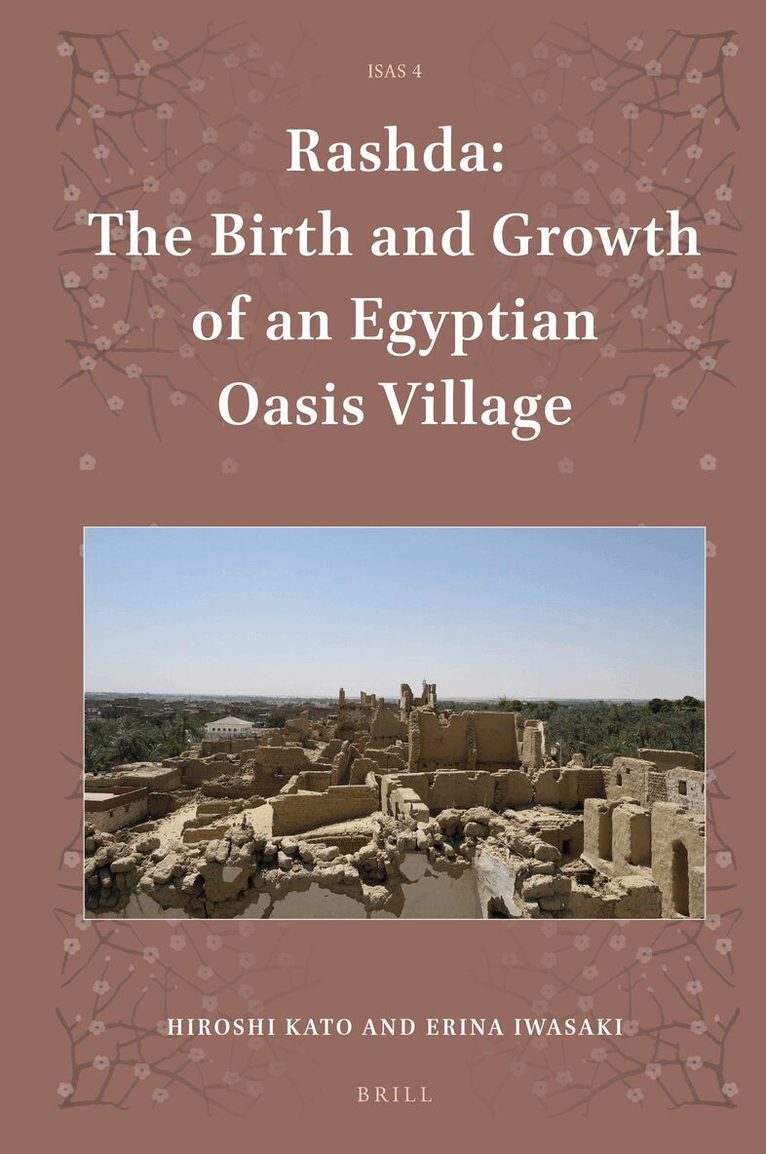
    Rashda: The Birth and Growth of an Egyptian Oasis Village

    AvHiroshi Kato,Erina Iwasaki

    Inbunden, Engelska, 2016

    Del 4 i serien Islamic Area Studies

    2 274 kr

    Beställningsvara. Skickas inom 5-8 vardagar. Fri frakt över 249 kr.

    Beskrivning

    Rashda:The Birth and Growth of an Egyptian Oasis Village is an interdisciplinary study from a multi-perspective, using various kinds of data and information. It offers a comprehensive description of Rashda, a village in Dakhla Oasis in Egypt from its beginning to the present. Key concepts are the uncertainty of the water supply, the dependence on the political regime and the rational behaviour of individuals. The villagers of Rashda have dealt with the difficult natural circumstances by creating the local customs of irrigation and cultivation. The development of village recently depends ever more on the government, as long as large amounts of finance and superior technology are necessary to dig deeper wells to secure water for cultivation.

    Produktinformation

    • Utgivningsdatum:2016-06-09
    • Mått:155 x 235 x 24 mm
    • Vikt:622 g
    • Format:Inbunden
    • Språk:Engelska
    • Serie:Islamic Area Studies
    • Antal sidor:294
    • Förlag:Brill
    • ISBN:9789004316171

    Utforska kategorier

    • Regional planering inom Naturvetenskap och teknik
    • Sociala grupper och identitet inom Samhälle och politik
    • Lantbruksteknik inom Naturvetenskap och teknik

    Mer om författaren

    Hiroshi Kato, Ph.D.(1983) is Professor Emeritus of Hitotsubashi University. He specializes in the social and economic history of Arab countries, especially Egypt, and has published many books and articles in Japanese, including A Scandal of Village Abu Senita: Village Society in Judicial Documents, 1997. His most recent article is ""Personality" of Economic Development in the Delta Region of Egypt in Modern Times: Focus on Buhaira Governorate", (with Erina Iwasaki), 2016. Erina Iwasaki, Ph.D.(2006) is Professor at Sophia University. She specializes in Middle Eastern and North African studies, and has published many articles, including "Income Distribution in Rural Egypt - A Three Village Case", 2015.

    Innehållsförteckning

    • PrefaceTransliteration of ArabicIntroductionScope of the ResearchMethodology and DataPart 1 Dakhla Oasis1 Islands of the BlessedIslands in the SandDakhla Oasis in the Administration of Modern EgyptColumn ① Egypt from the Periphery2 Conditions of Natural and Human ResourcesClimate and HydrogeologyDemographic TrendsWater, Population and Land Use3 Family StructureAnalytical FrameworkHousehold Structures in the Nationwide SurveysHousehold Structures and Family in 19 VillagesFamily Structures in Four Survey Villages4 Social EconomySocial and Economic Structures in EgyptRegional Categorization of Social and Economic StructuresViewing 19 Villages using Basic IndicatorsPersonalities of the 19 VillagesPart 2 Rashda in History5 Formation of RashdaRashda at the End of the 18th CenturyRashda as a FieldRashda as a SettlementLandscape of “Old” Rashda6 Development of RashdaIndependence of Rashda from QalamunFormation of the “New” RashdaExpansion of the Village SpaceColumn ② Rashda Village Cemetery7 A Society Based on WaterUncertainty of Water SupplyState Intervention in Water AffairsA Society Controlled by WaterA Society Based on Water SharingPart 3 Rashda Today8 Rashda as a CommunityLocation and AdministrationResidential Space in RashdaPublic Services in RashdaServices Provided by the Villagers9 Family Structure in RashdaHousehold Structure in 1861Household and Family Structure in Rashda in 2005Families in Rashda across 150 YearsColumn ③ Family Tree10 Wells and IrrigationWells and SpringsDevelopment of WellsWater DistributionColumn ④ Bir Majnun District11 Agriculture and Household EconomiesAgriculture in Household EconomiesCrop and LivestockMarket in Household EconomiesPart 4 Community in Well No. 3 Irrigation District12 Irrigation DistrictCategories of Irrigation DistrictBir Sheykh (Local Well) Irrigation DistrictInvestment Well No. 51 DistrictSaada (Surface Spring) District13 Society of Well No. 3 Irrigation DistrictHistory of Well No. 3 Irrigation DistrictIrrigation Management SystemCrop Rotation System14 Social Relations of Well No. 3 Irrigation DistrictAn Irrigation District Formed by Government PolicyFamily as an Institution of Landholding and ManagementAgricultural Co-operation between FarmersConclusionThree Factors for AnalysisA Society Embedded in Water ManagementList of IllustrationsSelect BibliographyExplanatory Glossary