• Fri frakt över 249 kr
  • •
  • Snabba leveranser
  • •
  • Billiga böcker
Kundservice

Du är på sajten för privatpersoner.

Företag, bibliotek eller offentlig verksamhet?

Du handlar på classic.bokus.com, där alla dina funktioner finns intakta.
Till classic.bokus.com
Bokus logotyp. Gå till startsidan.
  • Erbjudanden
  • Nyheter
  • Student
  • Topplistor
  • Barn & ungdom
  • Bokus Play
  • E-böcker
  • Pocketböcker
  • Spel & pussel

10% rabatt på allt med kod: NYSTART10 →

Sidfot

Mina sidor

    Hjälp

    • Kundservice
    • Vanliga frågor och svar
    • Frakt och leverans
    • Retur vid ångerrätt
    • Reklamera vara
    • Betalning
    • Köpvillkor
    • Allmänna villkor
    • Information om webbplatsens tillgänglighet

    Om Bokus

    • Om oss
    • Pressrum
    • För studenter
    • För företag
    • För bibliotek och offentlig verksamhet
    • För leverantörer
    • Hållbarhet

    Populärt

    • Aktuella erbjudanden
    • Presentkort
    • Studentlitteratur
    • Nya böcker
    • Topplistor
    • Signerade böcker
    • Engelska böcker

    Inspiration

    • Boktips
    • BookTok
    • Populära bokserier
    • Barnbokskaraktärer
    • Populära författare
    Logotyp för Bokus
    Följ oss på Facebook (extern länk)Följ oss på Instagram (extern länk)Följ oss på YouTube (extern länk)Följ oss på TikTok (extern länk)
    bokus @ CookiesAnpassa cookiesIntegritetspolicyKöpvillkor
    Till Citymail hemsida (extern länk)Till Budbee hemsida (extern länk)Till Postnord hemsida (extern länk)Till Schenker hemsida (extern länk)Till Early Bird hemsida (extern länk)Till Walleys hemsida (extern länk)
    1. Historia och arkeologi
    2. Historia
    3. Asiens historia

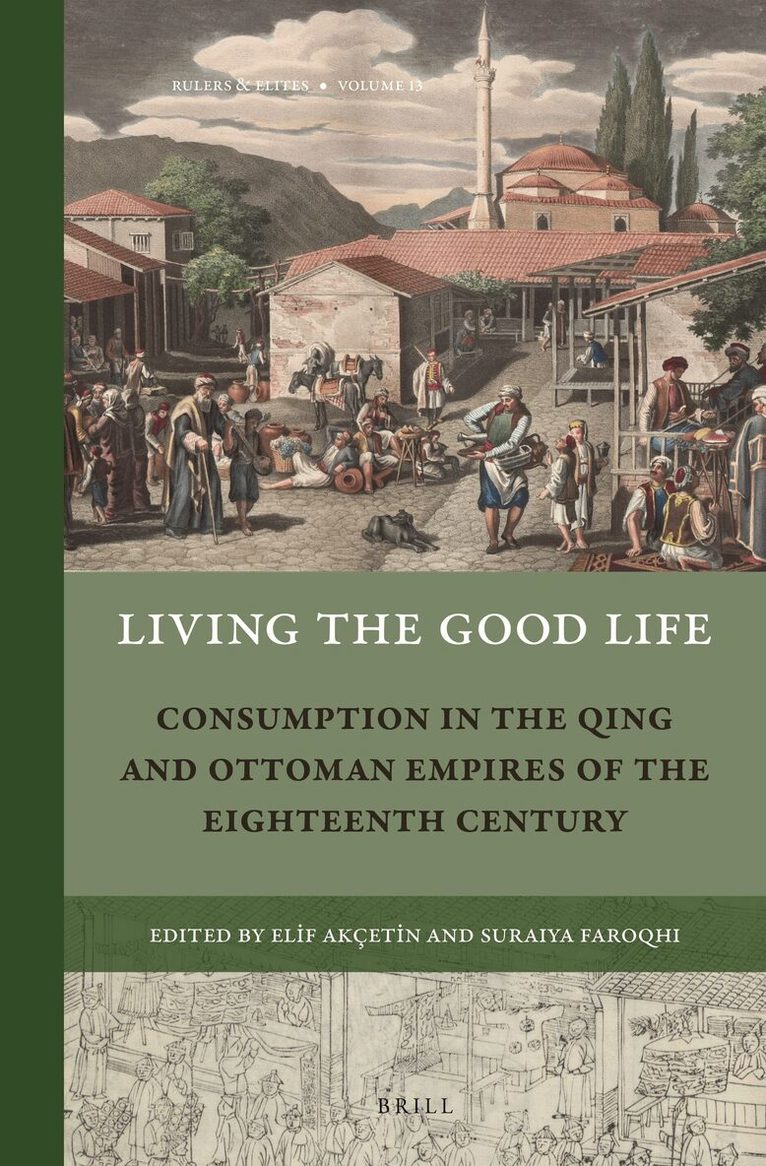
    Living the Good Life

    Consumption in the Qing and Ottoman Empires of the Eighteenth Century

    AvElif Akçetin,Suraiya Faroqhi

    Inbunden, Engelska, 2017

    Del 13 i serien Rulers & Elites

    3 109 kr

    Beställningsvara. Skickas inom 5-8 vardagar. Fri frakt över 249 kr.

    Beskrivning

    Eighteenth-century consumers of the Qing and Ottoman empires had access to an increasingly diverse array of goods, from home furnishings to fashionable clothes and new foodstuffs. While this tendency was of shorter duration and intensity in the Ottoman world, some urbanites of the sultans’ realm did enjoy silks, coffee, and Chinese porcelain. By contrast, a vibrant consumer culture flourished in Qing China, where many consumers flaunted their fur coats and indulged in gourmet dining. Living the Good Life explores how goods furthered the expansion of social networks, alliance-building between rulers and regional elites, and the expression of elite, urban, and gender identities. The scholarship in the present volume highlights the recently emerging “material turn” in Qing and Ottoman historiographies and provides a framework for future research.Contributors: Arif Bilgin, Michael G. Chang, Edhem Eldem, Colette Establet, Antonia Finnane, Selim Karahasanoglu, Lai Hui-min, Amanda Phillips, Hedda Reindl-Kiel, Martina Siebert, Su Te-Cheng, Joanna Waley-Cohen, Wang Dagang, Wu Jen-shu, Yıldız Yılmaz, and Yun Yan.

    Produktinformation

    • Utgivningsdatum:2017-10-20
    • Mått:155 x 235 x 40 mm
    • Vikt:1 051 g
    • Format:Inbunden
    • Språk:Engelska
    • Serie:Rulers & Elites
    • Antal sidor:574
    • Förlag:Brill
    • ISBN:9789004349384

    Utforska kategorier

    • Asiens historia inom Historia och arkeologi
    • Socialhistoria och kulturhistoria inom Historia och arkeologi

    Mer om författaren

    Elif Akçetin (Ph.D. University of Washington, 2007) is a social historian focusing on the Qing dynasty. She is currently preparing a manuscript on the social and cultural meanings of corruption in eighteenth-century China.Suraiya Faroqhi Dr. phil. (Germany), University of Hamburg, is a Professor of History at Istanbul Bilgi University. She has published ten monographs and six volumes of articles on Ottoman history, and is a co-editor of the Cambridge History of Turkey.

    Innehållsförteckning

    • PrefaceList of Figures and TablesNotes on Editors and ContributorsIntroductionElif Akçetin and Suraiya Faroqhi1 Setting the StageElif Akçetin and Suraiya FaroqhiPart 1: Dead Grandees and Their Inventories2 Elite Objects and Private Collections in Eighteenth-Century China: A Study of Chen Huizu’s Confiscated GoodsYun Yan3 Ali Paşa and His Stuff: An Ottoman Household in Istanbul and VanAmanda Phillips4 Cutting a Fine Figure among Pots and Pans: Aghas of the Sultan’s Harem in the Eighteenth CenturyYıldız Yılmaz 5 Challenging the Paradigm of the Tulip Age: The Consumer Behavior of Nevşehirli Damad İbrahim Paşa and His HouseholdSelim KarahasanoğluPart 2: Urban Life: Generating a Self-Image through Textiles, Pictures, and Buildings6 Furnishing the Home in Qing Yangzhou: A Case for Rethinking “Consumer Constraint”Antonia Finnane7 A Preliminary Study of Local Consumption in the Qianlong Reign (1736–1796): The Case of Ba County in Sichuan ProvinceWu Jen-shu and Wang Dagang8 Women, Wealth and Textiles in 1730s BursaSuraiya Faroqhi 9 Consuming Luxurious and Exotic Goods in Damascus around 1700Colette EstabletPart 3: Food Culture10 From Artichoke to Corn: New Fruits and Vegetables in the Istanbul Market (Seventeenth to Nineteenth Centuries)Arif Bilgin11 Food and China’s World of Goods in the Long Eighteenth CenturyJoanna Waley-Cohen12 Of Feasts and Feudatories: The Politics of Commensal Consumption at the Early Kangxi CourtMichael G. ChangPart 4: Materials: Precious and Modest, Luxuries and Necessities13 Brass Consumption in the Qing EmpireLai Hui-min and Su Te-Cheng 14 Consumption as Knowledge: Pawnbrokers in Qing China Appraise FursElif Akçetin15 Consuming and Possessing Things on Paper: Examples from Late Imperial China’s Natural StudiesMartina Siebert16 Diamonds Are a Vizier’s Best Friends or: Merzifonlu Kara Mustafa’s Jewelry AssetsHedda Reindl-Kiel17 Of Bricks and Tiles: The History of a Local Industry in the Area of Mürefte (Thrace)Edhem EldemConclusionElif Akçetin and Suraiya FaroqhiChinese Character GlossaryBibliographyIndex