• Fri frakt över 249 kr
  • •
  • Snabba leveranser
  • •
  • Billiga böcker
Kundservice

Du är på sajten för privatpersoner.

Företag, bibliotek eller offentlig verksamhet?

Du handlar på classic.bokus.com, där alla dina funktioner finns intakta.
Till classic.bokus.com
Bokus logotyp. Gå till startsidan.
  • Erbjudanden
  • Nyheter
  • Student
  • Topplistor
  • Barn & ungdom
  • Bokus Play
  • E-böcker
  • Pocketböcker
  • Spel & pussel

Må bättre, för mindre! Upp till 50% rabatt på hälsoböcker

Sidfot

Mina sidor

    Hjälp

    • Kundservice
    • Vanliga frågor och svar
    • Frakt och leverans
    • Retur vid ångerrätt
    • Reklamera vara
    • Betalning
    • Köpvillkor
    • Allmänna villkor
    • Information om webbplatsens tillgänglighet

    Om Bokus

    • Om oss
    • Pressrum
    • För studenter
    • För företag
    • För bibliotek och offentlig verksamhet
    • För leverantörer
    • Hållbarhet

    Populärt

    • Aktuella erbjudanden
    • Presentkort
    • Studentlitteratur
    • Nya böcker
    • Topplistor
    • Signerade böcker
    • Engelska böcker

    Inspiration

    • Boktips
    • BookTok
    • Populära bokserier
    • Barnbokskaraktärer
    • Populära författare
    Logotyp för Bokus
    Följ oss på Facebook (extern länk)Följ oss på Instagram (extern länk)Följ oss på YouTube (extern länk)Följ oss på TikTok (extern länk)
    bokus @ CookiesAnpassa cookiesIntegritetspolicyKöpvillkor
    Till Citymail hemsida (extern länk)Till Budbee hemsida (extern länk)Till Postnord hemsida (extern länk)Till Schenker hemsida (extern länk)Till Early Bird hemsida (extern länk)Till Walleys hemsida (extern länk)
    1. Djur och Natur
    2. Djurböcker

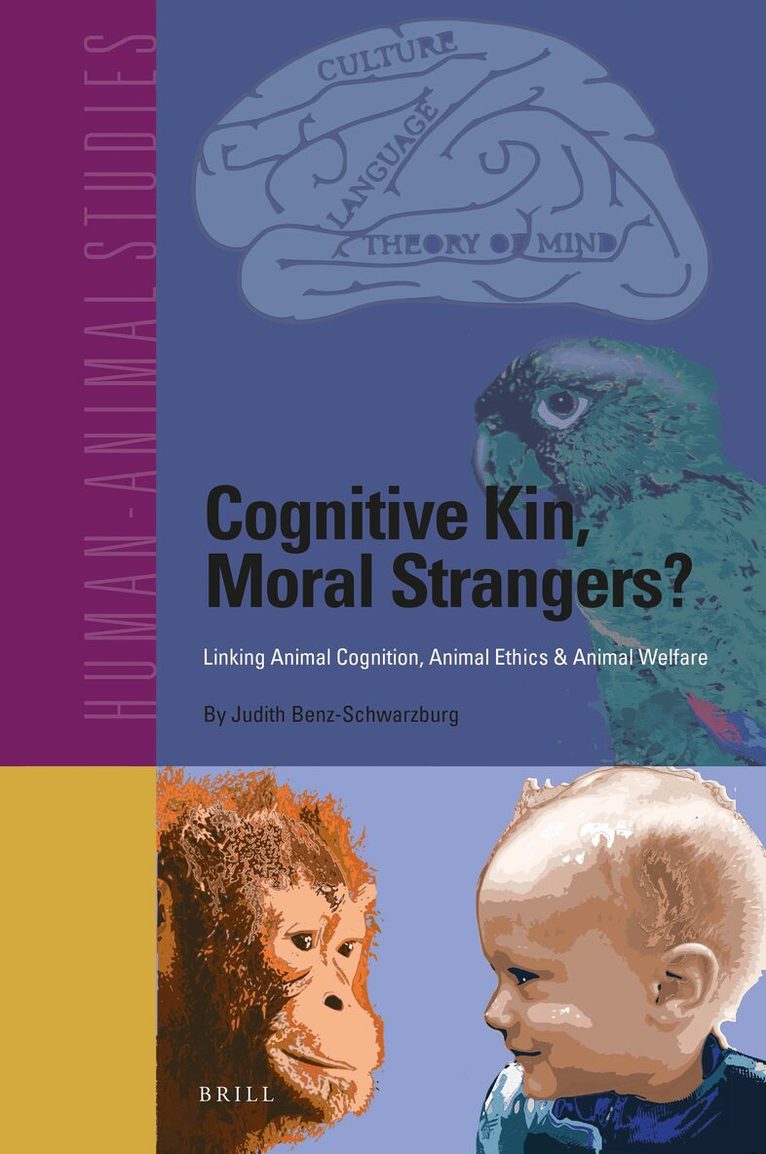
    Cognitive Kin, Moral Strangers? Linking Animal Cognition, Animal Ethics & Animal Welfare

    AvJudith Benz-Schwarzburg

    Inbunden, Engelska, 2019

    Del 23 i serien Human-Animal Studies

    2 458 kr

    Beställningsvara. Skickas inom 5-8 vardagar. Fri frakt över 249 kr.

    Beskrivning

    In Cognitive Kin, Moral Strangers?, Judith Benz-Schwarzburg reveals the scope and relevance of cognitive kinship between humans and non-human animals. She presents a wide range of empirical studies on culture, language and theory of mind in animals and then leads us to ask why such complex socio-cognitive abilities in animals matter. Her focus is on ethical theory as well as on the practical ways in which we use animals. Are great apes maybe better described as non-human persons? Should we really use dolphins as entertainers or therapists? Benz-Schwarzburg demonstrates how much we know already about animals’ capabilities and needs and how this knowledge should inform the ways in which we treat animals in captivity and in the wild.

    Produktinformation

    • Utgivningsdatum:2019-10-24
    • Mått:155 x 235 x 31 mm
    • Vikt:822 g
    • Format:Inbunden
    • Språk:Engelska
    • Serie:Human-Animal Studies
    • Antal sidor:436
    • Förlag:Brill
    • ISBN:9789004358867
    • Originaltitel:VERWANDTE IM GEISTE – FREMDE IM RECHT. SOZIO-KOGNITIVE FÄHIGKEITEN BEI TIEREN UND IHRE RELEVANZ FÜR TIERETHIK UND TIERSCHUTZ
    • Översättare:Mark Kanak

    Utforska kategorier

    • Djurböcker inom Djur och Natur
    • Zoologi inom Naturvetenskap och teknik
    • Filosofiska discipliner inom Filosofi och religion

    Mer om författaren

    Dr. Judith Benz-Schwarzburg is a Senior Researcher at the Messerli Research Institute, Vienna, who works and publishes at the intersection of animal cognition and animal ethics. She is currently leading a research group on animal morality.

    Innehållsförteckning

    • Preface and AcknowledgmentsPart 1: Introduction1Socio-Cognitive Abilities in Animals as the Object of Science—and What Has Been Neglected Thus Far2Questions and Objectives of the BookPart 2: Socio-Cognitive Abilities in Animals3The Concept of Cognition and the Concept of Consciousness4Culture in Animals?4.1Animal Tool Use and Tool Production: a Widespread Phenomenon4.2Theoretical Considerations4.3Culture in Chimpanzees4.4Culture in Orangutans, Gorillas, and Dolphins4.5Culture in New Caledonian Crows4.6Can We Speak Meaningfully of “Culture” in Animals?5Language in Animals?5.1Language: the Ultimate Differentia Specifica?5.2Concept Possession as Prerequisite for Language5.3Functional and Intentional Aspects of Natural Animal Communication5.4Propositional Representations and Basic Grammar: First Notes from Language-Teaching Experiments5.5Can We Speak Meaningfully of “Language” in Animals?6Theory of Mind in Animals?6.1Theory of Mind as Everyday Psychology6.2Theory of Mind Research in Children6.3Theory of Mind in Animals: What Do Animals Know about Perceptual States and False Beliefs?6.4Can We Speak Meaningfully of “Theory of Mind” in Animals?7Summary and TransitionPart 3: The Relevance of Socio-Cognitive Abilities in Animals for Animal Ethics and Animal Welfare8Kinship and Responsibility: the Moral Status of Animals8.1Introduction to Basic Concepts in Animal Ethics8.2Basic Positions in Animal Ethics8.3“Classical” Arguments in Animal Ethics and Animal Welfare8.4A “New” Argument: Personhood Rights for Animals8.5Problems and Limits of Personhood Rights8.6Opportunities for Personhood Rights: “Cognitive Relatives” as Ambassadors of Species Protection?9Kinship and Responsibility: the Discrepancy between Ethical Demands and the Status Quo9.1Case Study: How We Treat Great Apes9.2Case Study: How We Treat Dolphins10SummaryPart 4: Discussion11Cognitive Kinship and the Concept of an Evolutionary Self11.1Animals as Strangers and Kin at the Same Time11.2On the Way to a Nature Deficit of a Special Kind12A Comparison of Arguments12.1Animal Welfare Arguments vs. Species Conservation Arguments12.2Utilitarian Pathocentrism vs. Personhood Rights12.3Rights that Go Beyond the Weighing of Goods12.4Criteria that Go Beyond the Ability to Consciously Suffer12.5Painless Killing and Production of Insensitive Animals13Possibilities of Modifying Personhood Rights for Animals13.1Toward a Consistently Gradual Understanding13.2Personhood Status Despite Being a “Gradual” Person?13.3Species-Specific Inalienable Rights?13.4Differentiation between Clear and Less Clear Cases?14Alternative: Turn the Focus Back to the Suffering of Animals?14.1The Relationship between the Ability to Suffer and Socio-Cognitive Abilities14.2Socio-Cognitive Abilities, Animal Welfare, and Species Conservation14.3Indicators of Well-being in Captivity14.4Enrichment as Occupational Therapy14.5Cognition—Motivation—Frustration: the Need to Gain Information and Engage in Exploratory Behavior14.6The Difficulty of Assessing Behavioral Disorders, Using Stereotypies as an Example14.7The Effects of Enrichment14.8Enrichment in Captivity as an Ethical Necessity15Final Evaluation of Personhood Rights for AnimalsAcknowledgementsBibliographyIndex