• Fri frakt över 249 kr
  • •
  • Snabba leveranser
  • •
  • Billiga böcker
Kundservice

Du är på sajten för privatpersoner.

Företag, bibliotek eller offentlig verksamhet?

Du handlar på classic.bokus.com, där alla dina funktioner finns intakta.
Till classic.bokus.com
Bokus logotyp. Gå till startsidan.
  • Erbjudanden
  • Nyheter
  • Student
  • Topplistor
  • Barn & ungdom
  • Bokus Play
  • E-böcker
  • Pocketböcker
  • Spel & pussel

10% rabatt på allt med kod: NYSTART10 →

Sidfot

Mina sidor

    Hjälp

    • Kundservice
    • Vanliga frågor och svar
    • Frakt och leverans
    • Retur vid ångerrätt
    • Reklamera vara
    • Betalning
    • Köpvillkor
    • Allmänna villkor
    • Information om webbplatsens tillgänglighet

    Om Bokus

    • Om oss
    • Pressrum
    • För studenter
    • För företag
    • För bibliotek och offentlig verksamhet
    • För leverantörer
    • Hållbarhet

    Populärt

    • Aktuella erbjudanden
    • Presentkort
    • Studentlitteratur
    • Nya böcker
    • Topplistor
    • Signerade böcker
    • Engelska böcker

    Inspiration

    • Boktips
    • BookTok
    • Populära bokserier
    • Barnbokskaraktärer
    • Populära författare
    Logotyp för Bokus
    Följ oss på Facebook (extern länk)Följ oss på Instagram (extern länk)Följ oss på YouTube (extern länk)Följ oss på TikTok (extern länk)
    bokus @ CookiesAnpassa cookiesIntegritetspolicyKöpvillkor
    Till Citymail hemsida (extern länk)Till Budbee hemsida (extern länk)Till Postnord hemsida (extern länk)Till Schenker hemsida (extern länk)Till Early Bird hemsida (extern länk)Till Walleys hemsida (extern länk)
    1. Samhälle och politik
    2. Samhälle och kultur
    3. Sociala grupper och identitet
    4. Etnicitet

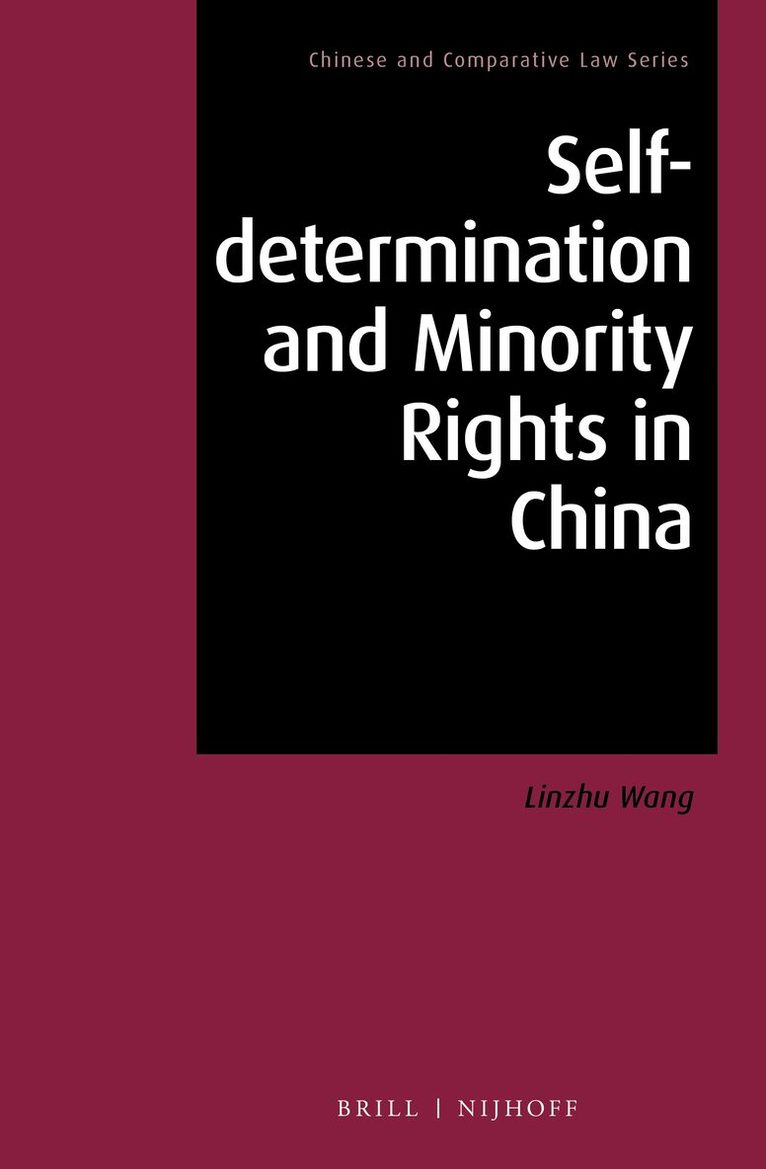
    Self-determination and Minority Rights in China

    AvLinzhu Wang

    Inbunden, Engelska, 2018

    Del 7 i serien Chinese and Comparative Law Series

    2 452 kr

    Beställningsvara. Skickas inom 5-8 vardagar. Fri frakt över 249 kr.

    Beskrivning

    In Self-determination and Minority Rights in China, Linzhu Wang examines the rights of China’s minorities from the perspective of self-determination. The book offers an insight into the ethnic issues in contemporary China, by examining the principle of self-determination in shaping China’s ethnic grouping and appraising the rights of the minorities and their limits. Based on a comprehensive survey of the practice of self-determination in the Chinese context and the Regional Ethnic Autonomy regime, the author seeks to answer the questions of how the ethnic policies and laws have come to be, why they are problematic, and what can be done to promote minority rights in China.

    Produktinformation

    • Utgivningsdatum:2018-12-20
    • Mått:155 x 235 x 24 mm
    • Vikt:634 g
    • Format:Inbunden
    • Språk:Engelska
    • Serie:Chinese and Comparative Law Series
    • Antal sidor:308
    • Förlag:Brill
    • ISBN:9789004380561

    Utforska kategorier

    • Etnicitet inom Samhälle och politik
    • Lag och samhälle inom Juridik
    • Mänskliga och medborgerliga rättigheter inom Juridik

    Mer om författaren

    Linzhu Wang, Ph.D. (2014), Lancaster University, is a Lecturer in Law at the School of International Law, Southwest University of Political Science and Law. She has published widely in the field of minority and group rights in different languages.

    Innehållsförteckning

    • Introduction1 Aims and Scope2 Methodology3 An Outline of the BookPART 1Self-determinaion in the Chinese Context1 The Nation of China1.1 Pre-modern Chinese Identity1.2 The Nation of China1.2.1 Sun Yat-sen and the Nationalism of the Nationalist Party(1) The Republican Era(2) The Nationalist Definition of the Chinese Nation1.2.2 The Communist Nationalism(1) The Peasant Nationalism(2) The Communist Nation Building: 1949–1978(3) The Communist Nation Building: 1978 Onwards1.2.3 The Nation of China1.3 Sovereignty: China’s Perspective(1) The Imperial Understanding of Sovereignty(2) The Modern Concept of Chinese Sovereignty1.4 Concluding Remarks2 China and the Political Principle of Self-determination2.1 National Self-determination at the Peace Conference of Paris and the Shandong (Shantung) Issue2.1.1 Conflict in the Former Yugoslavia2.1.2 Japanese and Chinese Positions2.1.3 Consequences of the Conference2.2 Lenin’s Theory of Self-determination and Its Influences upon China2.2.1 The Nationalist Self-determination2.2.2 The Cpc and Soviet Self-determination(1) The Pre-Long March Period (1921–1934)(2) The Long March Period (1934–1936)(3) The Anti-Japanese War (1937–1945)(4) The Civil War (1946–1949)2.3 Concluding Remarks3 The Right to Self-determination in the Chinese Context3.1 An Overview of the Right to Self-determination in International Law3.1.1 Colonial Self-determination3.1.2 Self-determination in the Post-colonial Era(1) Remedial Secession(2) The Right to Self-determination in the Human Rights Context3.2 The Question of Tibet3.2.1 The Background3.2.2 Resolution 1353 (1959)3.2.3 Resolution 1723 (1961)3.2.4 Resolution 2079 (1965)3.3 Self-determination in the Situation of Hong Kong and Macau3.3.1 Hong Kong(1) The Origin of the Issue(2) Hong Kong as a Non-self-governing Territory(3) An Exception to the Colonial Self-determination3.3.2 Macau3.4 China’s Approach to the Right to Self-determination3.4.1 Autonomy as a Means of Exercising Internal Self-determination(1) One Country Two Systems(2) Ethnic Territorial AutonomyPART 2Minority Rights in China4 The Regional Ethnic Autonomy Regime4.1 Regions in the REA4.1.1 Historical Factors4.1.2 The Size of Population4.1.3 Other Factors4.2 Autonomous Agencies4.2.1 The Local People’s Congress and Local People’s Government4.2.2 Minority Representation in Autonomous Agencies(1) Minorities in the People’s Congress and Its Standing Committee(2) Minority Representation in the LPG(3) Political Reality of Minority Representation4.3 The Definition of Minorities4.3.1 The Ethnic Identification Project4.3.2 Problems of the Ethnic Identification Project4.3.3 International Obligations of China in Relation to Minority Recognition(1) ICESCR(2) ICERD4.4 The Definition of Indigenous Peoples and Indigenous Situation in China4.4.1 Criteria for Identifying Indigenous Peoples in International Law(1) Defining “Indigenous”(2) The Meaning of “Peoples”(3) The Definition Advocated by China4.4.2 The Applicability of the Concept of Indigenous Rights in China(1) The Ilo Convention 169(2) The African Interpretation4.4.3 Indigenous Peoples in Taiwan4.4.4 Indigenous Small-numbered Peoples in Russia(1) The Ewenki Groups(2) The Hezhe Group(3) The Tuvinians4.5 Concluding Remarks5 Autonomous Rights under the rea: Legislative and Financial Rights5.1 Legislative Power of Autonomous Agencies5.1.1 Legislative Power5.1.2 Adaptation Power5.1.3 Adaptive Implementation Power5.2 Autonomous Financial Power5.2.1 Financial Rights of Autonomous Regions(1) The Local Government’s Own Revenue—Tax income(2) The Local Government’s Own Revenue—Intergovernmental Transfers(3) The Tax Refund(4) The General Financial Transfer(5) The Special Fund5.2.2 Financial Autonomy of Sub- provincial Autonomous Units5.3 Concluding Remarks6 The Cultural Rights of the Minorities6.1 China’s International Obligations Concerning Minority Rights6.1.1 Commitments Under The ICESCR6.1.2 State Obligations under the ICCPR6.1.3 State Obligations under the ICERD6.2 The Rights of the Minorities to Culture under Chinese Law6.2.1 Freedom of Religious Belief(1) Religious Freedom before the 1980s(2) Religious Freedom in Contemporary ChinaInstitutional Religions Minority Belief Systems 6.2.2 The Language Rights of the Minorities(1) Linguistic Planning for the Minorities before the 1980sThe Situation of Minority Languages Minority Writing Systems (2) Language Policy in the New EraLegal Provisions on Minority Languages Language Use in Public Service Language Use in Education Language Use in Business and Other Aspects 6.3 Concluding Remarks Conclusion1 China’s Practice of Self- determination and Minority Rights2 Prospects for Ethnic Territorial Autonomy in ChinaReferences