• Fri frakt över 249 kr
  • •
  • Snabba leveranser
  • •
  • Billiga böcker
Kundservice

Du är på sajten för privatpersoner.

Företag, bibliotek eller offentlig verksamhet?

Du handlar på classic.bokus.com, där alla dina funktioner finns intakta.
Till classic.bokus.com
Bokus logotyp. Gå till startsidan.
  • Erbjudanden
  • Nyheter
  • Student
  • Topplistor
  • Barn & ungdom
  • Bokus Play
  • E-böcker
  • Pocketböcker
  • Spel & pussel

10% rabatt på allt med kod NYSTART10 →

Sidfot

Mina sidor

    Hjälp

    • Kundservice
    • Vanliga frågor och svar
    • Frakt och leverans
    • Retur vid ångerrätt
    • Reklamera vara
    • Betalning
    • Köpvillkor
    • Allmänna villkor
    • Information om webbplatsens tillgänglighet

    Om Bokus

    • Om oss
    • Pressrum
    • För studenter
    • För företag
    • För bibliotek och offentlig verksamhet
    • För leverantörer
    • Hållbarhet

    Populärt

    • Aktuella erbjudanden
    • Presentkort
    • Studentlitteratur
    • Nya böcker
    • Topplistor
    • Signerade böcker
    • Engelska böcker

    Inspiration

    • Boktips
    • BookTok
    • Populära bokserier
    • Barnbokskaraktärer
    • Populära författare
    Logotyp för Bokus
    Följ oss på Facebook (extern länk)Följ oss på Instagram (extern länk)Följ oss på YouTube (extern länk)Följ oss på TikTok (extern länk)
    bokus @ CookiesAnpassa cookiesIntegritetspolicyKöpvillkor
    Till Citymail hemsida (extern länk)Till Budbee hemsida (extern länk)Till Postnord hemsida (extern länk)Till Schenker hemsida (extern länk)Till Early Bird hemsida (extern länk)Till Walleys hemsida (extern länk)
    1. Kultur
    2. Scenkonst och film
    3. Film

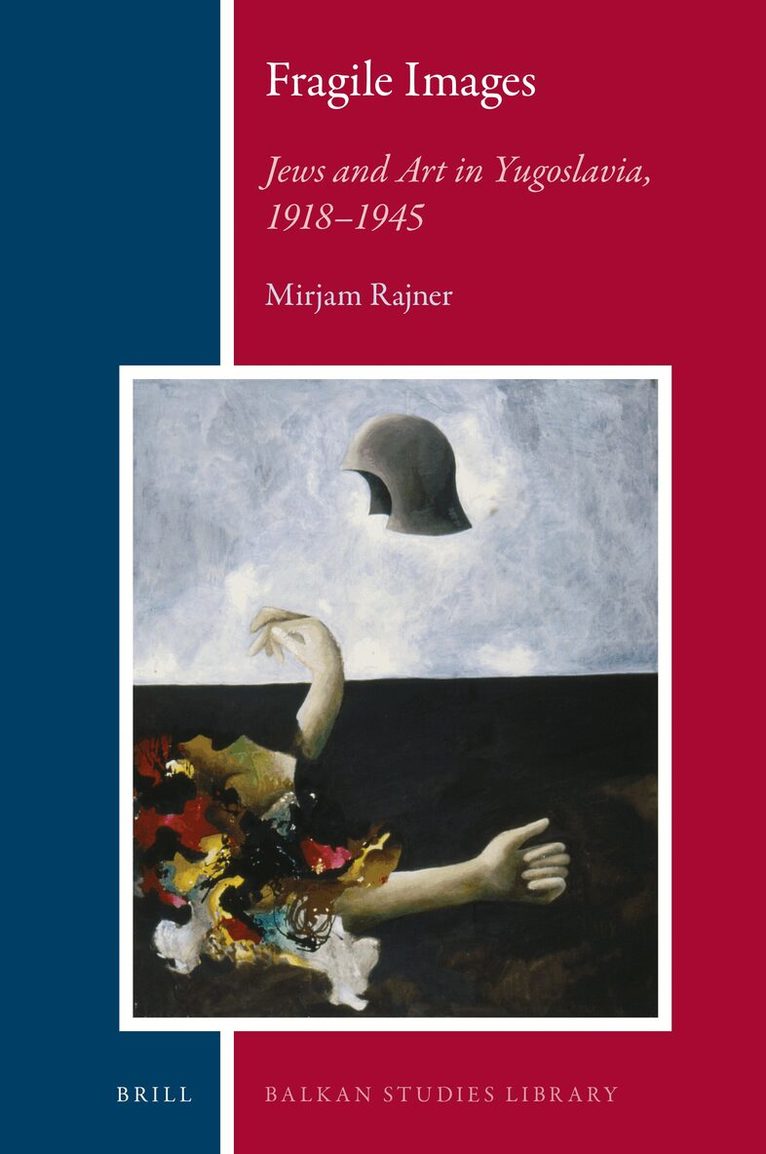
    Fragile Images

    Jews and Art in Yugoslavia, 1918-1945

    AvMirjam Rajner

    Inbunden, Engelska, 2019

    Del 26 i serien Balkan Studies Library

    3 218 kr

    Beställningsvara. Skickas inom 5-8 vardagar. Fri frakt över 249 kr.

    Beskrivning

    In Fragile Images: Jews and Art in Yugoslavia, 1918-1945, Mirjam Rajner traces the lives and creativity of seven artists of Jewish origin. The artists - Moša Pijade, Daniel Kabiljo, Adolf Weiller, Bora Baruh, Daniel Ozmo, Ivan Rein and Johanna Lutzer - were characterized by multiple and changeable identities: nationalist and universalist, Zionist and Sephardic, communist and cosmopolitan.These fluctuating identities found expression in their art, as did their wartime fate as refugees, camp inmates, partisans and survivors. A wealth of newly-discovered images, diaries and letters highlight this little-known aspect of Jewish life and art in Yugoslavia, illuminating a turbulent era that included integration into a newly-founded country, the catastrophe of the Holocaust, and renewal in its aftermath.interview with the author

    Produktinformation

    • Utgivningsdatum:2019-09-19
    • Mått:155 x 235 x 33 mm
    • Vikt:885 g
    • Format:Inbunden
    • Språk:Engelska
    • Serie:Balkan Studies Library
    • Antal sidor:446
    • Förlag:Brill
    • ISBN:9789004408852

    Utforska kategorier

    • Film inom Kultur
    • Television inom Kultur
    • Biografier inom Biografier

    Mer om författaren

    Mirjam Rajner, Ph.D. (2004), The Hebrew University of Jerusalem, is a senior lecturer in the Jewish Art Department of Bar-Ilan University and the co-editor of Ars Judaica, The Bar-Ilan Journal of Jewish Art. She has published numerous articles on modern Jewish art in edited volumes and academic journals such as Images, East-European Jewish Studies, Studia Rosenthaliana, and Studies in Contemporary Jewry.

    Recensioner i media

    interview with the author"Somit hat Mirjam Rajner mit ihrem Buch den im Balkanraum fast vergessenen und in der westlichen Welt so gut wie unbekannten Kulturschafffenden ein Denkmal gegen das Vergessen gesetzt." - Martina Bitunjac, in: Zeitschrift für Religions- und Geistesgeschichte 72, 2 (2020), Seiten 228–230

    Innehållsförteckning

    • Acknowledgments  xiList of IllustrationsNote on Personal NamesIntroductionPart 1: In Search of an Identity: Sephardic, Zionist, YugoslavIntroduction to Part 11 From Dorćol to Paris and Back: Moša Pijade’s Self-Portraits1 Coming of Age in Belgrade2 Fin-de-siècle Munich3 The Bohemian Paris4 Pijade’s Self-Portraits: In Search of an Identity2 Sarajevo’s Multiculturalism: Daniel Kabiljo’s Sephardic Types1 Between East and West2 Bosnian Artist or Yugoslav Zionist?3 Choosing Sides4 Kabiljo’s Sephardic Types3 A Croatian Zionist: Adolf Weiller between the East European Shtetl and the Lure of Nature1 Becoming a “Jewish Artist”2 The Lure of NaturePart 2: From Avant-Garde to Political ActivismIntroduction to Part 24 Bora Baruh’s Refugees1 “Four Mahaneh Portraits”2 The Early Works3 Paris: A Painter and a Revolutionary4 Painting Refugees5 Two Directions: The “Art for Art’s Sake” and the Socially Engaged Art5 Ivan Rein’s Paris: From the Quartier Latin to Camp Vernet1 Growing Up in an Affluent and Acculturated Jewish-Catholic Family2 The Croatian School of Painting3 Rein’s Paris4 Social Awareness and Political Protest5 Letters to Cuca: On Being Jewish, Yugoslav, and Universal on the Eve of WWII6 The Ethnic and Universal Avante-Garde: Daniel Ozmo’s Linocuts1 A Bosnian Sephardic Artist in Belgrade2 Discussing “Jewish Art” in the 1930’s: Between Racial Traits and Human Values3 Social Content and Expressionist Form4 Sarajevo’s Avant-Garde: Collegium ArtisticumPart 3: “We Artists Have to Paint”: Art Created during the War and the HolocaustIntroduction to Part 37 Bora Baruh in Occupied Belgrade: Images of Jewish and Christian Mourning1 Bombing of Belgrade and Persecution of the Jews2 Painting Portraits3 Refugees on Ruins8 Art in Jasenovac: Daniel Ozmo and the Artists of the Ceramic Workshop1 The Destruction of Sarajevo’s Jewish Community and Daniel Ozmo’s Arrest2 The Jasenovac Camp and the Ceramic Workshop3 Ozmo’s Depictions of Forced Labor4 Slavko Bril5 Portraits and Landscapes6 Ozmo’s End9 Refugee and Artist: Ivan Rein, Johanna Lutzer, and Jewish Cultural Life in Kraljevica1 Escaping to the Adriatic Coast2 Being a Refugee in Kraljevica3 Ivan Rein’s Refugee Art4 The Kraljevica—Porto Re Camp5 Ivan Rein’s Drawings Created in the Kraljevica Camp6 Johanna Lutzer: A Jewish Artist from Vienna10 The Rab Island Camp: From Internment to FreedomPart 4: Producing Art for Partisans: Creativity between Ideology and SurvivalIntroduction to Part 411 Bora Baruh as a Partisan, 1941–194212 Johanna Lutzer: Jewish Refugees with the Partisans in Croatia13 Postscript: Jewish Artists as National Heroes, Victims of Fascism, and Holocaust SurvivorsConclusionBibliographyIndex