• Fri frakt över 249 kr
  • •
  • Snabba leveranser
  • •
  • Billiga böcker
Kundservice

Du är på sajten för privatpersoner.

Företag, bibliotek eller offentlig verksamhet?

Du handlar på classic.bokus.com, där alla dina funktioner finns intakta.
Till classic.bokus.com
Bokus logotyp. Gå till startsidan.
  • Erbjudanden
  • Nyheter
  • Student
  • Topplistor
  • Barn & ungdom
  • Bokus Play
  • E-böcker
  • Pocketböcker
  • Spel & pussel

10% rabatt på allt med kod NYSTART10 →

Sidfot

Mina sidor

    Hjälp

    • Kundservice
    • Vanliga frågor och svar
    • Frakt och leverans
    • Retur vid ångerrätt
    • Reklamera vara
    • Betalning
    • Köpvillkor
    • Allmänna villkor
    • Information om webbplatsens tillgänglighet

    Om Bokus

    • Om oss
    • Pressrum
    • För studenter
    • För företag
    • För bibliotek och offentlig verksamhet
    • För leverantörer
    • Hållbarhet

    Populärt

    • Aktuella erbjudanden
    • Presentkort
    • Studentlitteratur
    • Nya böcker
    • Topplistor
    • Signerade böcker
    • Engelska böcker

    Inspiration

    • Boktips
    • BookTok
    • Populära bokserier
    • Barnbokskaraktärer
    • Populära författare
    Logotyp för Bokus
    Följ oss på Facebook (extern länk)Följ oss på Instagram (extern länk)Följ oss på YouTube (extern länk)Följ oss på TikTok (extern länk)
    bokus @ CookiesAnpassa cookiesIntegritetspolicyKöpvillkor
    Till Citymail hemsida (extern länk)Till Budbee hemsida (extern länk)Till Postnord hemsida (extern länk)Till Schenker hemsida (extern länk)Till Early Bird hemsida (extern länk)Till Walleys hemsida (extern länk)
    1. Kultur
    2. Konstböcker
    3. Konsthistoria

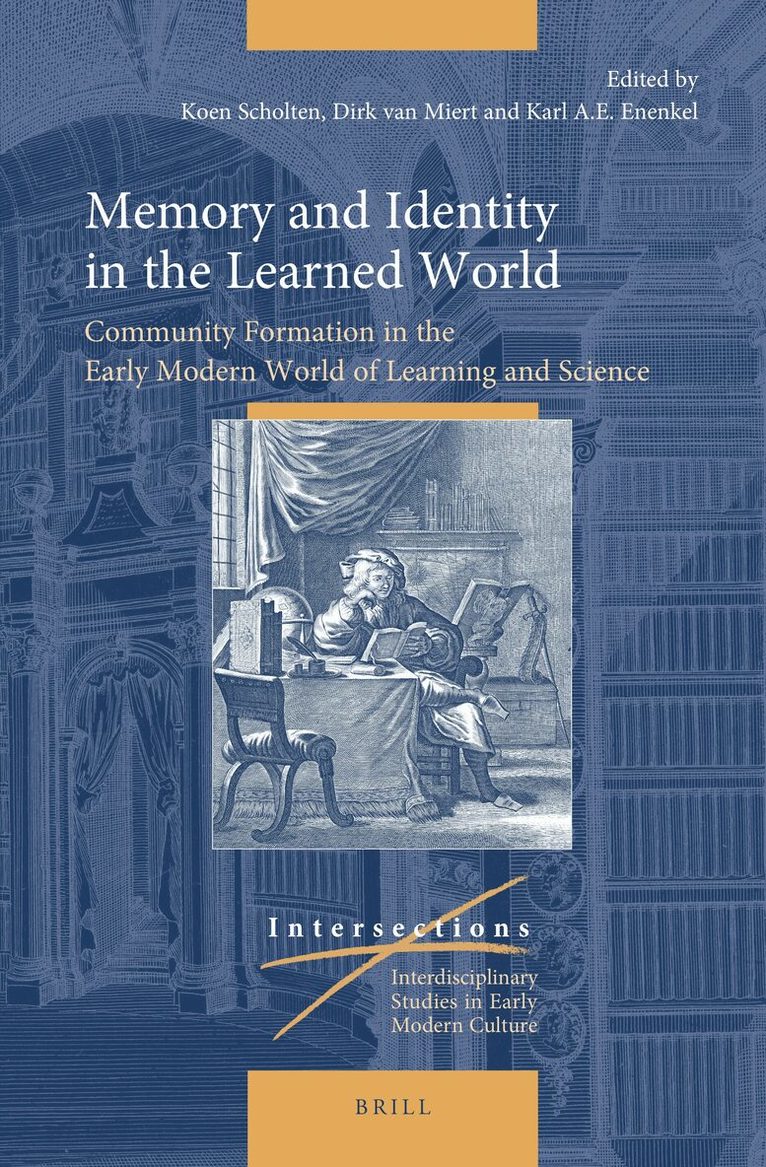
    Memory and Identity in the Learned World

    Community Formation in the Early Modern World of Learning and Science

    AvKoen Scholten,Dirk van Miert

    Inbunden, Engelska, 2022

    Del 81 i serien Intersections

    2 283 kr

    Beställningsvara. Skickas inom 5-8 vardagar. Fri frakt över 249 kr.

    Beskrivning

    Memory and Identity in the Learned World offers a detailed and varied account of community formation in the early modern world of learning and science. The book traces how collective identity, institutional memory and modes of remembrance helped to shape learned and scientific communities. The case studies in this book analyse how learned communities and individuals presented and represented themselves, for example in letters, biographies, histories, journals, opera omnia, monuments, academic travels and memorials. By bringing together the perspectives of historians of literature, scholarship, universities, science, and art, this volume studies knowledge communities by looking at the centrality of collective identity and memory in their formations and reformations.Contributors: Lieke van Deinsen, Karl Enenkel, Constance Hardesty, Paul Hulsenboom, Dirk van Miert, Alan Moss, Richard Kirwan, Koen Scholten, Floris Solleveld, and Esther M. Villegas de la Torre.

    Produktinformation

    • Utgivningsdatum:2022-03-24
    • Mått:155 x 235 x 24 mm
    • Vikt:801 g
    • Format:Inbunden
    • Språk:Engelska
    • Serie:Intersections
    • Antal sidor:352
    • Förlag:Brill
    • ISBN:9789004507142

    Utforska kategorier

    • Konsthistoria inom Kultur
    • Teater inom Kultur
    • Litteraturvetenskap inom Skönlitteratur

    Mer om författaren

    Koen Scholten is a PhD candidate and researcher at the Research Institute for History at Utrecht University. He has published articles on early modern science and scholarship as well as on scholarly travels. His current research focuses on how scholarly communities form and reform in early modern Europe. Dirk van Miert is Associate Professor of Early Modern Culture at Utrecht University and Director of the Huygens Institute (Royal Netherlands Academy of Arts and Sciences). He has published widely on the history of learning, scholarship, universities and the Republic of Letters.Karl A.E. Enenkel is Professor of Medieval Latin and Neo-Latin at the University of Münster. Previously he was Professor of Neo-Latin at the University of Leiden. He has published widely on international Humanism, early modern culture, paratexts, literary genres 1300–1600, Neo-Latin emblems, word and image relationships, and the history of scholarship and science.

    Innehållsförteckning

    • ContentsList of IllustrationsNotes on the EditorsNotes on the Contributors1 Introduction: Memory and Identity in Learned CommunitiesKoen ScholtenPart 1: Collective Identity2 “Identities” in Humanist Autobiographies and Related Self-PresentationsKarl A.E. Enenkel3 Female Faces and Learned Likenesses: Author Portraits and the Construction of Female Authorship and Intellectual AuthorityLieke van Deinsen4 Scholarly Identity and Gender in the Respublica litteraria: The Cases of Luisa Sigea (1522–1560) and Margaret Cavendish (1623–1673)Esther M. Villegas de la Torre5 The Republic of Letters Mapping the Republic of Letters: Jacob Brucker’s Pinacotheca (1741–1755) and Its AntecedentsFloris SolleveldPart 2: Institutional Memory as a Shared Past6 Mirror, Model, Muse: Institutional Memory and Identity in the Dublin, Oxford and Royal SocietiesConstance Hardesty7 Miscellanies of Memory: From Scholarly Biography to Institutional History in the Early Modern German UniversityRichard KirwanPart 3: Memory Cultures and Modes of Remembrance8 Tracing the Sites of Learned Men: Places and Objects of Knowledge on the Dutch and Polish Grand TourPaul Hulsenboom and Alan Moss9 The Curious Case of Isaac Casaubon’s Monstrous Bladder: The Networked Construction of Learned Memory within the Seventeenth-Century Reformed World of LearningDirk van MiertIndex Nominum