• Fri frakt över 249 kr
  • •
  • Snabba leveranser
  • •
  • Billiga böcker
Kundservice

Du är på sajten för privatpersoner.

Företag, bibliotek eller offentlig verksamhet?

Du handlar på classic.bokus.com, där alla dina funktioner finns intakta.
Till classic.bokus.com
Bokus logotyp. Gå till startsidan.
  • Erbjudanden
  • Nyheter
  • Student
  • Topplistor
  • Barn & ungdom
  • Bokus Play
  • E-böcker
  • Pocketböcker
  • Spel & pussel

10% studentrabatt med kod TERM26

Sidfot

Mina sidor

    Hjälp

    • Kundservice
    • Vanliga frågor och svar
    • Frakt och leverans
    • Retur vid ångerrätt
    • Reklamera vara
    • Betalning
    • Köpvillkor
    • Allmänna villkor
    • Information om webbplatsens tillgänglighet

    Om Bokus

    • Om oss
    • Pressrum
    • För studenter
    • För företag
    • För bibliotek och offentlig verksamhet
    • För leverantörer
    • Hållbarhet

    Populärt

    • Aktuella erbjudanden
    • Presentkort
    • Studentlitteratur
    • Nya böcker
    • Topplistor
    • Signerade böcker
    • Engelska böcker

    Inspiration

    • Boktips
    • BookTok
    • Populära bokserier
    • Barnbokskaraktärer
    • Populära författare
    Logotyp för Bokus
    Följ oss på Facebook (extern länk)Följ oss på Instagram (extern länk)Följ oss på YouTube (extern länk)Följ oss på TikTok (extern länk)
    bokus @ CookiesAnpassa cookiesIntegritetspolicyKöpvillkor
    Till Citymail hemsida (extern länk)Till Budbee hemsida (extern länk)Till Postnord hemsida (extern länk)Till Schenker hemsida (extern länk)Till Early Bird hemsida (extern länk)Till Walleys hemsida (extern länk)
    1. Historia och arkeologi
    2. Historia
    3. Historia: teori och metod

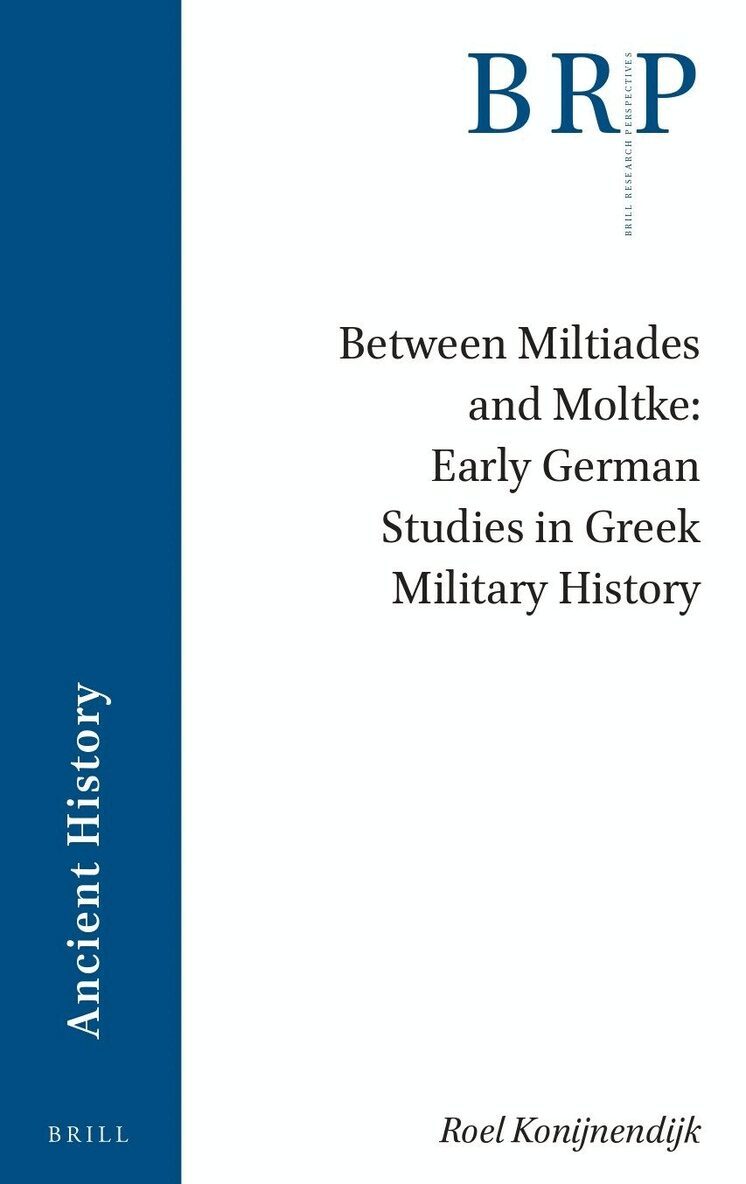
    Between Miltiades and Moltke: Early German Studies in Greek Military History

    AvRoel Konijnendijk

    Häftad, Engelska, 2022

    Del i serien Brill Research Perspectives in Ancient History

    1 110 kr

    Beställningsvara. Skickas inom 5-8 vardagar. Fri frakt över 249 kr.

    Beskrivning

    The authors of the first serious scholarly works on Greek warfare were not free to write their surveys as they wished. In the nineteenth-century German-speaking world, the supreme authority on all military history rested with the Great General Staff, the intellectual nerve centre of the Prussian army. Officers rejected the ability of historians to understand warfare and imposed their pragmatic perspective on any attempt to study past wars. How did classicists and historians respond to this challenge? This book explores how the scope and method of the first handbooks on Greek warfare were shaped by their environment; it questions the ancient wisdom that practical expertise is the best guide to writing military history.

    Produktinformation

    • Utgivningsdatum:2022-12-15
    • Mått:155 x 235 x 7 mm
    • Vikt:223 g
    • Format:Häftad
    • Språk:Engelska
    • Serie:Brill Research Perspectives in Ancient History
    • Antal sidor:118
    • Förlag:Brill
    • ISBN:9789004540026

    Utforska kategorier

    • Historia: teori och metod inom Historia och arkeologi
    • Forntida militärhistoria inom Historia och arkeologi

    Mer om författaren

    Roel Konijnendijk, Ph.D. (2015), University College London, is Darby Fellow in Ancient History at Lincoln College, University of Oxford. He wrote Classical Greek Tactics: A Cultural History (2018) and edited Brill’s Companion to Greek Land Warfare Beyond the Phalanx (2021).

    Recensioner i media

    "(...) an eminently useful book. It also raises many more questions than it can answer, which is not at all a bad thing. The relationship between politics, military and the study of antiquity is in need of further exploration, and anyone interested in shedding further light on this would be well advised to take Konijnendijk’s study as a starting-point." Jorit Wintjes in BMCR 2024.04.17

    Innehållsförteckning

    • ContentsAbstractKeywords1 Introduction2 An Officer and a Gentleman: The Joint Works of Rüstow and Köchly3 The Age of the Great Handbooks: The New Surveys of 1880–18954 The Delbrück-Kromayer Controversy5 Conclusion: Between Miltiades and MoltkeAcknowledgementsBibliographyIndex