• Fri frakt över 249 kr
  • •
  • Snabba leveranser
  • •
  • Billiga böcker
Kundservice

Du är på sajten för privatpersoner.

Företag, bibliotek eller offentlig verksamhet?

Du handlar på classic.bokus.com, där alla dina funktioner finns intakta.
Till classic.bokus.com
Bokus logotyp. Gå till startsidan.
  • Erbjudanden
  • Nyheter
  • Student
  • Topplistor
  • Barn & ungdom
  • Bokus Play
  • E-böcker
  • Pocketböcker
  • Spel & pussel

10% rabatt på allt med kod: NYSTART10 →

Sidfot

Mina sidor

    Hjälp

    • Kundservice
    • Vanliga frågor och svar
    • Frakt och leverans
    • Retur vid ångerrätt
    • Reklamera vara
    • Betalning
    • Köpvillkor
    • Allmänna villkor
    • Information om webbplatsens tillgänglighet

    Om Bokus

    • Om oss
    • Pressrum
    • För studenter
    • För företag
    • För bibliotek och offentlig verksamhet
    • För leverantörer
    • Hållbarhet

    Populärt

    • Aktuella erbjudanden
    • Presentkort
    • Studentlitteratur
    • Nya böcker
    • Topplistor
    • Signerade böcker
    • Engelska böcker

    Inspiration

    • Boktips
    • BookTok
    • Populära bokserier
    • Barnbokskaraktärer
    • Populära författare
    Logotyp för Bokus
    Följ oss på Facebook (extern länk)Följ oss på Instagram (extern länk)Följ oss på YouTube (extern länk)Följ oss på TikTok (extern länk)
    bokus @ CookiesAnpassa cookiesIntegritetspolicyKöpvillkor
    Till Citymail hemsida (extern länk)Till Budbee hemsida (extern länk)Till Postnord hemsida (extern länk)Till Schenker hemsida (extern länk)Till Early Bird hemsida (extern länk)Till Walleys hemsida (extern länk)
    1. Samhälle och politik
    2. Samhälle och kultur
    3. Kultur och medier
    4. Referensverk och tvärvetenskap

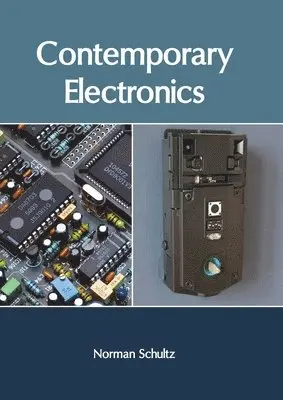
    Conceptual Realism and Historicity: Brandom versus Hegel

    AvNorman Schultz

    Inbunden, Engelska, 2024

    Del 403 i serien Cognitive Science

    2 230 kr

    Beställningsvara. Skickas inom 3-6 vardagar. Fri frakt över 249 kr.

    Beskrivning

    A persistent challenge in philosophy is constructing an explicit link between mind and external reality. In this regard, this book introduces and examines two opposing philosophies. It scrutinizes Brandom's inferentialist solution, encompassinging his influential work Making It Explicit (1994) and his controversial interpretation of Hegel as a conceptual realist in A Spirit of Trust (2019). Constrastingly, it introduces Hegel’s relativist historicism, arguing that a robust epistemological framework does not necessitate an explicit link to mind-independent reality. By confining knowledge to its historical context, it prevents adherence to false beliefs, maintaining openness for truth to emerge one day.

    Produktinformation

    • Utgivningsdatum:2024-12-19
    • Mått:155 x 235 x 25 mm
    • Vikt:623 g
    • Format:Inbunden
    • Språk:Engelska
    • Serie:Cognitive Science
    • Antal sidor:292
    • Förlag:Brill
    • ISBN:9789004714793

    Utforska kategorier

    • Referensverk och tvärvetenskap inom Samhälle och politik
    • Sociologi och antropologi inom Samhälle och politik
    • Filosofiska discipliner inom Filosofi och religion

    Mer om författaren

    Norman Schultz, Ph.D. (2018), Duquesne University (Pittsburgh), is Assistant Professor at the School of Philosophy and Social Development of Shandong University.

    Innehållsförteckning

    • Acknowledgment1 Introduction—The Divide and Brandom’s Interpretation of Hegel2 Brandom’s Conceptual Realism and Two Interpretations of Hegel1 From Hegel to Analytic Philosophy to Pragmatic Contextualism1.1 The Creation Myth of Analytic Philosophy—The Rejection of Hegel1.2 The Problem of the External World in Analytic Philosophy1.3 The Neo-Pragmatic Turn and Sellars’ Linguistic Rationalism1.4 Rorty’s Skepticism and Brandom1.5 Conclusions on the Birth of Analytic Philosophy from the Spirit of Hegel2 Brandom’s Pragmatic Semantics and Its Relation to Realism2.1 Mind-External Realism and Inferentialism2.2 Procedural Realism and Assertion2.3 Proof of Objectivity—Towards Mind-External Reality3 Brandom and History4 Brandom’s A Spirit of Trust and Conceptual Realism4.1 Brandom’s Conceptual Realism Applied to Hegel4.1.1 Conceptual Realism4.1.2 Brandom’s Hylomorphism and ‘Implausible’ Idealism4.1.3 Brandom’s Standard of Philosophy—Experiencing Error and Experiencing Reality4.2 The Normative Side4.3 The Historical Progression—The Advent of a Better Society3 Transition: Habermas’ Contextualism, Brandom’s Realism and Hegel’s Historicity1 Differences between Habermas’ and Brandom’s Account1.1 Pragmatics and Semantics—Two Incompatible Approaches in Brandom?1.2 Anaphora as an Anchor in Reality1.3 Brandom’s Leveling of Facts and Norms2 Habermas and Hegel2.1 Hegel’s Denial of Mentalism2.2 Habermas’ Critique of Hegel’s Concept of Self-consciousness4 Hegel’s Historical Relativism1 Logic and History1.1 The Historicity of the Science of Logic1.2 Hegel and the Concept of History2 Hegel’s Phenomenology2.1 Ordinary Phenomenologies in Relation to Essentialism and Foundationalism2.2 Kant’s Foundationalism and the Hegelian Rejection2.3 Hegel’s Account of Self-consciousness and His Epistemology3 Absolute Knowing in Relation to History and Time3.1 Hegel as a Thinker of World History and Absolute Knowing3.2 The Formal Absolute4 The Achievement of Absolute Knowing4.1 The Exposition of the Problem of Spirit4.2 The Unification of Consciousness with Self-consciousness4.3 The Unification of Consciousness with Self-consciousness through the Concept4.4 Absolute Knowing and Human History4.5 The Contradiction of Time and a Science of Experience4.6 Externalizations of Spirit—Time and History4.6.1 Definition of Time4.6.2 Definition of Nature and History4.6.3 Hegel’s Solution of Absolute Knowing5 Conclusion on Brandom’s Conceptual Realism and Hegel’s HistoricityBibliographyIndex