• Fri frakt över 249 kr
  • •
  • Snabba leveranser
  • •
  • Billiga böcker
Kundservice

Du är på sajten för privatpersoner.

Företag, bibliotek eller offentlig verksamhet?

Du handlar på classic.bokus.com, där alla dina funktioner finns intakta.
Till classic.bokus.com
Bokus logotyp. Gå till startsidan.
  • Erbjudanden
  • Nyheter
  • Student
  • Topplistor
  • Barn & ungdom
  • Bokus Play
  • E-böcker
  • Pocketböcker
  • Spel & pussel

10% rabatt på allt med kod: NYSTART10 →

Sidfot

Mina sidor

    Hjälp

    • Kundservice
    • Vanliga frågor och svar
    • Frakt och leverans
    • Retur vid ångerrätt
    • Reklamera vara
    • Betalning
    • Köpvillkor
    • Allmänna villkor
    • Information om webbplatsens tillgänglighet

    Om Bokus

    • Om oss
    • Pressrum
    • För studenter
    • För företag
    • För bibliotek och offentlig verksamhet
    • För leverantörer
    • Hållbarhet

    Populärt

    • Aktuella erbjudanden
    • Presentkort
    • Studentlitteratur
    • Nya böcker
    • Topplistor
    • Signerade böcker
    • Engelska böcker

    Inspiration

    • Boktips
    • BookTok
    • Populära bokserier
    • Barnbokskaraktärer
    • Populära författare
    Logotyp för Bokus
    Följ oss på Facebook (extern länk)Följ oss på Instagram (extern länk)Följ oss på YouTube (extern länk)Följ oss på TikTok (extern länk)
    bokus @ CookiesAnpassa cookiesIntegritetspolicyKöpvillkor
    Till Citymail hemsida (extern länk)Till Budbee hemsida (extern länk)Till Postnord hemsida (extern länk)Till Schenker hemsida (extern länk)Till Early Bird hemsida (extern länk)Till Walleys hemsida (extern länk)
    1. Naturvetenskap och teknik
    2. Matematik och naturvetenskap
    3. Biologi

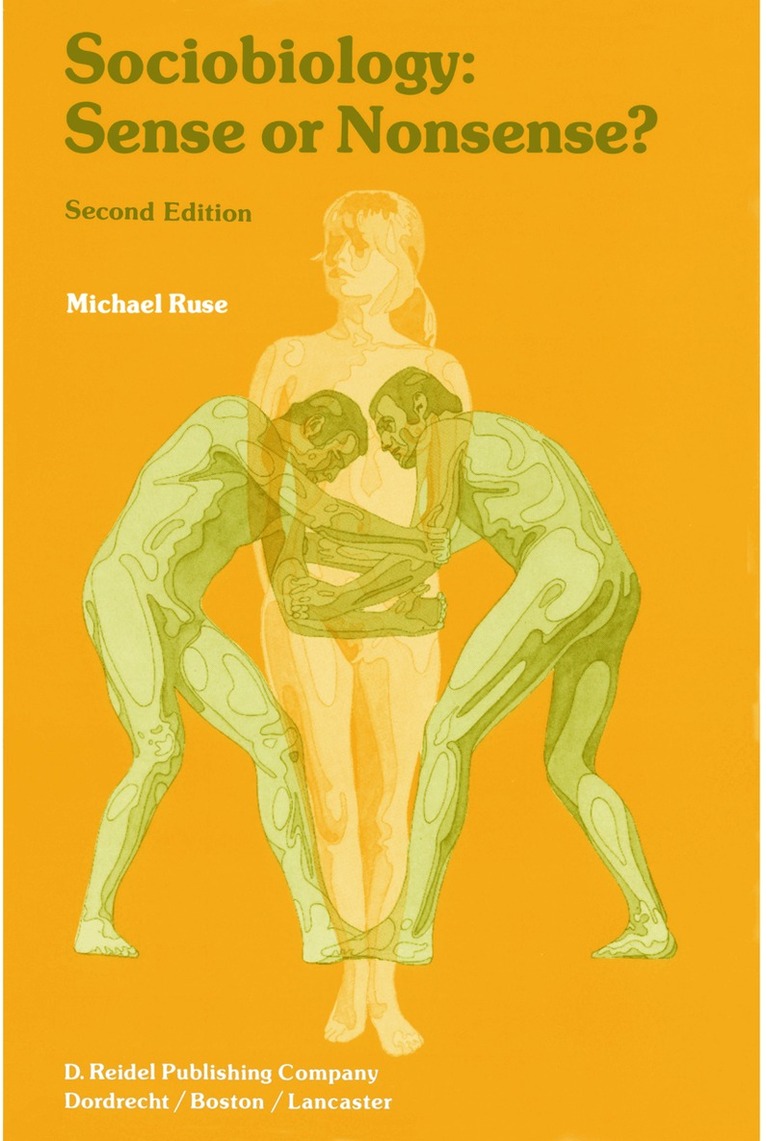
    Sociobiology: Sense or Nonsense?

    AvM. Ruse

    Häftad, Engelska, 1984

    Del 8 i serien Episteme

    547 kr

    Beställningsvara. Skickas inom 10-15 vardagar. Fri frakt över 249 kr.

    Fler format och utgåvor

    Inbunden

    547 kr

    E-bok

    710 kr

    Beskrivning

    In June 1975, the distinguished Harvard entomologist Edward O. Wilson published a truly huge book entitled, Sociobiology: The New Synthesis. In this book, drawing on both fact and theory, Wilson tried to present a com­ prehensive overview of the rapidly growing subject of 'sociobiology', the study of the biological nature and foundations of animal behaviour, more precisely animal social behaviour. Although, as the title rather implies, Wilson was more surveying and synthesising than developing new material, he com­ pensated by giving the most thorough and inclusive treatment possible, beginning in the animal world with the most simple of forms, and progressing via insects, lower invertebrates, mammals and primates, right up to and in­ cluding our own species, Homo sapiens. Initial reaction to the book was very favourable, but before the year was out it came under withering attack from a group of radical scientists in the Boston area, who styled themselves 'The Science for the People Sociobiology Study Group'. Criticism, of course, is what every academic gets (and needs!); but, for two reasons, this attack was particularly unpleasant. First, not only were Wilson's ideas attacked, but he himself was smeared by being linked with the most reactionary of political thinkers, including the Nazis.

    Produktinformation

    • Utgivningsdatum:1984-12-31
    • Mått:155 x 235 x 16 mm
    • Vikt:429 g
    • Format:Häftad
    • Språk:Engelska
    • Serie:Episteme
    • Antal sidor:260
    • Upplaga:2
    • Förlag:Springer
    • ISBN:9789027717986

    Utforska kategorier

    • Biologi inom Naturvetenskap och teknik
    • Naturvetenskapens filosofi inom Naturvetenskap och teknik

    Innehållsförteckning

    • 1. Introduction.- Notes to Chapter 1.- 2. The Biological Background.- 2.1. Sociobiology as Biology.- 2.2. Principles of Genetics.- 2.3. Population Genetics.- 2.4. Selection as Preserver of the Status Quo.- 2.5. The Level of Selection.- 2.6. The Theory of Evolution.- 2.7. Sociobiology as part of Evolutionary Theory.- Notes to Chapter 2.- 3. The Sociobiology of Animals.- 3.1. Aggression: The Ethological Viewpoint.- 3.2. What is Animal Aggression Really Like?.- 3.3. Evolutionary Stable Strategies.- 3.4. Strengths and Limitations of the Game-theoretic Approach.- 3.5. Sex and Sexual Selection.- 3.6. Parental Investment.- 3.7. Female Reproductive Strategies.- 3.8. Parenthood.- 3.9. Altruism.- 3.10. Kin Selection.- 3.11. Parental Manipulation.- 3.12. Reciprocal Altruism.- Notes to Chapter 3.- 4. Human Sociobiology.- 4.1. Aggression.- 4.2. Sex.- 4.3. Parenthood.- 4.4. Kin Selection.- 4.5. Parental Manipulation.- 4.6. Reciprocal Altruism.- 4.7. A General Model for Human Altruism.- Notes to Chapter 4.- 5. Normative Criticisms.- 5.1. Sociobiology as Reactionary.- 5.2. Does Sociobiology Support Virulent Capitalism?.- 5.3. Why Sahlins’ Criticisms About Ideology Fail.- 5.4. Sociobiological Explanations of Homosexuality.- 5.5. Is Sociobiology Sexist? The Minor Charges.- 5.6. Is Sociobiology Sexist? The Major Charge.- Notes to Chapter 5.- 6. Epistemological Criticisms.- 6.1. The Problem of Reification.- 6.2. Sociobiology as Mystical Nonsense.- 6.3. Natural Selection as Social Exploitation.- 6.4. Is Sociobiology Unfalsifiable? General Considerations.- 6.5. Is Sociobiology Unfalsifiable? Particular Considerations.- 6.6. Is Human Sociobiology False? The Rise and Fall of Islam.- 6.7. Is Human Sociobiology False? The Problem of Daughters.- 6.8. Conclusion.- Notes to Chapter 6.- 7. ThePositive Evidence.- 7.1. The Direct Evidence: Problems with Testing.- 7.2. Successes and Reservations.- 7.3. The Question of Intelligence.- 7.4. The Causes Behind Intelligence.- 7.5. The Weight of the Direct Evidence for Human Sociobiology.- 7.6. The Argument from Analogy.- 7.7. Human Aggression.- 7.8. The Indirect Evidence for Animal Sociobiology.- 7.9. The Indirect Evidence for Human Sociobiology.- 7.10. The Plausibility of Cultural Causes over Biological Causes.- 7.11. Does Culture Leave a Place for Human Sociobiology?.- 7.12. A Biological-Cultural Compromise.- 7.13. Conclusion.- Notes to Chapter 7.- 8. Sociobiology and the Social Sciences.- 8.1. Theory Change: Replacement and Reduction.- 8.2. The Replacement of Anthropology.- 8.3. Primitive War as Analysed through a Biological-Anthropological Compromise.- 8.4. Biologically Sympathetic Anthropology.- 8.5. The Formal Relationship between a Corrected Anthropology and Biology.- 8.6. Psychology: The Problem of Learning.- 8.7. Psychoanalytic Theory and the Explanation of Homosexuality.- 8.8. Economics.- 8.9. Sociology.- 8.10. Conclusion.- Notes to Chapter 8.- 9. Sociobiology and Ethics.- 9.1. Why are we Ethical?.- 9.2. Evolutionary Ethics.- 9.3. Wilson’s Attack on Intuitionism.- 9.4. Wilson’s Moral Relativism.- 9.5. Can Evolution be Directed?.- 9.6. Sociobiology and the Direction of Evolution.- 9.7 Conclusion.- Afterword.- Name Index.