Inbunden, Engelska, 2010
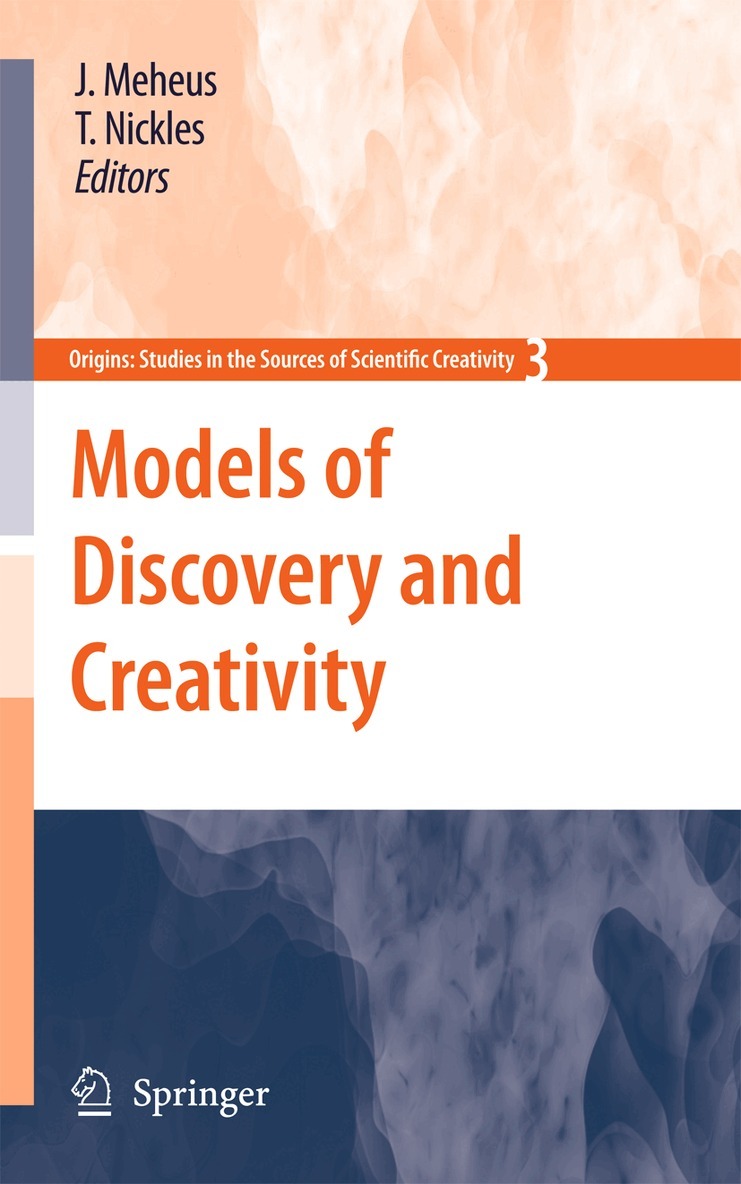
Models of Discovery and Creativity
Av Joke Meheus, Thomas Nickles
1098 kr
Beställningsvara. Skickas inom 10-15 vardagar. Fri frakt över 249 kr.
Beskrivning
Since the origin of the modern sciences, our views on discovery and creativity had a remarkable history. Originally, discovery was seen as an integral part of methodology and the logic of discovery as algorithmic or nearly algorithmic. During the nineteenth century, conceptions in line with romanticism led to the famous opposition between the context of discovery and the context of justification, culminating in a view that banned discovery from methodology. The revival of the methodological investigation of discovery, which started some thirty years ago, derived its major impetus from historical and sociological studies of the sciences and from developments within cognitive psychology and artificial intelligence. Today, a large majority of philosophers of science agrees that the classical conception as well as the romantic conception are mistaken. Against the classical conception, it is generally accepted that truly novel discoveries are not the result of simply applying some standardized procedure. Against the romantic conception, it is rejected that discoveries are produced by unstructured flashes of insight.An especially important result of the contemporary study concerns the availability of (descriptive and normative) models for explaining discoveries and creative processes. Descriptive models mainly aim at explaining the origin of novel products; normative models moreover address the question how rational researchers should proceed when confronted with problems for which a standard procedure is missing. The present book provides an overview of these models and of the important changes they induced within methodology. As appears from several papers, the methodological study of discovery and creativity led to profound changes in our conceptions of justification and acceptance, of rationality, of scientific change, and of conceptual change. The book contains contributions from both historians and philosophers of science. All of them, however, are methodological in the contemporary sense of the term. The central values of this methodology are empirical accurateness, clarity and precision, and rationality. The different contributions realize these values by their interdisciplinary nature. Some philosophically oriented papers rely on historical case studies and results from the cognitive sciences, others on recent results from the computer sciences and/or non-standard logics. The historically oriented papers address central philosophical questions and hypotheses.
Produktinformation
- Utgivningsdatum: 2010-02-04
- Mått: 155 x 235 x 29 mm
- Vikt: 539 g
- Format: Inbunden
- Språk: Engelska
- Serie: Origins: Studies in the Sources of Scientific Creativity
- Antal sidor: 249
- Upplaga: 2009
- Förlag: Springer
- ISBN: 9789048134205
Utforska kategorier
Betyg & recensioner
0 recensioner
Inga recensioner tillgängliga.