• Fri frakt över 249 kr
  • •
  • Snabba leveranser
  • •
  • Billiga böcker
Kundservice

Du är på sajten för privatpersoner.

Företag, bibliotek eller offentlig verksamhet?

Du handlar på classic.bokus.com, där alla dina funktioner finns intakta.
Till classic.bokus.com
Bokus logotyp. Gå till startsidan.
  • Erbjudanden
  • Student
  • Topplistor
  • Barn & ungdom
  • Bokus Play
  • E-böcker
  • Ljudböcker
  • Pocketböcker
  • Spel och pussel

5% studentrabatt – använd koden KURSBOK27 →

Sidfot

Mina sidor

    Hjälp

    • Kundservice
    • Vanliga frågor och svar
    • Frakt och leverans
    • Retur vid ångerrätt
    • Reklamera vara
    • Betalning
    • Köpvillkor
    • Allmänna villkor
    • Information om webbplatsens tillgänglighet

    Om Bokus

    • Om oss
    • Pressrum
    • För studenter
    • För företag
    • För bibliotek och offentlig verksamhet
    • För leverantörer
    • Hållbarhet

    Populärt

    • Aktuella erbjudanden
    • Presentkort
    • Studentlitteratur
    • Nya böcker
    • Topplistor
    • Signerade böcker
    • Engelska böcker

    Inspiration

    • Boktips
    • BookTok
    • Barnbokskaraktärer
    • Populära författare
    Logotyp för Bokus
    Följ oss på Facebook (extern länk)Följ oss på Instagram (extern länk)Följ oss på YouTube (extern länk)Följ oss på TikTok (extern länk)
    bokus @ CookiesAnpassa cookiesIntegritetspolicyKöpvillkor
    Till Citymail hemsida (extern länk)Till Budbee hemsida (extern länk)Till Postnord hemsida (extern länk)Till Schenker hemsida (extern länk)Till Early Bird hemsida (extern länk)Till Walleys hemsida (extern länk)
    1. Samhälle och politik
    2. Samhälle och kultur
    3. Kultur och medier
    4. Referensverk och tvärvetenskap

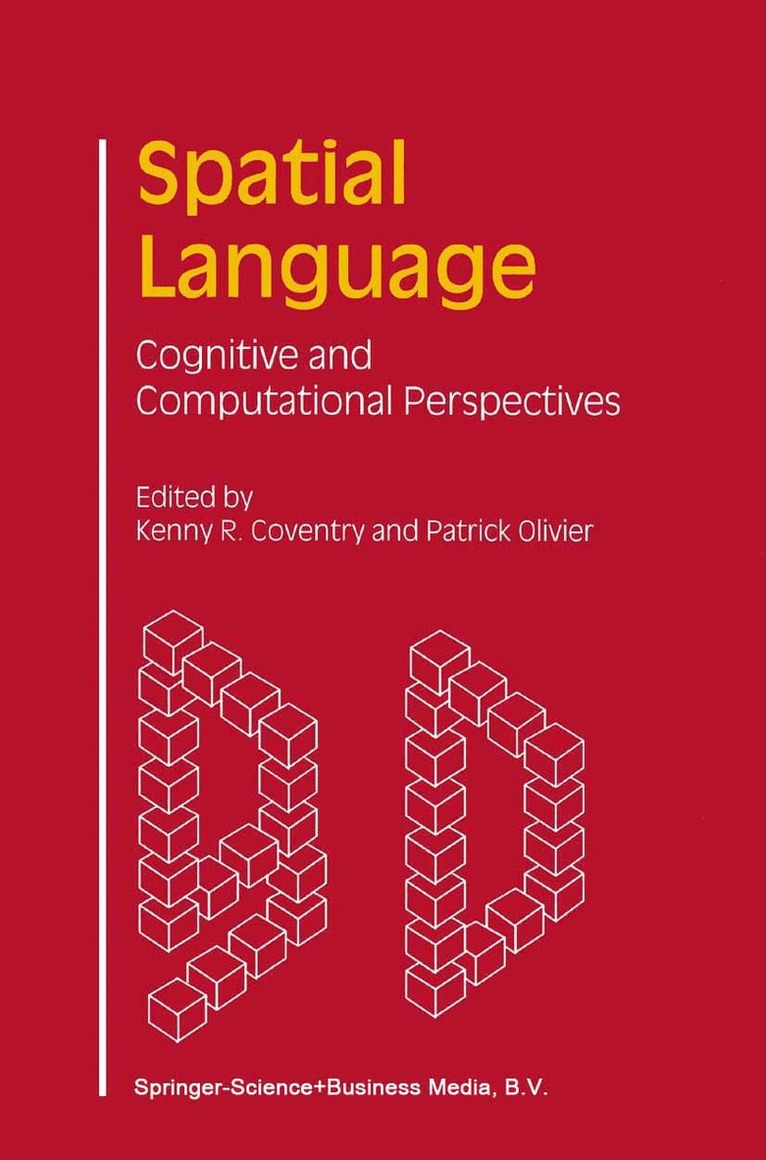
    Spatial Language

    Cognitive and Computational Perspectives

    AvKenny R. Coventry,P. Olivier

    Häftad, Engelska, 2010

    1 048 kr

    Beställningsvara. Skickas inom 10-15 vardagar. Fri frakt över 249 kr.

    Beskrivning

    People constantly talk to each other about experience or knowledge resulting from spatial perception; they describe the size, shape, orientation and position of objects using a wide range of spatial expressions. The semantic treatment of such expressions presents particular challenges for natural language processing. The meaning representation used must be capable of distinguishing between fine-grained sense differences and ambiguities grounded in our experience and perceptual structure. While there have been many different approaches to the representation and processing of spatial expressions, most computational characterisations have been restricted to particularly narrow problem domains. The chapters in the present volume reflect a commitment to the development of cognitively informed computational treatments of spatial language and spatial representation. Therefore the chapters present computational work, empirical work, or a combination of both. The book will appeal to all those interested in spatial language and spatial representation, whether they work in artificial intelligence, cognitive science, cognitive psychology or linguistics.

    Produktinformation

    • Utgivningsdatum:2010-12-01
    • Mått:160 x 240 x 17 mm
    • Vikt:452 g
    • Format:Häftad
    • Språk:Engelska
    • Antal sidor:283
    • Förlag:Springer
    • ISBN:9789048159109

    Utforska kategorier

    • Referensverk och tvärvetenskap inom Samhälle och politik
    • Artificiell intelligens inom Data och IT
    • Språkvetenskap och lingvistik inom Språk och ordböcker

    Innehållsförteckning

    • 1. Reasoning about Shape using the Tangential Axis Transform or the Shape’s “Grain”.- 2. A Conceptual Model for Representing Verbal Expressions used in Route Descriptions.- 3. Resolving Ambiguous Descriptions through Visual Information.- 4. An Anthropomorphic Agent for the Use of Spatial Language.- 5. Gesture, Thought, and Spatial Language.- 6. Organization of Temporal Situations.- 7. Grounding Meaning in Visual Knowledge. A Case Study: Dimensional Adjectives.- 8. Understanding How We Think about Space.- 9. The Real Story of “Over”?.- 10. Generating Spatial Descriptions from a Cognitive Point of View.- 11. Multiple Frames of Reference in Interpreting Complex Projective Terms.- 12. Goal-Directed Effects on Processing a Spatial Environment. Indications from Memory and Language.- 13. Memory for Text and Memory for Space. Two Concurrent Memory Systems?.- Author index.