• Fri frakt över 249 kr
  • •
  • Snabba leveranser
  • •
  • Billiga böcker
Kundservice

Du är på sajten för privatpersoner.

Företag, bibliotek eller offentlig verksamhet?

Du handlar på classic.bokus.com, där alla dina funktioner finns intakta.
Till classic.bokus.com
Bokus logotyp. Gå till startsidan.
  • Erbjudanden
  • Nyheter
  • Student
  • Topplistor
  • Barn & ungdom
  • Bokus Play
  • E-böcker
  • Pocketböcker
  • Spel & pussel

10% rabatt på allt med kod: NYSTART10 →

Sidfot

Mina sidor

    Hjälp

    • Kundservice
    • Vanliga frågor och svar
    • Frakt och leverans
    • Retur vid ångerrätt
    • Reklamera vara
    • Betalning
    • Köpvillkor
    • Allmänna villkor
    • Information om webbplatsens tillgänglighet

    Om Bokus

    • Om oss
    • Pressrum
    • För studenter
    • För företag
    • För bibliotek och offentlig verksamhet
    • För leverantörer
    • Hållbarhet

    Populärt

    • Aktuella erbjudanden
    • Presentkort
    • Studentlitteratur
    • Nya böcker
    • Topplistor
    • Signerade böcker
    • Engelska böcker

    Inspiration

    • Boktips
    • BookTok
    • Populära bokserier
    • Barnbokskaraktärer
    • Populära författare
    Logotyp för Bokus
    Följ oss på Facebook (extern länk)Följ oss på Instagram (extern länk)Följ oss på YouTube (extern länk)Följ oss på TikTok (extern länk)
    bokus @ CookiesAnpassa cookiesIntegritetspolicyKöpvillkor
    Till Citymail hemsida (extern länk)Till Budbee hemsida (extern länk)Till Postnord hemsida (extern länk)Till Schenker hemsida (extern länk)Till Early Bird hemsida (extern länk)Till Walleys hemsida (extern länk)
    1. Psykologi och pedagogik
    2. Pedagogik
    3. Pedagogisk psykologi

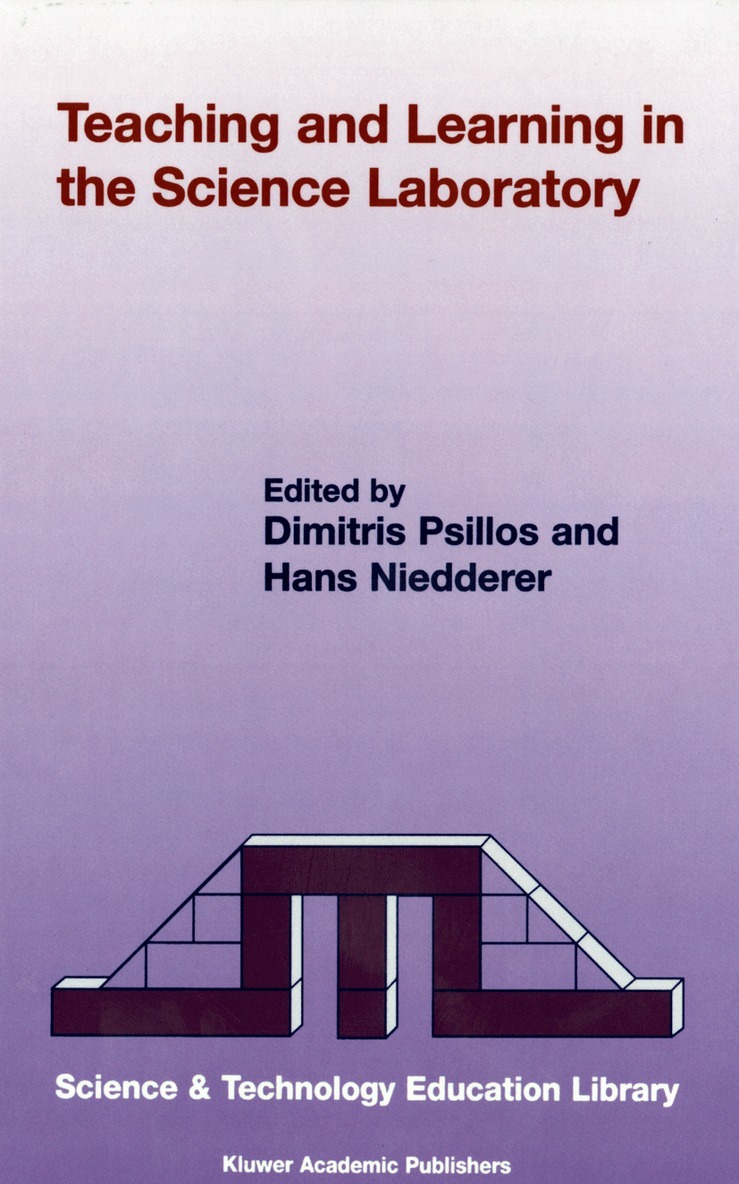
    Teaching and Learning in the Science Laboratory

    AvDimitris Psillos,H. Niedderer

    Häftad, Engelska, 2010

    Del 16 i serien Contemporary Trends and Issues in Science Education

    1 626 kr

    Beställningsvara. Skickas inom 10-15 vardagar. Fri frakt över 249 kr.

    Beskrivning

    Scope of the book There is an on-going debate regarding the role of labwork in science education, which dates back several decades and which illustrates the conviction and interest of teachers, researchers and policy-makers world-wide in the value of laboratory work for understanding science. This is evident in more recent books and studies regarding the laboratory, which mainly refer to countries with a considerable tradition in practical work in science education (Woolnough & Alsop 1985, Hodson 1993, Hegarthy-Hazel 1990, Wellington 2000). Yet in discussing research studies on labwork, several authors express their concern about its effectiveness in facilitating students' understanding of various aspects of scientific inquiry. They point out a comprehensive re-conceptualisation of the aims of labwork and, as a consequence, of investigating what the students actually learn in different contexts (Lazarowitz & Tamir 1994, Tobin & Tippins 1993, Lunetta 1998). It has also been argued that the relationship between instructional activities and student learning in labwork needs more attention than it has been given in science education research (Leach & Paulsen 1999). It appears that the case for research-based labwork emerges in several quarters in science education, particularly among researchers. This book presents and discusses a variety of laboratory practices and their effectiveness. The studies take into account recent theoretical developments and empirical results concerning students' understanding of scientific inquiry. A whole chapter is devoted to technological advances offering new learning opportunities for the students and teaching facilities for the teacher.

    Produktinformation

    • Utgivningsdatum:2010-12-09
    • Mått:155 x 235 x 16 mm
    • Vikt:429 g
    • Format:Häftad
    • Språk:Engelska
    • Serie:Contemporary Trends and Issues in Science Education
    • Antal sidor:270
    • Upplaga:2002
    • Förlag:Springer
    • ISBN:9789048161713

    Utforska kategorier

    • Pedagogisk psykologi inom Psykologi och pedagogik
    • Material och digital teknik i undervisningen inom Psykologi och pedagogik
    • Undervisning i specifika ämnen inom Psykologi och pedagogik

    Innehållsförteckning

    • General Introduction.- General Introduction.- Approaching Labwork: Frames and Tools.- Varieties of Labwork: A Way of Profiling Labwork Tasks.- Issues and Questions Regarding the Effectiveness of Labwork.- Talking Physics in Labwork Contexts - A Category Based Analysis of Videotapes.- Students’ Understanding of the Nature of Science and its Influence on Labwork.- Standard Labwork Based on Hands-on Experiments.- Modelling Activities of Students During a Traditional Labwork.- Students’ Intellectual Activities During Standard Labwork at Undergraduate Level.- A Laboratory-based Teaching Learning Sequence on Fluids: Developing Primary Student Teachers’ Conceptual and Procedural Knowledge.- Development and Evaluation of a Laboratory Course in Physics for Medical Students.- The Biology Textbook as a Source of Ideas about Scientific Knowledge and Experimental Activity.- Open-Ended Labwork.- The Role of Epistemological Information in Open-ended Investigative Labwork.- The Effectiveness of Mini-projects as a Preparation for Open-ended Investigations.- Data Interpretation Activities and Students’ Views of the Epistemology of Science during a University Earth Sciences Field Study Course.- Labwork and Data Handling.- The Use of Secondary Data in Teaching about Data Analysis in a First Year Undergraduate Biochemistry Course.- An Investigation of Teaching and Learning about Measurement Data and their Treatment in the Introductory Physics Laboratory.- Labwork Based on Integrated Use of New Information Technology.- Enhancing the Linking of theoretical Knowledge to Physical Phenomena by Real-time Graphing.- The Link of Theory and Practice in Traditional and in Computer-based University Laboratory Experiments.- Computer Tools in the Lab - Effects Linking Theory and Experiment.-Modelling in Geometrical Optics Using a Microcomputer.- Evolution of Students’ Reasoning about Microscopic Processes in Electrostatics under the Influence of Interactive Simulations.