• Fri frakt över 249 kr
  • •
  • Snabba leveranser
  • •
  • Billiga böcker
Kundservice

Du är på sajten för privatpersoner.

Företag, bibliotek eller offentlig verksamhet?

Du handlar på classic.bokus.com, där alla dina funktioner finns intakta.
Till classic.bokus.com
Bokus logotyp. Gå till startsidan.
  • Erbjudanden
  • Nyheter
  • Student
  • Topplistor
  • Barn & ungdom
  • Bokus Play
  • E-böcker
  • Pocketböcker
  • Spel & pussel

10% rabatt på allt med kod: NYSTART10 →

Sidfot

Mina sidor

    Hjälp

    • Kundservice
    • Vanliga frågor och svar
    • Frakt och leverans
    • Retur vid ångerrätt
    • Reklamera vara
    • Betalning
    • Köpvillkor
    • Allmänna villkor
    • Information om webbplatsens tillgänglighet

    Om Bokus

    • Om oss
    • Pressrum
    • För studenter
    • För företag
    • För bibliotek och offentlig verksamhet
    • För leverantörer
    • Hållbarhet

    Populärt

    • Aktuella erbjudanden
    • Presentkort
    • Studentlitteratur
    • Nya böcker
    • Topplistor
    • Signerade böcker
    • Engelska böcker

    Inspiration

    • Boktips
    • BookTok
    • Populära bokserier
    • Barnbokskaraktärer
    • Populära författare
    Logotyp för Bokus
    Följ oss på Facebook (extern länk)Följ oss på Instagram (extern länk)Följ oss på YouTube (extern länk)Följ oss på TikTok (extern länk)
    bokus @ CookiesAnpassa cookiesIntegritetspolicyKöpvillkor
    Till Citymail hemsida (extern länk)Till Budbee hemsida (extern länk)Till Postnord hemsida (extern länk)Till Schenker hemsida (extern länk)Till Early Bird hemsida (extern länk)Till Walleys hemsida (extern länk)
    1. Historia och arkeologi
    2. Historia
    3. Historia: särskilda händelser och ämnen
    4. Socialhistoria och kulturhistoria

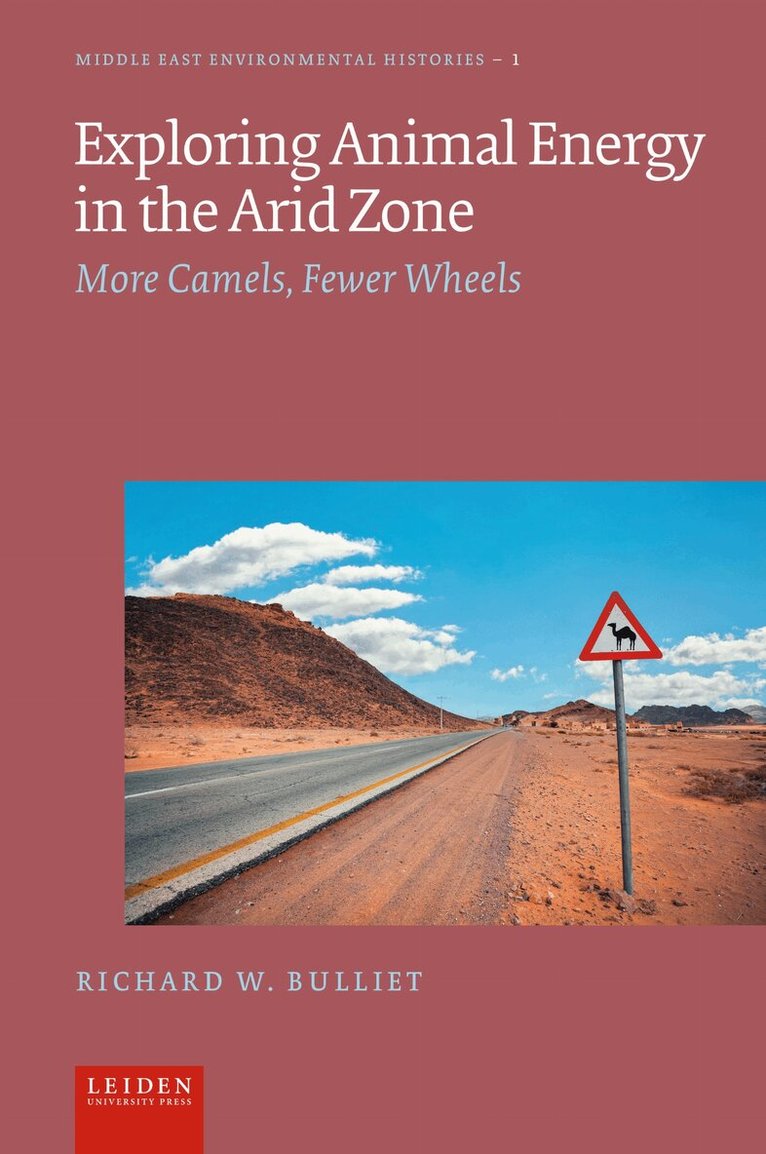
    Exploring Animal Energy in the Arid Zone

    More Camels, Fewer Wheels

    AvRichard Bulliet

    Inbunden, Engelska, 2024

    Del i serien Middle East Environmental Histories

    1 248 kr

    Beställningsvara. Skickas inom 5-8 vardagar. Fri frakt över 249 kr.

    Fler format och utgåvor

    Häftad

    515 kr

    Beskrivning

    Every society has an energy profile, that is, an array of energy sources, ranging in complexity from human power to nuclear fusion, that can be ranked according to their relative importance to that society. From about 4000 BE onward, animal muscle power becomes integrated into the energy profiles of many societies. The forms this integration takes include riding, carrying burdens, pulling wheeled vehicles and sleighs, operating mills and irrigation devices, and pulling plows, threshing sleds, and other agricultural implements. The use of animal power varies from region to region. These variations can be understood as falling into six discrete zones. The distinctive features of the arid zone from Morocco to Mongolia constitute the primary focus of this book. Successive chapters deal with caravan trading as a mode of production, the relationship between dairying and the availability of working animals, the spread of hybrid animal breeding (mules, bukhts, dzos) as an economic enterprise, and the integration of pastoral nomadism into the overall economy.

    Produktinformation

    • Utgivningsdatum:2024-07-01
    • Mått:156 x 234 x undefined mm
    • Format:Inbunden
    • Språk:Engelska
    • Serie:Middle East Environmental Histories
    • Antal sidor:168
    • Förlag:Leiden University Press
    • ISBN:9789087284183

    Utforska kategorier

    • Socialhistoria och kulturhistoria inom Historia och arkeologi
    • Nationalism inom Samhälle och politik
    • Mellanösterns historia inom Historia och arkeologi

    Mer om författaren

    Richard W. Bulliet is emeritus professor of history at Columbia University. He is the author of Islam: The View from the Edge, The Camel and The Wheel and the editor of The Columbia History of the Twentieth Century.

    Innehållsförteckning

    • Prologue; Introduction: Animal Energy; Exploration One: Camel Caravans as a Mode of Production; Exploration Two: A Miller's Tale; Exploration Three: The Two-Ox Mystery and the Price of Milk; Exploration Four: Unnatural Selection; Conclusion: The Missing Chapter; Bibliography