• Fri frakt över 249 kr
  • •
  • Snabba leveranser
  • •
  • Billiga böcker
Kundservice

Du är på sajten för privatpersoner.

Företag, bibliotek eller offentlig verksamhet?

Du handlar på classic.bokus.com, där alla dina funktioner finns intakta.
Till classic.bokus.com
Bokus logotyp. Gå till startsidan.
  • Erbjudanden
  • Nyheter
  • Student
  • Topplistor
  • Barn & ungdom
  • Bokus Play
  • E-böcker
  • Pocketböcker
  • Spel & pussel

10% rabatt på allt med kod: NYSTART10 →

Sidfot

Mina sidor

    Hjälp

    • Kundservice
    • Vanliga frågor och svar
    • Frakt och leverans
    • Retur vid ångerrätt
    • Reklamera vara
    • Betalning
    • Köpvillkor
    • Allmänna villkor
    • Information om webbplatsens tillgänglighet

    Om Bokus

    • Om oss
    • Pressrum
    • För studenter
    • För företag
    • För bibliotek och offentlig verksamhet
    • För leverantörer
    • Hållbarhet

    Populärt

    • Aktuella erbjudanden
    • Presentkort
    • Studentlitteratur
    • Nya böcker
    • Topplistor
    • Signerade böcker
    • Engelska böcker

    Inspiration

    • Boktips
    • BookTok
    • Populära bokserier
    • Barnbokskaraktärer
    • Populära författare
    Logotyp för Bokus
    Följ oss på Facebook (extern länk)Följ oss på Instagram (extern länk)Följ oss på YouTube (extern länk)Följ oss på TikTok (extern länk)
    bokus @ CookiesAnpassa cookiesIntegritetspolicyKöpvillkor
    Till Citymail hemsida (extern länk)Till Budbee hemsida (extern länk)Till Postnord hemsida (extern länk)Till Schenker hemsida (extern länk)Till Early Bird hemsida (extern länk)Till Walleys hemsida (extern länk)
    1. Naturvetenskap och teknik
    2. Teknik och industri
    3. Agronomi och lantbruk
    4. Lantbruksteknik

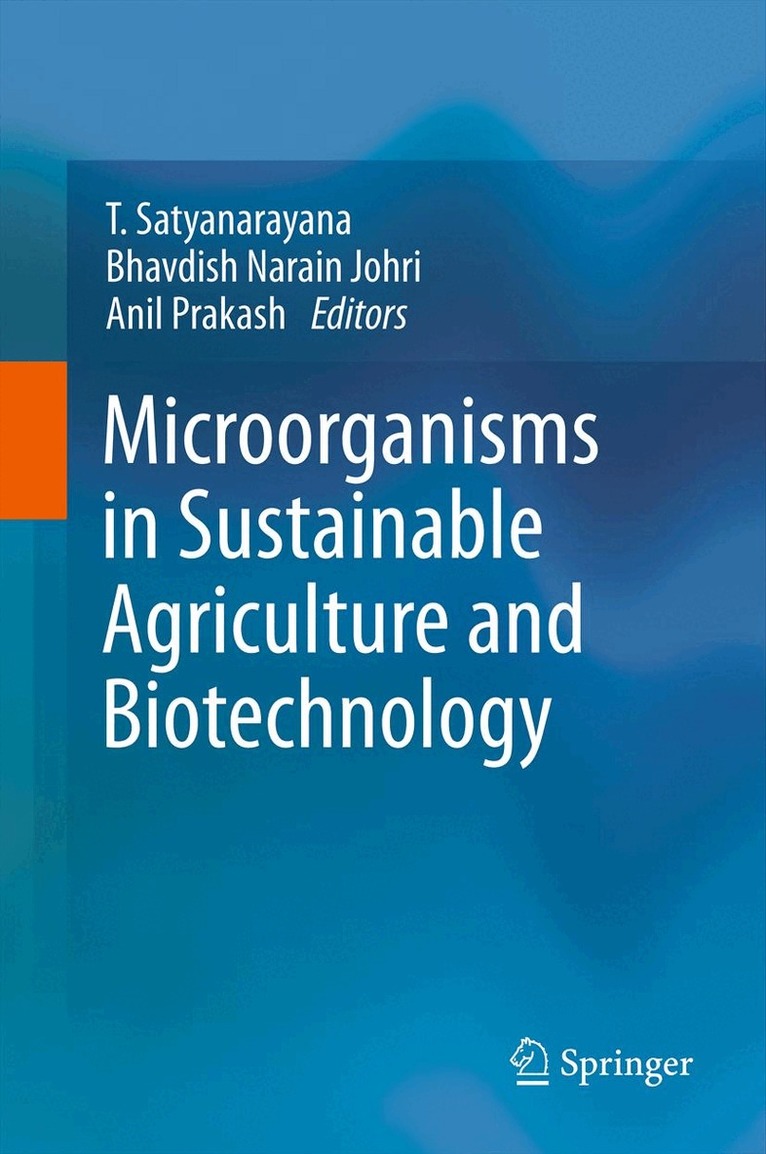
    Microorganisms in Sustainable Agriculture and Biotechnology

    AvT. Satyanarayana,Bhavdish Narain Johri

    Inbunden, Engelska, 2012

    2 165 kr

    Beställningsvara. Skickas inom 10-15 vardagar. Fri frakt över 249 kr.

    Beskrivning

    This review of recent developments in our understanding of the role of microbes in sustainable agriculture and biotechnology covers a research area with enormous untapped potential. Chemical fertilizers, pesticides, herbicides and other agricultural inputs derived from fossil fuels have increased agricultural production, yet growing awareness and concern over their adverse effects on soil productivity and environmental quality cannot be ignored. The high cost of these products, the difficulties of meeting demand for them, and their harmful environmental legacy have encouraged scientists to develop alternative strategies to raise productivity, with microbes playing a central role in these efforts. One application is the use of soil microbes as bioinoculants for supplying nutrients and/or stimulating plant growth. Some rhizospheric microbes are known to synthesize plant growth-promoters, siderophores and antibiotics, as well as aiding phosphorous uptake. The last 40 years have seen rapid strides made in our appreciation of the diversity of environmental microbes and their possible benefits to sustainable agriculture and production. The advent of powerful new methodologies in microbial genetics, molecular biology and biotechnology has only quickened the pace of developments. The vital part played by microbes in sustaining our planet’s ecosystems only adds urgency to this enquiry. Culture-dependent microbes already contribute much to human life, yet the latent potential of vast numbers of uncultured—and thus untouched—microbes, is enormous. Culture-independent metagenomic approaches employed in a variety of natural habitats have alerted us to the sheer diversity of these microbes, and resulted in the characterization of novel genes and gene products. Several new antibiotics and biocatalysts have been discovered among environmental genomes and some products have already been commercialized. Meanwhile, dozens ofindustrial products currently formulated in large quantities from petrochemicals, such as ethanol, butanol, organic acids, and amino acids, are equally obtainable through microbial fermentation. Edited by a trio of recognized authorities on the subject, this survey of a fast-moving field—with so many benefits within reach—will be required reading for all those investigating ways to harness the power of microorganisms in making both agriculture and biotechnology more sustainable.

    Produktinformation

    • Utgivningsdatum:2012-01-03
    • Mått:155 x 235 x 50 mm
    • Vikt:1 425 g
    • Format:Inbunden
    • Språk:Engelska
    • Antal sidor:829
    • Upplaga:2012
    • Förlag:Springer
    • ISBN:9789400722132

    Utforska kategorier

    • Lantbruksteknik inom Naturvetenskap och teknik
    • Biokemisk teknik inom Naturvetenskap och teknik
    • Biologi inom Naturvetenskap och teknik

    Innehållsförteckning

    • Foreword.- Preface.- Part I. Microbes in Sustainable Agriculture.- 1. Plant growth promotion by phytases and phytase-producing microbes due to amelioration in phosphorus availability.- 2. Environmental and Nutritional benefits of biopreservation of animal feed.- 3. Pivotal role of organic acid secretion by rhizobacteria for plant growth promotion and bioremediation.- 4. Organic Farming – for Sustainable Production and Environmental Protection.- 5. Utilization of psychrotolerant phosphate solubilizing fungi in low temperature environments of mountain ecosystem.- 6. Antimicrobial lipopeptides of Bacillus: Natural Weapons for Biocontrol of Plant Pathogens.- 7. Frankia and actinorhizal symbiosis.- 8. Microbes in agro-waste management for sustainable agriculture.- 9. Genetic and antigenic diversity of ruminant pestiviruses: implications for diagnosis and control.- 10. Cyanobacteria-PGPR interactions for effective nutrient and pest management strategies in agriculture.- 11. Regulation of Antibiotics Production in Biocontrol Strains of Pseudomonas spp.- 12. Exploiting Plant growth promoting rhizomicroorganisms for enhanced crop productivity.- 13. Tripartite association among plant, arbuscular mycorrhizal fungi and bacteria.- Part II. Microbes in Biotechnology.- 14. Metagenomics – a relief road to novel microbial genes and genomes.- 15. Metagenomics of saline habitats with respect to bacterial phylogeny and biocatalytic potential.- 16. Laccases: The biocatalyst with industrial and biotechnological applications.- 17. Biotechnological applications of biocatalysts from the Firmicutes Bacillus and Geobacillus species.- 18. Recent trends in valorization of lignocellulose to biofuels.- 19. Probiotic Yeasts.- 20. Biotechnological approach to caffeine degradation: current trends and perspectives.- 21. Arxula adeninivorans (Blastobotrys adeninivorans) – imperfect dimorphic yeast of biotechnologicalpotential.- 22. The thermostable and multi-functional enzymes catalyzing carbohydrate molecules identified from thermophilic archaea.- 23. biology on the ribonucleoprotein enzyme, RNase P, in the hyperthermophilic archaeon Pyrococcus horikoshii OT3.- 24. Biosynthesis of pullulan and its applications in food and pharmaceutical industry.- 25. Haolphilic microorganisms as sources of novel enzymes.- 26. Sourcing the fungal endophytes: A beneficial transaction of biodiversity, bioactive natural products, plant protection and nanotechnology.- 27. Fungi:  a potential source of anti-inflammatory compounds.- 28. Application of Microbial Toxins for Cancer Therapy.- 29. Application of environmental DNA resources to create useful DNA polymerases with different properties.- 30. Utilization of tropical fruits for wine production: Special emphasis on mango (Mangifera indica L.).- 31. Biosystem development for microbial enhanced oil recovery (MEOR).- 32. Bacterial small RNAs (sRNAs) and carbon catabolite repression.- 33. Lactic acid bacteria in food industry.- 34. RNA interference and Functional Genomics in Fungi.- 35. Bioethanol: A critical appraisal.- Subject Index.