• Fri frakt över 249 kr
  • •
  • Snabba leveranser
  • •
  • Billiga böcker
Kundservice

Du är på sajten för privatpersoner.

Företag, bibliotek eller offentlig verksamhet?

Du handlar på classic.bokus.com, där alla dina funktioner finns intakta.
Till classic.bokus.com
Bokus logotyp. Gå till startsidan.
  • Erbjudanden
  • Nyheter
  • Student
  • Topplistor
  • Barn & ungdom
  • Bokus Play
  • E-böcker
  • Pocketböcker
  • Spel & pussel

10% rabatt på allt med kod: NYSTART10 →

Sidfot

Mina sidor

    Hjälp

    • Kundservice
    • Vanliga frågor och svar
    • Frakt och leverans
    • Retur vid ångerrätt
    • Reklamera vara
    • Betalning
    • Köpvillkor
    • Allmänna villkor
    • Information om webbplatsens tillgänglighet

    Om Bokus

    • Om oss
    • Pressrum
    • För studenter
    • För företag
    • För bibliotek och offentlig verksamhet
    • För leverantörer
    • Hållbarhet

    Populärt

    • Aktuella erbjudanden
    • Presentkort
    • Studentlitteratur
    • Nya böcker
    • Topplistor
    • Signerade böcker
    • Engelska böcker

    Inspiration

    • Boktips
    • BookTok
    • Populära bokserier
    • Barnbokskaraktärer
    • Populära författare
    Logotyp för Bokus
    Följ oss på Facebook (extern länk)Följ oss på Instagram (extern länk)Följ oss på YouTube (extern länk)Följ oss på TikTok (extern länk)
    bokus @ CookiesAnpassa cookiesIntegritetspolicyKöpvillkor
    Till Citymail hemsida (extern länk)Till Budbee hemsida (extern länk)Till Postnord hemsida (extern länk)Till Schenker hemsida (extern länk)Till Early Bird hemsida (extern länk)Till Walleys hemsida (extern länk)
    1. Psykologi och pedagogik
    2. Pedagogik
    3. Undervisning i specifika ämnen

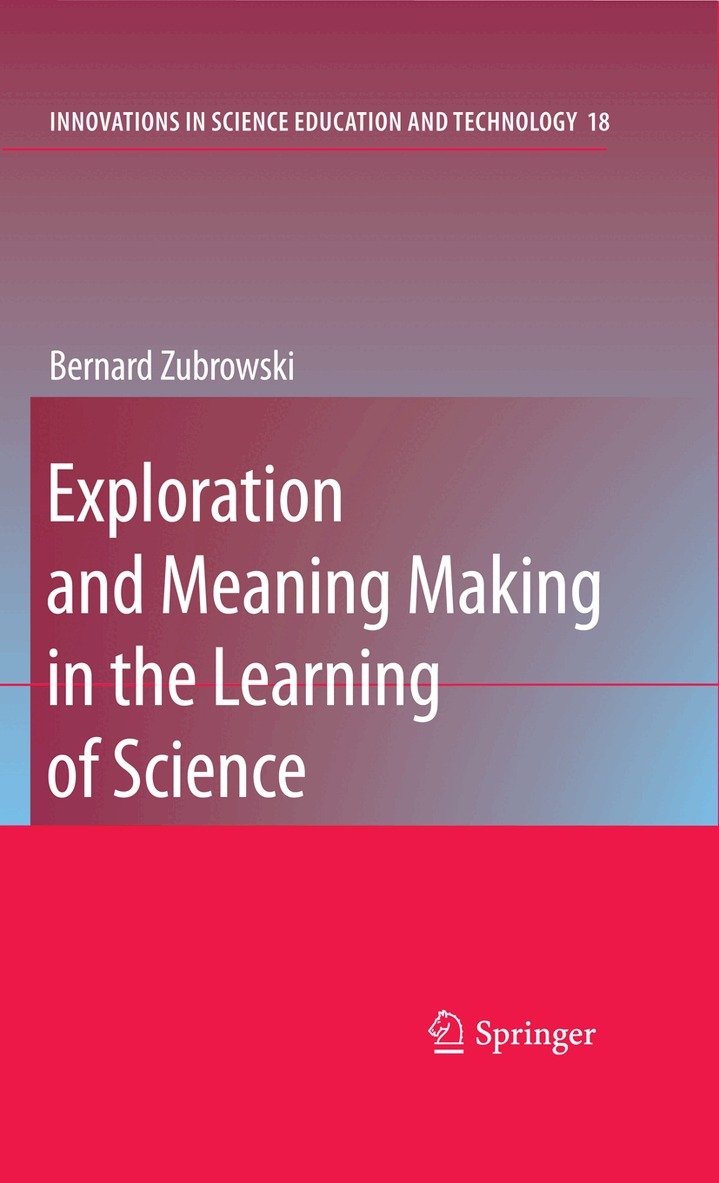
    Exploration and Meaning Making in the Learning of Science

    AvBernard Zubrowski

    Häftad, Engelska, 2012

    Del i serien Innovations in Science Education and Technology

    1 626 kr

    Beställningsvara. Skickas inom 10-15 vardagar. Fri frakt över 249 kr.

    Fler format och utgåvor

    Inbunden

    1 626 kr

    E-bok

    2 049 kr

    Beskrivning

    Mountaineers, Rock Climbers, and Science Educators Around the 1920s, rock climbing separated from mountaineering to become a separate sport. At that time European climbers developed new equipment and techniques, enabling them to ascend mountain faces and to climb rocks, which were considered unassailable up to that time. American climbers went further by expanding and improving on the equipment. They even developed a system of quantification where points were given for the degree of difficulty of an ascent. This system focused primarily on the pitch of the mountain, and it even calculated up to de- mals to give a high degree of quantification. Rock climbing became a technical system. Csikszentmihaly (1976) observed that the sole interest of rock climbers at that time was to climb the rock. Rock climbers were known to reach the top and not even glance around at the scenery. The focus was on reaching the top of the rock. In contrast, mountaineers saw the whole mountain as a single “unit of perc- tion. ” “The ascent (to them) is a gestalt including the aesthetic, historical, personal and physical sensations” (Csikszentmihaly, 1976, p. 486). This is an example of two contrasting approaches to the same kind of landscape and of two different groups of people. Interestingly, in the US, Europe, and Japan a large segment of the early rock climbers were young mathematicians and theoretical physicists, while the mountaineers were a more varied lot.

    Produktinformation

    • Utgivningsdatum:2012-03-14
    • Mått:155 x 235 x 20 mm
    • Vikt:557 g
    • Format:Häftad
    • Språk:Engelska
    • Serie:Innovations in Science Education and Technology
    • Antal sidor:343
    • Upplaga:2009
    • Förlag:Springer
    • ISBN:9789400730359

    Utforska kategorier

    • Undervisning i specifika ämnen inom Psykologi och pedagogik
    • Naturvetenskap:allmänt inom Naturvetenskap och teknik

    Innehållsförteckning

    • Characteristics of a Genetic Approach to Curriculum Design.- A Pedagogical Model For Guided Inquiry.- A Grade 1–9 Curriculum Framework Composed of Archetypical Phenomena and Technological Artifacts.- An Alternative Paradigm as a Basis for a Holistic Approach to Science Education.- The Body Image and Feelings in Science Learning.- Sensory Understanding.- Movement in Explorations, Gestural Representations, and Communication.- Empathy.- Aesthetics in the Learning of Science.- Play and Exploration in the Teaching and Learning of Science.- Play and Variations in Explorations and Representations: The Stereoscopic Principle and Montage in the Design of Science Educational Experiences.- The Role of Metaphor, Models, and Analogies in Science Education.