• Fri frakt över 249 kr
  • •
  • Snabba leveranser
  • •
  • Billiga böcker
Kundservice

Du är på sajten för privatpersoner.

Företag, bibliotek eller offentlig verksamhet?

Du handlar på classic.bokus.com, där alla dina funktioner finns intakta.
Till classic.bokus.com
Bokus logotyp. Gå till startsidan.
  • Erbjudanden
  • Nyheter
  • Student
  • Topplistor
  • Barn & ungdom
  • Bokus Play
  • E-böcker
  • Pocketböcker
  • Spel & pussel

10% rabatt på allt med kod: NYSTART10 →

Sidfot

Mina sidor

    Hjälp

    • Kundservice
    • Vanliga frågor och svar
    • Frakt och leverans
    • Retur vid ångerrätt
    • Reklamera vara
    • Betalning
    • Köpvillkor
    • Allmänna villkor
    • Information om webbplatsens tillgänglighet

    Om Bokus

    • Om oss
    • Pressrum
    • För studenter
    • För företag
    • För bibliotek och offentlig verksamhet
    • För leverantörer
    • Hållbarhet

    Populärt

    • Aktuella erbjudanden
    • Presentkort
    • Studentlitteratur
    • Nya böcker
    • Topplistor
    • Signerade böcker
    • Engelska böcker

    Inspiration

    • Boktips
    • BookTok
    • Populära bokserier
    • Barnbokskaraktärer
    • Populära författare
    Logotyp för Bokus
    Följ oss på Facebook (extern länk)Följ oss på Instagram (extern länk)Följ oss på YouTube (extern länk)Följ oss på TikTok (extern länk)
    bokus @ CookiesAnpassa cookiesIntegritetspolicyKöpvillkor
    Till Citymail hemsida (extern länk)Till Budbee hemsida (extern länk)Till Postnord hemsida (extern länk)Till Schenker hemsida (extern länk)Till Early Bird hemsida (extern länk)Till Walleys hemsida (extern länk)
    1. Naturvetenskap och teknik
    2. Geovetenskap
    3. Geovetenskap

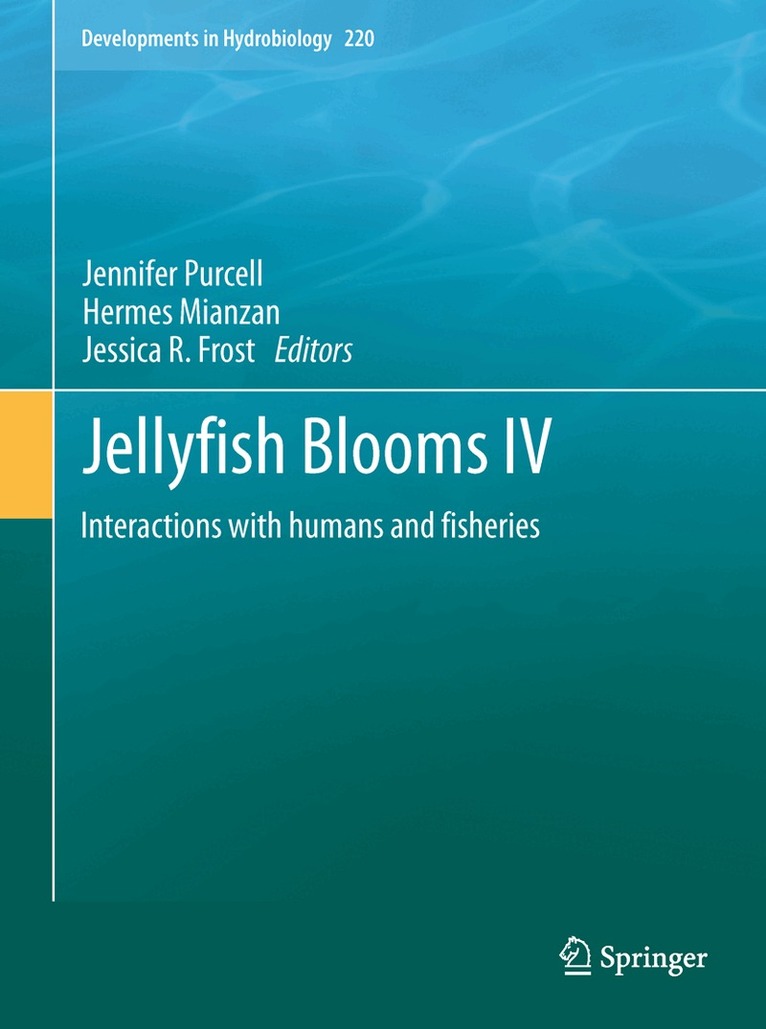
    Jellyfish Blooms IV

    Interactions with humans and fisheries

    AvJennifer Purcell,Hermes Mianzan

    Häftad, Engelska, 2014

    Del i serien Developments in Hydrobiology

    1 626 kr

    Beställningsvara. Skickas inom 10-15 vardagar. Fri frakt över 249 kr.

    Beskrivning

    Jellyfish generally are considered to be nuisances because they interfere with human activities by stinging swimmers, clogging power plant intakes and nets of fishermen, killing fish in aquaculture pens, and being both predators and competitors of fish. There is concern that environmental changes such as global warming, eutrophication, over-fishing, and coastal construction may benefit jellyfish populations. During this past decade following the first Jellyfish Blooms volume, some species have bloomed more frequently, expanded their range, and caused more problems for humans. Mnemiopsis leidyi, the ctenophore that invaded the Black Sea in the 1980s and damaged fisheries, now also blooms in the North, Baltic, and Mediterranean seas. Nemopilema nomurai, a giant Asian jellyfish, has bloomed frequently during this decade, causing severe damage to the Japanese fishing industry. Jellyfish Blooms: Interactions with Humans and Fisheries is the fourth volume in this series. Syntheses andoriginal research articles address the question if jellyfish have increased globally and what factors may have contributed to the abundance of jellyfish. This volume is the most extensive to date, containing papers from all continents (except Antarctica) on scyphozoans, hydrozoans, cubozoans, staurozoans, and ctenophores, and on the fate of jellyfish blooms. This is a key reference for students and professional marine biologists, oceanographers, and fishery scientists and managers. Previously published in Hydrobiologia, vol. 690, 2012​

    Produktinformation

    • Utgivningsdatum:2014-11-09
    • Mått:193 x 260 x 17 mm
    • Vikt:631 g
    • Format:Häftad
    • Språk:Engelska
    • Serie:Developments in Hydrobiology
    • Antal sidor:292
    • Upplaga:2012
    • Förlag:Springer
    • ISBN:9789400795525

    Utforska kategorier

    • Geovetenskap inom Naturvetenskap och teknik
    • Biovetenskap inom Naturvetenskap och teknik
    • Hydrologi inom Naturvetenskap och teknik

    Innehållsförteckning

    • PART I: JELLYFISH BLOOMS.- PART II: JELLYFISH BLOOMS AND THEIR CONSEQUENCES.- PART III: POTENTIAL CONTROLS ON JELLY POPULATIONS: ENVIRONMENTAL FACTORS, PREDATION, AND PARASITISM.- PART IV: FATE OF JELLYFISH BLOOMS.- PART V: CUBOMEDUSAN BIOLOGY.