• Fri frakt över 249 kr
  • •
  • Snabba leveranser
  • •
  • Billiga böcker
Kundservice

Du är på sajten för privatpersoner.

Företag, bibliotek eller offentlig verksamhet?

Du handlar på classic.bokus.com, där alla dina funktioner finns intakta.
Till classic.bokus.com
Bokus logotyp. Gå till startsidan.
  • Erbjudanden
  • Student
  • Topplistor
  • Barn & ungdom
  • Bokus Play
  • E-böcker
  • Ljudböcker
  • Pocketböcker
  • Spel och pussel

5% studentrabatt – använd koden KURSBOK27 →

Sidfot

Mina sidor

    Hjälp

    • Kundservice
    • Vanliga frågor och svar
    • Frakt och leverans
    • Retur vid ångerrätt
    • Reklamera vara
    • Betalning
    • Köpvillkor
    • Allmänna villkor
    • Information om webbplatsens tillgänglighet

    Om Bokus

    • Om oss
    • Pressrum
    • För studenter
    • För företag
    • För bibliotek och offentlig verksamhet
    • För leverantörer
    • Hållbarhet

    Populärt

    • Aktuella erbjudanden
    • Presentkort
    • Studentlitteratur
    • Nya böcker
    • Topplistor
    • Signerade böcker
    • Engelska böcker

    Inspiration

    • Boktips
    • BookTok
    • Barnbokskaraktärer
    • Populära författare
    Logotyp för Bokus
    Följ oss på Facebook (extern länk)Följ oss på Instagram (extern länk)Följ oss på YouTube (extern länk)Följ oss på TikTok (extern länk)
    bokus @ CookiesAnpassa cookiesIntegritetspolicyKöpvillkor
    Till Citymail hemsida (extern länk)Till Budbee hemsida (extern länk)Till Postnord hemsida (extern länk)Till Schenker hemsida (extern länk)Till Early Bird hemsida (extern länk)Till Walleys hemsida (extern länk)
    1. Samhälle och politik
    2. Politik och statsskick
    3. Statsvetenskap och politisk teori

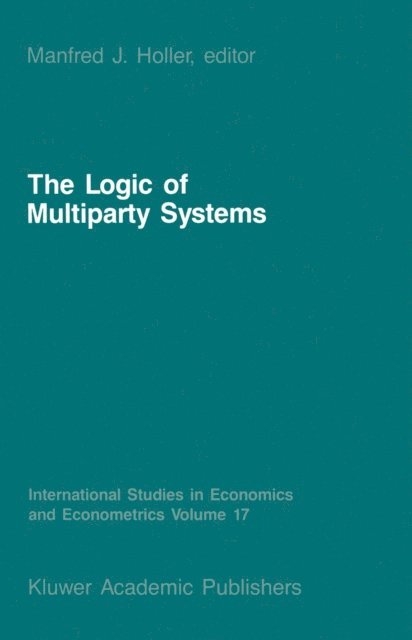
    Logic of Multiparty Systems

    AvM.J. Holler

    E-bok
    PDF, Engelska, 2012

    710 kr

    Läs direkt i Bokus Reader – eller ladda ned till din enhet (PDF kräver ofta zoom och scroll på små skärmar).

    Beskrivning

    What determines the number of political parties in a democracy? Electoral rules certainly influence the incentives to create and maintain parties. However, a society''s political culture can maintain parties despite electoral rules that give them poor prospects of success. Thus, comparing the number of parties and differences in electoral rules across countries cannot clearly test the effect of the electoral rules. A better test would examine a society with a fairly continuous political culture, but a change in electoral rules. Postwar France is such a society. While the basic social order has not changed, there was a drastic change in the electoral system in 1958, which theory implies would reduce the number of parties. Thus we can test the hypothesis that the number of parties fell with the change in electoral system. We can also calculate an " equivalent number of parties· to see how closely France approached a two - party system under the new regime. The first section describes the electoral rules under the Fourth and Fifth Republics. The second section develops a model that indicates how the change in electoral rules should have affected the incentives for multiple parties. The third section tests the hypothesis that the number of parties fell from the Fourth to the Fifth Republic. 1. Electoral Rules In the French Fourth Republic (1945 - 1958) political parties existed largely to serve the direct interests of their members.

    Produktinformation

    • Utgivningsdatum:2012-12-06
    • Språk:Engelska
    • Filformat:PDF
    • Kopieringsskydd:LCP
    • ISBN:9789400936072
    • Förlag:Springer Netherlands

    Utforska kategorier

    • Statsvetenskap och politisk teori inom Samhälle och politik