• Fri frakt över 249 kr
  • •
  • Snabba leveranser
  • •
  • Billiga böcker
Kundservice

Du är på sajten för privatpersoner.

Företag, bibliotek eller offentlig verksamhet?

Du handlar på classic.bokus.com, där alla dina funktioner finns intakta.
Till classic.bokus.com
Bokus logotyp. Gå till startsidan.
  • Erbjudanden
  • Nyheter
  • Student
  • Topplistor
  • Barn & ungdom
  • Bokus Play
  • E-böcker
  • Pocketböcker
  • Spel & pussel

10% rabatt på allt med kod NYSTART10 →

Sidfot

Mina sidor

    Hjälp

    • Kundservice
    • Vanliga frågor och svar
    • Frakt och leverans
    • Retur vid ångerrätt
    • Reklamera vara
    • Betalning
    • Köpvillkor
    • Allmänna villkor
    • Information om webbplatsens tillgänglighet

    Om Bokus

    • Om oss
    • Pressrum
    • För studenter
    • För företag
    • För bibliotek och offentlig verksamhet
    • För leverantörer
    • Hållbarhet

    Populärt

    • Aktuella erbjudanden
    • Presentkort
    • Studentlitteratur
    • Nya böcker
    • Topplistor
    • Signerade böcker
    • Engelska böcker

    Inspiration

    • Boktips
    • BookTok
    • Populära bokserier
    • Barnbokskaraktärer
    • Populära författare
    Logotyp för Bokus
    Följ oss på Facebook (extern länk)Följ oss på Instagram (extern länk)Följ oss på YouTube (extern länk)Följ oss på TikTok (extern länk)
    bokus @ CookiesAnpassa cookiesIntegritetspolicyKöpvillkor
    Till Citymail hemsida (extern länk)Till Budbee hemsida (extern länk)Till Postnord hemsida (extern länk)Till Schenker hemsida (extern länk)Till Early Bird hemsida (extern länk)Till Walleys hemsida (extern länk)
    1. Naturvetenskap och teknik
    2. Matematik och naturvetenskap
    3. Fysik

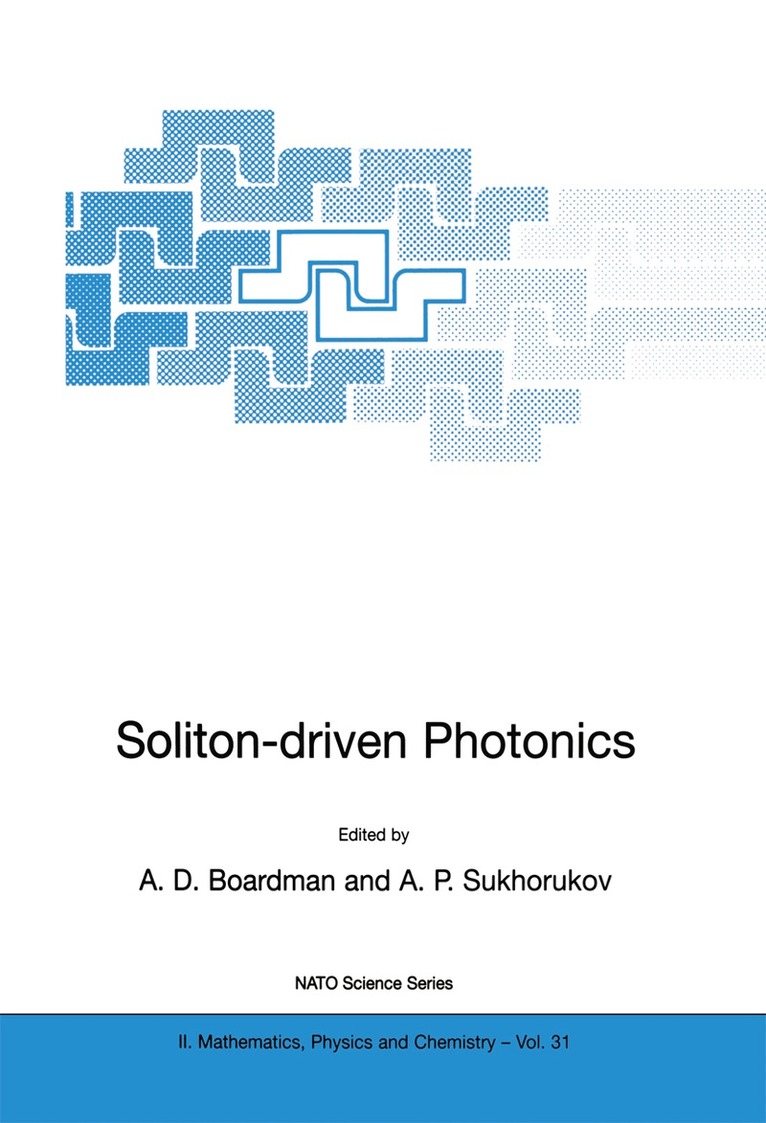
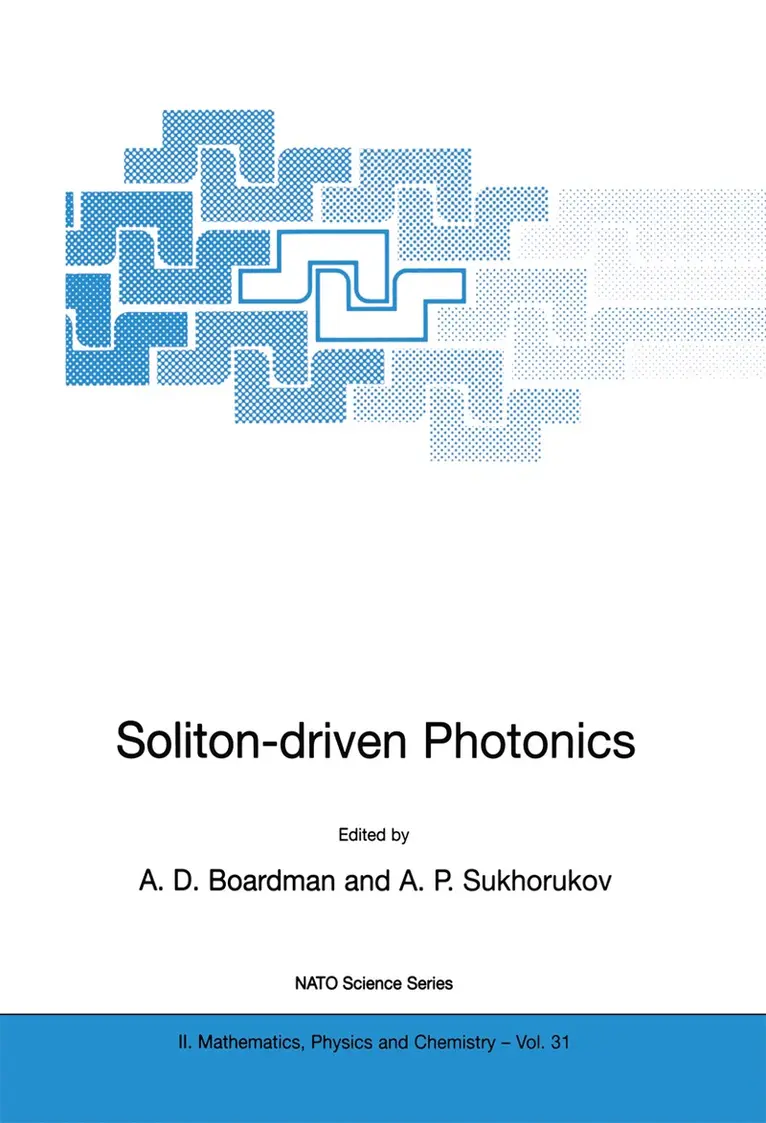
    Soliton-driven Photonics

    AvA.P. Sukhorukov,A.D. Boardman

    E-bok
    PDF, Engelska, 2012

    2 833 kr

    Läs direkt i Bokus Reader – eller ladda ned till din enhet (PDF kräver ofta zoom och scroll på små skärmar).

    Beskrivning

    It is ironic that the ideas ofNewton, which described a beam of light as a stream ofparticles made it difficult for him to explain things like thin film interference. Yet these particles, called ''photons'', have caused the adjective ''photonic'' to gain common usage, when referring to optical phenomena. The purist might argue that only when we are confronted by the particle nature of light should we use the word photonics. Equally, the argument goes on, only when we are face-to­ face with an integrable system, i. e. one that possesses an infinite number of conserved quantities, should we say soliton rather than solitary wave. Scientists and engineers are pragmatic, however, and they are happy to use the word ''soliton'' to describe what appears to be an excitation that is humped, multi­ humped, or localised long enough for some use to be made of it. The fact that such ''solitons'' may stick to each other (fuse) upon collision is often something to celebrate for an application, rather than just evidence that, after all, these are not really solitons, in the classic sense. ''Soliton'', therefore, is a widely used term with the qualification that we are constantly looking out for deviant behaviour that draws our attention to its solitary wave character. In the same spirit, ''photonics'' is a useful generic cover-all noun, even when ''electromagnetic theory'' or ''optics'' would suffice.

    Produktinformation

    • Utgivningsdatum:2012-12-06
    • Språk:Engelska
    • Filformat:PDF
    • Kopieringsskydd:LCP
    • ISBN:9789401006828
    • Förlag:Springer Netherlands

    Utforska kategorier

    • Fysik inom Naturvetenskap och teknik
    • Elektricitet och magnetism inom Naturvetenskap och teknik
    • Matematisk fysik inom Naturvetenskap och teknik