

Beneficial Co-Utilization of Agricultural, Municipal and Industrial by-Products
AvLee W. Jacobs,J. Scott Angle
E-bok
PDF, Engelska, 20121 427 kr
Läs direkt i Bokus Reader – eller ladda ned till din enhet (PDF kräver ofta zoom och scroll på små skärmar).
Beskrivning
Co-utilization or blending of residuals offers a unique opportunity to develop products with particular characteristics that are able to target specific customer needs. The very notion of deliberately blending by-products suggests that the recycling and beneficial reuse industries are taking a quantitative step forward towards developing products rather than simply reusing residuals. At the same time that this step provides unique opportunities, it also presents unique challenges. The science associated with the beneficial use of one product may not apply when that product is mixed with another residual. Blending of materials may alter the chemistry of the components of the mixture. This may offer additional benefits, as in the case of disease suppression in composts, or present unexpected problems, as the use of lime-stabilized biosolids has done in Maryland. This book consists of the proceedings of the Beltsville Symposium. The organizers of the Symposium attempted to structure a meeting that would outline both the potential benefits of co-utilization as well as concerns. The editors have divided the proceedings into sections that describe the practical basis for co-utilization of residuals as well as the potential benefits. Specific considerations are described. Finally, case studies include descriptions of successful operations and data that detail results of research involving co-utilization materials. Blending of materials for specific objectives needs to be the focus of any successful co-utilization effort. The scientific implications of the mix need to be determined before a product can be used properly.
Produktinformation
Utforska kategorier
Hoppa över listan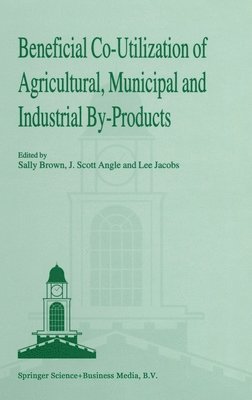




Du kanske också är intresserad av
Beneficial Co-utilization of Agricultural, Municipal and Industrial By-Products
Sally Brown, Sally L. Brown, J. Scott Angle, Lee W. Jacobs
Inbunden, 1998
1 211 kr
Beneficial Co-Utilization of Agricultural, Municipal and Industrial by-Products
Sally L. Brown, J. Scott Angle, Lee W. Jacobs
Häftad, 2012
1 102 kr
Del 12
Methods of Soil Analysis, Part 2
Peter J. Bottomley, J. Scott Angle, R. W. Weaver
Inbunden, 2014
1 011 kr
- 10% rabatt på allt
Del 3
- 10% rabatt på allt
Del 11
- Signerad!
Del 3
- -30%
- 10% rabatt på allt
- 10% rabatt på allt