• Fri frakt över 249 kr
  • •
  • Snabba leveranser
  • •
  • Billiga böcker
Kundservice

Du är på sajten för privatpersoner.

Företag, bibliotek eller offentlig verksamhet?

Du handlar på classic.bokus.com, där alla dina funktioner finns intakta.
Till classic.bokus.com
Bokus logotyp. Gå till startsidan.
  • Erbjudanden
  • Student
  • Topplistor
  • Barn & ungdom
  • Bokus Play
  • E-böcker
  • Ljudböcker
  • Pocketböcker
  • Spel & pussel

10% rabatt på allt med kod NYSTART10 →

Sidfot

Mina sidor

    Hjälp

    • Kundservice
    • Vanliga frågor och svar
    • Frakt och leverans
    • Retur vid ångerrätt
    • Reklamera vara
    • Betalning
    • Köpvillkor
    • Allmänna villkor
    • Information om webbplatsens tillgänglighet

    Om Bokus

    • Om oss
    • Pressrum
    • För studenter
    • För företag
    • För bibliotek och offentlig verksamhet
    • För leverantörer
    • Hållbarhet

    Populärt

    • Aktuella erbjudanden
    • Presentkort
    • Studentlitteratur
    • Nya böcker
    • Topplistor
    • Signerade böcker
    • Engelska böcker

    Inspiration

    • Boktips
    • BookTok
    • Populära bokserier
    • Barnbokskaraktärer
    • Populära författare
    Logotyp för Bokus
    Följ oss på Facebook (extern länk)Följ oss på Instagram (extern länk)Följ oss på YouTube (extern länk)Följ oss på TikTok (extern länk)
    bokus @ CookiesAnpassa cookiesIntegritetspolicyKöpvillkor
    Till Citymail hemsida (extern länk)Till Budbee hemsida (extern länk)Till Postnord hemsida (extern länk)Till Schenker hemsida (extern länk)Till Early Bird hemsida (extern länk)Till Walleys hemsida (extern länk)
    1. Samhälle och politik
    2. Samhälle och kultur
    3. Kultur och medier
    4. Medievetenskap

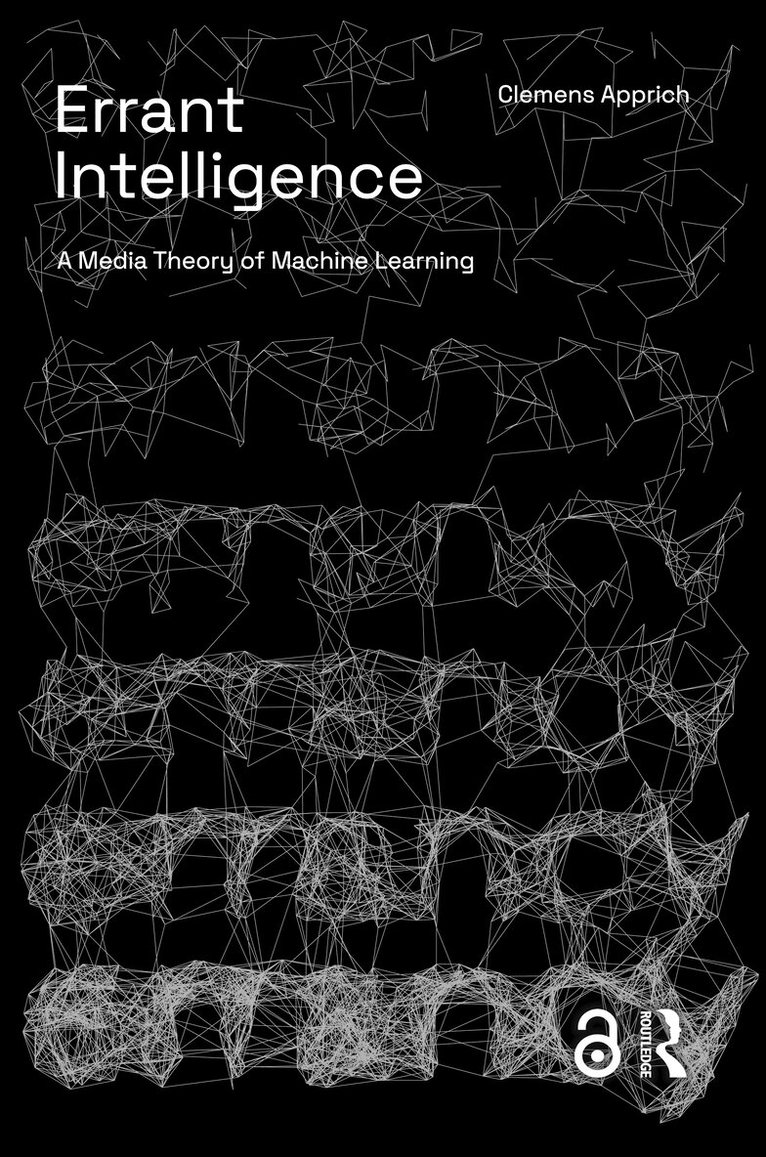
    Errant Intelligence

    A Media Theory of Machine Learning

    AvClemens Apprich

    Inbunden, Engelska, 2026

    Del i serien Recursions

    2 350 kr

    Beställningsvara. Skickas inom 10-15 vardagar. Fri frakt över 249 kr.

    Fler format och utgåvor

    Häftad

    579 kr

    Beskrivning

    Artificial intelligence is often framed as a quest to replicate the human brain, promising frictionless cognition and a future of seamless automation. But what if this pervasive narrative obscures a deeper, more “errant” truth?Errant Intelligence challenges the prevailing biological and individualistic interpretations of machine learning, arguing instead for a radical understanding of machine intelligence. The book embraces the deviations, inconsistencies, and “errant behaviour” as fundamental to the discovery of new knowledge, moving beyond the illusion of mere optimisation. Drawing on media theory, cybernetics, and a unique psychoanalytic lens, it explores the “technological unconscious” of machine learning. It traces the historical roots of AI, from early automatons and the Turing machine to natural language processing and contemporary machine learning systems. Challenging the idea of an autonomous, self-generating AI, the book exposes the hidden labour, assumed logics, and inherent biases that animate its operation. It re-evaluates computational thinking, insisting on its inherently social, collective, and symbolic character, and revealing how language and logical paradoxes are not obstacles but constitutive forces that shape intelligent machines.Errant Intelligence offers a vital new framework for understanding the profound co-evolution of human and machine learning. It’s time to “unlearn” our assumptions and embrace the productive ambiguity and fallibility at the core ofmachine intelligence.

    Produktinformation

    • Utgivningsdatum:2026-06-08
    • Mått:156 x 234 x 11 mm
    • Vikt:470 g
    • Format:Inbunden
    • Språk:Engelska
    • Serie:Recursions
    • Antal sidor:156
    • Förlag:Taylor & Francis Ltd
    • ISBN:9789463723077

    Utforska kategorier

    • Medievetenskap inom Samhälle och politik
    • Freudiansk psykologi inom Psykologi och pedagogik
    • Systemvetenskap och AI inom Data och IT

    Mer om författaren

    Clemens Apprich is Professor of Media Theory and History at the University of Applied Arts Vienna, Austria. His current research focuses on computational cultures, particularly machine learning. He is the author of Technotopia: A Media Genealogy of Net Cultures (2017) and co-author of Pattern Discrimination (2019).

    Innehållsförteckning

    • PrefaceIntroductionChapter One: Dancing with MachinesChapter Two: Talking to MachinesChapter Three: Dreaming of MachinesChapter Four: Learning from MachinesConclusionBibliographyIndex