• Fri frakt över 249 kr
  • •
  • Snabba leveranser
  • •
  • Billiga böcker
Kundservice

Du är på sajten för privatpersoner.

Företag, bibliotek eller offentlig verksamhet?

Du handlar på classic.bokus.com, där alla dina funktioner finns intakta.
Till classic.bokus.com
Bokus logotyp. Gå till startsidan.
  • Erbjudanden
  • Nyheter
  • Student
  • Topplistor
  • Barn & ungdom
  • Bokus Play
  • E-böcker
  • Pocketböcker
  • Spel & pussel

Må bättre, för mindre! Upp till 50% rabatt på hälsoböcker

Sidfot

Mina sidor

    Hjälp

    • Kundservice
    • Vanliga frågor och svar
    • Frakt och leverans
    • Retur vid ångerrätt
    • Reklamera vara
    • Betalning
    • Köpvillkor
    • Allmänna villkor
    • Information om webbplatsens tillgänglighet

    Om Bokus

    • Om oss
    • Pressrum
    • För studenter
    • För företag
    • För bibliotek och offentlig verksamhet
    • För leverantörer
    • Hållbarhet

    Populärt

    • Aktuella erbjudanden
    • Presentkort
    • Studentlitteratur
    • Nya böcker
    • Topplistor
    • Signerade böcker
    • Engelska böcker

    Inspiration

    • Boktips
    • BookTok
    • Populära bokserier
    • Barnbokskaraktärer
    • Populära författare
    Logotyp för Bokus
    Följ oss på Facebook (extern länk)Följ oss på Instagram (extern länk)Följ oss på YouTube (extern länk)Följ oss på TikTok (extern länk)
    bokus @ CookiesAnpassa cookiesIntegritetspolicyKöpvillkor
    Till Citymail hemsida (extern länk)Till Budbee hemsida (extern länk)Till Postnord hemsida (extern länk)Till Schenker hemsida (extern länk)Till Early Bird hemsida (extern länk)Till Walleys hemsida (extern länk)
    1. Samhälle och politik
    2. Politik och statsskick
    3. Centralt styre och förvaltning

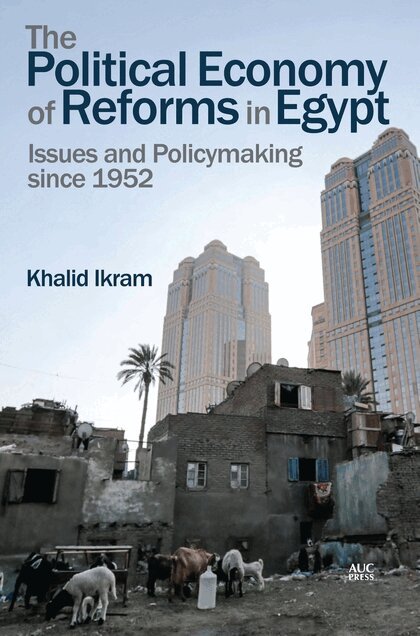
    The Political Economy of Reforms in Egypt

    Issues and Policymaking since 1952

    AvKhalid Ikram

    Inbunden, Engelska, 2018

    552 kr

    Beställningsvara. Skickas inom 5-8 vardagar. Fri frakt över 249 kr.

    Fler format och utgåvor

    Häftad

    366 kr

    Beskrivning

    What are the long-term structural features of the Egyptian economy? What are the factors that have facilitated or inhibited its performance? This crucial and timely work answers these questions and more by examining the most important economic decisions to have impacted the Egyptian economy since 1952 and the political factors behind them. Drawing on Khalid Ikram's extensive knowledge of economic policymaking at the highest levels, The Political Economy of Reforms in Egypt, 1952-2015 lays out the enduring features of the Egyptian economy and its performance since 1952 before presenting an account of policy-making, growth and structural change under the country's successive presidents to the present day. Topics covered include agrarian reforms; the Aswan High Dam; the move towards Arab socialism and a planned economy; the reversal of strategy and the infitah; fiscal, monetary, and exchange-rate policies; consumer subsidies; external debt crises; negotiations between Egypt and international donors and financial institutions; privatization; labor and employment; and poverty and income distribution.The analysis concludes with an examination of institutional reforms and development strategies to tackle the Egyptian economy's structural problems and lay the foundation for sustained and rapid growth. Written from the point of view of a 'participant-observer, ' this book will be indispensable to students of political economy, to scholars of Egypt and the Middle East, and to the general reader who wishes to understand, especially from the wealth of insider information provided, how domestic and international politics and economics can interact to shape decisions that promote, or prevent, economic reforms.

    Produktinformation

    • Utgivningsdatum:2018-04-03
    • Mått:150 x 230 x 30 mm
    • Vikt:738 g
    • Format:Inbunden
    • Språk:Engelska
    • Antal sidor:448
    • Förlag:The American University in Cairo Press
    • ISBN:9789774167942

    Utforska kategorier

    • Centralt styre och förvaltning inom Samhälle och politik
    • Internationell ekonomi inom Ekonomi och Ledarskap
    • Ekonomisk politik inom Ekonomi och Ledarskap

    Mer om författaren

    Khalid Ikram has been associated with Egypt's economic development for forty years, including as director of the World Bank's Egypt department. He has been a consultant to several institutions, including the World Bank, the Asian Development Bank, the Islamic Development Bank, USAID, OECD, UNDP and many other leading international and private institutions. He is the author of Egypt: Economic Management in a Period of Transition (1981) and The Egyptian Economy, 1952-2000: Performance, Policies, and Issues (2006).

    Recensioner i media

    "Written by someone who has had a ringside seat for decades, this fascinating volume is an important contribution not just to the economic history of Egypt, but to the political economy of aid and development, with a surprisingly frank perspective on the role of the Bretton Woods Institutions." Ehtisham Ahmad, University of Bonn and London School of Economics"This book is not only a major analytical contribution toward understanding the Egyptian political economy, but also provides a template for assessing policy challenges in other developing countries, particularly in the Middle East." Zubair Iqbal, Middle East Institute, Washington DC."This volume provides the cogent and deeply informed analysis that Egypt s development deserves but has rarely received. The Arab world s largest and most populous economy has consistently failed to realize its growth potential and Khalid Ikram explains why. A must read for all those with an interest in the political calculations that underlie the making and implementing of economic polices." Shahid Yusuf, George Washington University School of Business in Washington DC

    Innehållsförteckning

    • Introduction1. The Political Economy of Economic Reform2. Recurring Issues in Egypt's Political Economy3. Egypt's Economic Performance since 19524. Population: Dividend or Nightmare?5. Major Political Economy Issues in the Abdel Nasser Era, 1952-706. Major Political Economy Issues in the Sadat Era, 1970-817. Major Political Economy Issues in the Mubarak Era, 1981-20118. Post-Mubarak Issues9. The Present and the Future