• Fri frakt över 249 kr
  • •
  • Snabba leveranser
  • •
  • Billiga böcker
Kundservice

Du är på sajten för privatpersoner.

Företag, bibliotek eller offentlig verksamhet?

Du handlar på classic.bokus.com, där alla dina funktioner finns intakta.
Till classic.bokus.com
Bokus logotyp. Gå till startsidan.
  • Erbjudanden
  • Nyheter
  • Student
  • Topplistor
  • Barn & ungdom
  • Bokus Play
  • E-böcker
  • Pocketböcker
  • Spel & pussel

10% rabatt på allt med kod: NYSTART10 →

Sidfot

Mina sidor

    Hjälp

    • Kundservice
    • Vanliga frågor och svar
    • Frakt och leverans
    • Retur vid ångerrätt
    • Reklamera vara
    • Betalning
    • Köpvillkor
    • Allmänna villkor
    • Information om webbplatsens tillgänglighet

    Om Bokus

    • Om oss
    • Pressrum
    • För studenter
    • För företag
    • För bibliotek och offentlig verksamhet
    • För leverantörer
    • Hållbarhet

    Populärt

    • Aktuella erbjudanden
    • Presentkort
    • Studentlitteratur
    • Nya böcker
    • Topplistor
    • Signerade böcker
    • Engelska böcker

    Inspiration

    • Boktips
    • BookTok
    • Populära bokserier
    • Barnbokskaraktärer
    • Populära författare
    Logotyp för Bokus
    Följ oss på Facebook (extern länk)Följ oss på Instagram (extern länk)Följ oss på YouTube (extern länk)Följ oss på TikTok (extern länk)
    bokus @ CookiesAnpassa cookiesIntegritetspolicyKöpvillkor
    Till Citymail hemsida (extern länk)Till Budbee hemsida (extern länk)Till Postnord hemsida (extern länk)Till Schenker hemsida (extern länk)Till Early Bird hemsida (extern länk)Till Walleys hemsida (extern länk)
    1. Ekonomi och Ledarskap
    2. Nationalekonomi
    3. Mikroekonomi

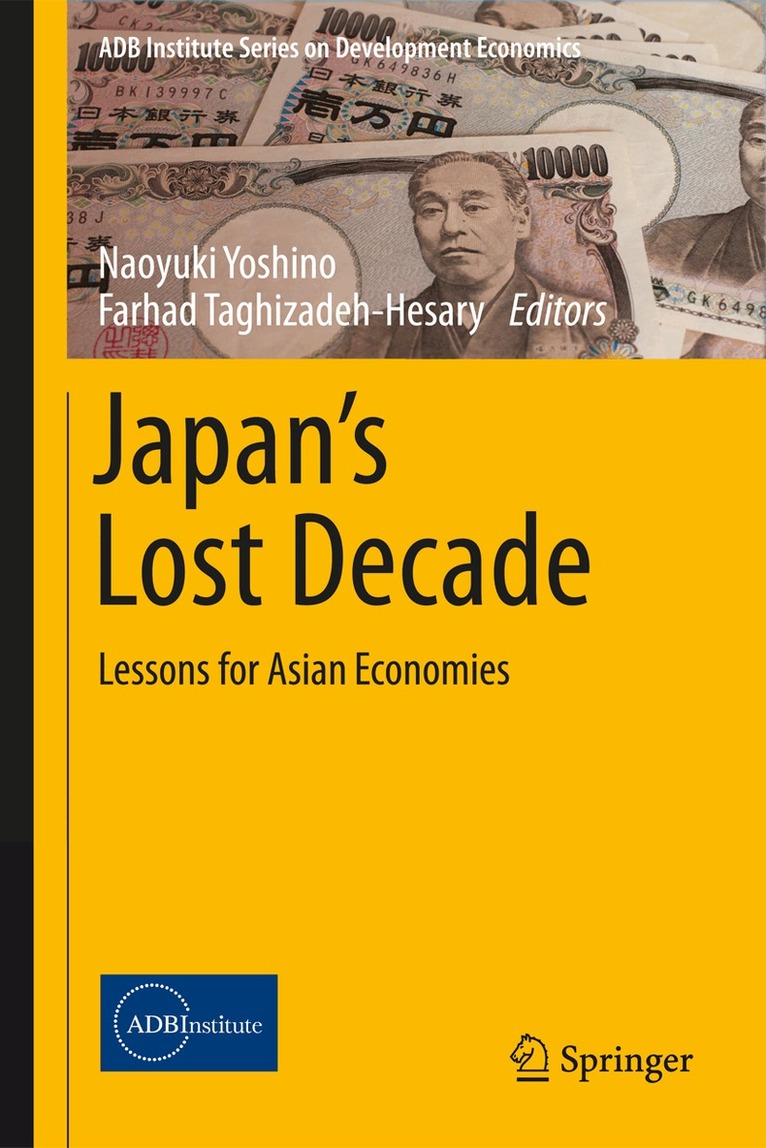
    Japan’s Lost Decade

    Lessons for Asian Economies

    AvNaoyuki Yoshino,Farhad Taghizadeh-Hesary

    Inbunden, Engelska, 2017

    Del i serien ADB Institute Series on Development Economics

    1 086 kr

    Beställningsvara. Skickas inom 10-15 vardagar. Fri frakt över 249 kr.

    Beskrivning

    This book discusses Japan’s long-term economic recession and provides remedies for that recession that are useful for other Asian economies. The book addresses why Japan’s economy has stagnated since the bursting of its economic bubble in the 1990s. Its empirical analysis challenges the beliefs of some economists, such as Paul Krugman, that the Japanese economy is caught in a liquidity trap. This book argues that Japan’s economic stagnation stems from a vertical “investment–saving” (IS) curve rather than a liquidity trap. The impact of fiscal policy has declined drastically, and the Japanese economy faces structural problems rather than a temporary downturn. These structural problems have many causes: an aging demographic (a problem that is frequently overlooked), an over-reliance by local governments on transfers from the central government, and Basel capital requirements that have made Japanese banks reluctant to lend money to start-up businesses and small and medium-sized enterprises. This latter issue has discouraged Japanese innovation and technological progress. All these issues are addressed empirically and theoretically, and several remedies for Japan’s long-lasting recession are provided. This volume will be of interest to researchers and policy makers not only in Japan but also the People’s Republic of China, many countries in the eurozone, and the United States, which may face similar challenges in the future.

    Produktinformation

    • Utgivningsdatum:2017-09-28
    • Mått:155 x 235 x 17 mm
    • Vikt:465 g
    • Format:Inbunden
    • Språk:Engelska
    • Serie:ADB Institute Series on Development Economics
    • Antal sidor:176
    • Upplaga:17001
    • Förlag:Springer Verlag, Singapore
    • ISBN:9789811050190

    Utforska kategorier

    • Mikroekonomi inom Ekonomi och Ledarskap
    • Makroekonomi inom Ekonomi och Ledarskap
    • Sociologi inom Samhälle och politik

    Innehållsförteckning

    • 1 Japan’s Lost Decade: Causes and Remedies (Naoyuki Yoshino and Farhad Taghizadeh-Hesary).- 2 Changes in Economic Effect of Infrastructure and Financing Methods: The Japanese Case (Masaki Nakahigashi and Naoyuki Yoshino).- 3 Optimal Fiscal Policy Rule for Achieving Fiscal Sustainability: A Japanese Case Study (Naoyuki Yoshino, Tetsuro Mizoguchi, and Farhad Taghizadeh-Hesary).- 4 Macroeconomic Volatility under High Accumulation of Government Debt: Lessons from Japan (Paul D. McNelis and Naoyuki Yoshino).- 5 Japan’s Postwar Monetary Policies: Taylor Rules or Something Else? (James R. Rhodes and Naoyuki Yoshino).- 6 Oil Price Fluctuations and Oil Consuming Sectors: An Empirical Analysis of Japan (Farhad Taghizadeh-Hesary, Naoyuki Yoshino, and Ehsan Rasolinezhad).- 7 Three Arrows of “Abenomics” and the Structural Reform of Japan (Naoyuki Yoshino and Farhad Taghizadeh-Hesary).- 8 The Effectiveness of Japan’s Negative Interest Rate Policy (Naoyuki Yoshino, Farhad Taghizadeh–Hesary, and Hiroaki Miyamoto). Index.