• Fri frakt över 249 kr
  • •
  • Snabba leveranser
  • •
  • Billiga böcker
Kundservice

Du är på sajten för privatpersoner.

Företag, bibliotek eller offentlig verksamhet?

Du handlar på classic.bokus.com, där alla dina funktioner finns intakta.
Till classic.bokus.com
Bokus logotyp. Gå till startsidan.
  • Erbjudanden
  • Nyheter
  • Student
  • Topplistor
  • Barn & ungdom
  • Bokus Play
  • E-böcker
  • Pocketböcker
  • Spel & pussel

10% rabatt på allt med kod: NYSTART10 →

Sidfot

Mina sidor

    Hjälp

    • Kundservice
    • Vanliga frågor och svar
    • Frakt och leverans
    • Retur vid ångerrätt
    • Reklamera vara
    • Betalning
    • Köpvillkor
    • Allmänna villkor
    • Information om webbplatsens tillgänglighet

    Om Bokus

    • Om oss
    • Pressrum
    • För studenter
    • För företag
    • För bibliotek och offentlig verksamhet
    • För leverantörer
    • Hållbarhet

    Populärt

    • Aktuella erbjudanden
    • Presentkort
    • Studentlitteratur
    • Nya böcker
    • Topplistor
    • Signerade böcker
    • Engelska böcker

    Inspiration

    • Boktips
    • BookTok
    • Populära bokserier
    • Barnbokskaraktärer
    • Populära författare
    Logotyp för Bokus
    Följ oss på Facebook (extern länk)Följ oss på Instagram (extern länk)Följ oss på YouTube (extern länk)Följ oss på TikTok (extern länk)
    bokus @ CookiesAnpassa cookiesIntegritetspolicyKöpvillkor
    Till Citymail hemsida (extern länk)Till Budbee hemsida (extern länk)Till Postnord hemsida (extern länk)Till Schenker hemsida (extern länk)Till Early Bird hemsida (extern länk)Till Walleys hemsida (extern länk)
    1. Kultur
    2. Arkitektur
    3. Arkitekturhistoria

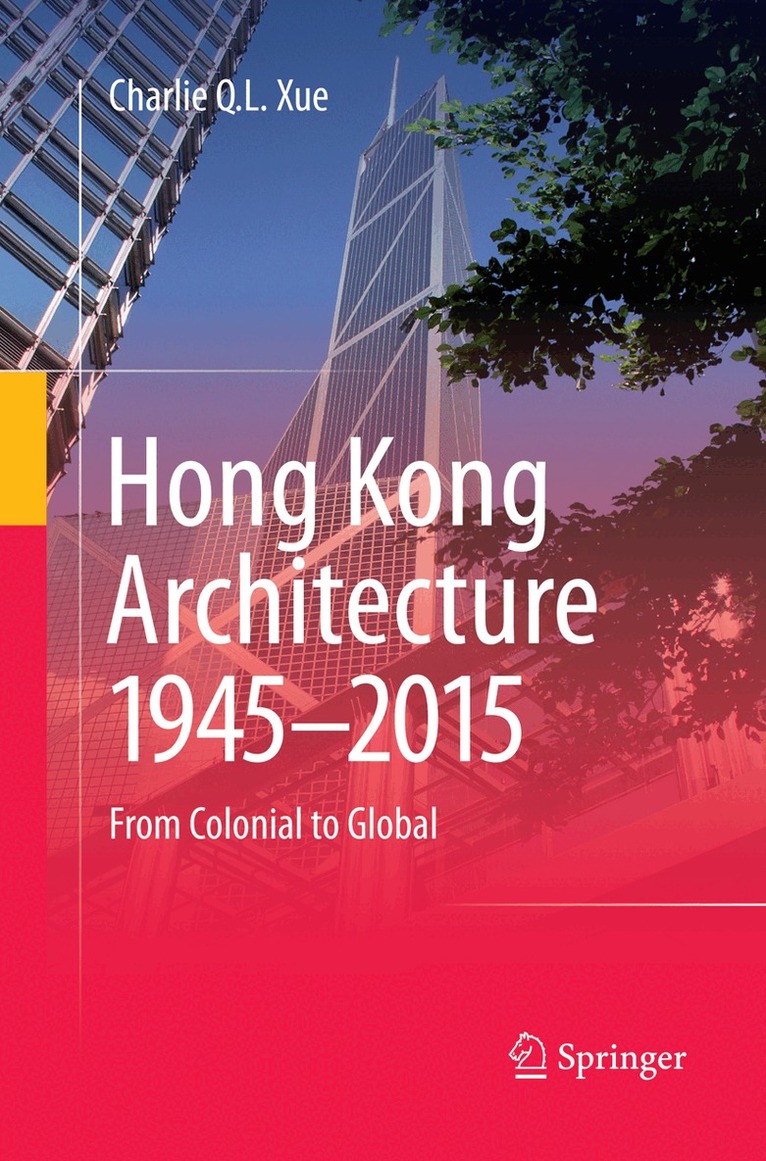
    Hong Kong Architecture 1945-2015

    From Colonial to Global

    AvCharlie Q. L. Xue

    Häftad, Engelska, 2018

    1 340 kr

    Beställningsvara. Skickas inom 10-15 vardagar. Fri frakt över 249 kr.

    Fler format och utgåvor

    Inbunden

    1 340 kr

    E-bok

    1 785 kr

    Beskrivning

    This book focuses on the transformation from colonial to global – the formation, mechanism, events, works and people related to urban architecture. The book reveals hardships the city encountered in the 1950s and the glamour enjoyed in the 1980s. It depicts the public and private developments, and especially the public housing which has sheltered millions of residents. The author identifies the architects practising in the formative years and the representatives of a rising generation after the 1980s. Suffering from land shortage and a dense environment, the urban development of Hong Kong has in the past 70 years met the changing demands of fluctuating economic activities and a rising population. Architecture on the island has been shaped by social demands, the economy and technology. The buildings have been forged by the government, clients, planners, architects, many contractors and end-users. The built environment nurtures our life and is visual evidence of the way the city hasdeveloped. Hong Kong is a key to East Asia in the Pacific Era. The book is a must-read for a thorough understanding the contemporary history and architecture of this oriental pearl.Endorsement:“Hong Kong sets an extreme example of hyper-density living. MTR’s Kowloon Station project offered my firm the unique opportunity to contribute to a new type of fully integrated three dimensional transport mega-structure, conceived as a well-connected place for people to live, work and play. Through Charlie Xue’s book, one can see how a compact city works and high density integrated development indicates a sustainable path for modern city making.” Sir Terry Farrell, CBE, Principal, Farrells"Well researched and refreshingly well structured, Charlie Xue's latest book comprehensively shows how Hong Kong's post-war urban architecture both tracks and symbolizes the former British colony's rise to success - a must read forarchitecture and culture buffs alike."Peter G. Rowe, Raymond Garbe Professor of Architecture and Urban Design, Harvard University Distinguished Service Professor.“An essential addition to the growing literature on Chinese architecture, the title of the book belies the full scope of Xue’s extensive history. Covering Hong Kong’s postwar transition from defeated colony to Pacific Age power house, Xue expertly traces the evolution of the city’s ambitious and innovative programs of integrated high density urban design and infrastructure, as well as changing architectural fashions. In a time when many Western governments have all but abandoned public housing programs, Xue’s book is a timely reminder of what can be achieved.” Professor Chris Abel, author of Architecture and Identity, Architecture, technology and process and The Extended Self.<

    Produktinformation

    • Utgivningsdatum:2018-06-07
    • Mått:155 x 235 x 20 mm
    • Vikt:557 g
    • Format:Häftad
    • Språk:Engelska
    • Antal sidor:337
    • Förlag:Springer Verlag, Singapore
    • ISBN:9789811093074

    Utforska kategorier

    • Arkitekturhistoria inom Kultur
    • Regional planering inom Naturvetenskap och teknik
    • Geografi inom Naturvetenskap och teknik

    Mer om författaren

    Dr. Charlie Q. L. Xue has held teaching appointments in architecture at Jiaotong University, Shanghai; University of Texas, USA and City University of Hong Kong. Dr. Xue has nine books published including Building Practice in China (1999, 2009), Building a Revolution: Chinese Architecture Since 1980 (2006, 2009) and World Architecture in China (2010. His research papers were published in the international refereed journals like Journal of Architecture, Journal of Architecture and Planning Research, Urban Design International, Journal of Urban Design, Habitat International, Cities. His works are widely read and cited internationally. Xue’s research focuses on architecture of the Greater China area and design strategies of high density environment.

    Innehållsförteckning

    • Part I   Government-led modernity.- Chapter 1:  Reconstruction and resettlement after the War.- Chapter 2:  Modernism coming to town – government low-cost housing and public buildings.- Chapter 3: Design forces and their strategies.- Chapter 4: Government control, building regulations and their implications.- Part II    Private forces command.- Chapter 5:  Serving the middle class – private housing and shopping mall.- Chapter 6:  Rail village and mega-structure.- Chapter 7:  Commercial to Global.- Chapter 8:  “Being Chinese in architecture” – growth of local architects.- Part III   Backward and forward vision.- Chapter 9:  Finding the roots and preserving our well-being.- Chapter 10:  Pursuing excellence – towards a civic architecture.