• Fri frakt över 249 kr
  • •
  • Snabba leveranser
  • •
  • Billiga böcker
Kundservice

Du är på sajten för privatpersoner.

Företag, bibliotek eller offentlig verksamhet?

Du handlar på classic.bokus.com, där alla dina funktioner finns intakta.
Till classic.bokus.com
Bokus logotyp. Gå till startsidan.
  • Erbjudanden
  • Nyheter
  • Student
  • Topplistor
  • Barn & ungdom
  • Bokus Play
  • E-böcker
  • Pocketböcker
  • Spel & pussel

Må bättre, för mindre! Upp till 50% rabatt på hälsoböcker

Sidfot

Mina sidor

    Hjälp

    • Kundservice
    • Vanliga frågor och svar
    • Frakt och leverans
    • Retur vid ångerrätt
    • Reklamera vara
    • Betalning
    • Köpvillkor
    • Allmänna villkor
    • Information om webbplatsens tillgänglighet

    Om Bokus

    • Om oss
    • Pressrum
    • För studenter
    • För företag
    • För bibliotek och offentlig verksamhet
    • För leverantörer
    • Hållbarhet

    Populärt

    • Aktuella erbjudanden
    • Presentkort
    • Studentlitteratur
    • Nya böcker
    • Topplistor
    • Signerade böcker
    • Engelska böcker

    Inspiration

    • Boktips
    • BookTok
    • Populära bokserier
    • Barnbokskaraktärer
    • Populära författare
    Logotyp för Bokus
    Följ oss på Facebook (extern länk)Följ oss på Instagram (extern länk)Följ oss på YouTube (extern länk)Följ oss på TikTok (extern länk)
    bokus @ CookiesAnpassa cookiesIntegritetspolicyKöpvillkor
    Till Citymail hemsida (extern länk)Till Budbee hemsida (extern länk)Till Postnord hemsida (extern länk)Till Schenker hemsida (extern länk)Till Early Bird hemsida (extern länk)Till Walleys hemsida (extern länk)
    1. Naturvetenskap och teknik
    2. Teknik och industri
    3. Biokemisk teknik

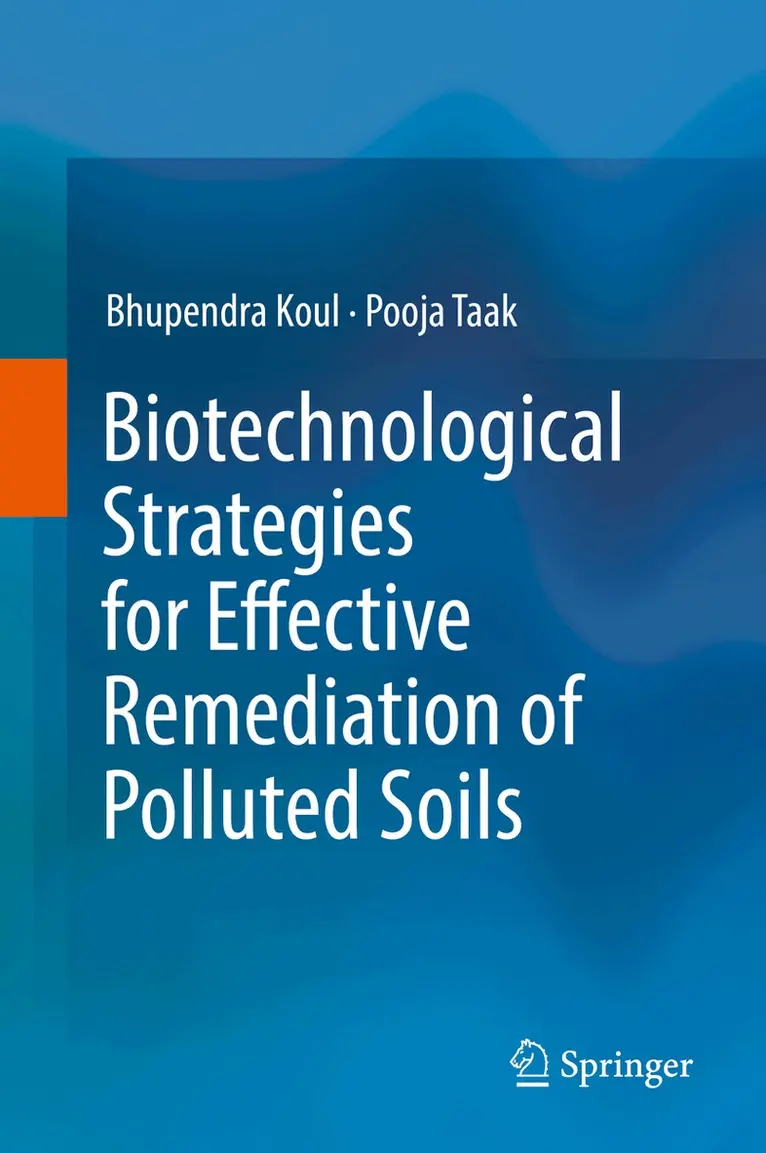
    Biotechnological Strategies for Effective Remediation of Polluted Soils

    AvBhupendra Koul,Pooja Taak

    Inbunden, Engelska, 2018

    1 626 kr

    Beställningsvara. Skickas inom 10-15 vardagar. Fri frakt över 249 kr.

    Beskrivning

    This book presents a comprehensive collection of various in situ and ex-situ soil remediation regimes that employ natural or genetically modified microbes, plants, and animals for the biodegradation of toxic compounds or hazardous waste into simpler non-toxic products. These techniques are demonstrated to be functionally effective in connection with physical, chemical, and biological strategies. Soil and water contamination through heavy metals, hydrocarbons and radioactive wastes is of global concern, as these factors have cumulative effects on the environment and human health through food-chain contamination. The book discusses the utilization of algae, plants, plant-associated bacteria, fungi (endophytic or rhizospheric) and certain lower animals for the sustainable bioremediation of organic and inorganic pollutants.  In addition, it explores a number of more recent techniques like biochar and biofilms for carbon sequestration, soil conditioning and remediation, and water remediation. It highlights a number of recent advances in nanobioremediation, an emerging technology based on biosynthetic nanoparticles. Lastly, it presents illustrative case studies and highlights the successful treatment of polluted soils by means of these strategies.

    Produktinformation

    • Utgivningsdatum:2018-11-13
    • Mått:155 x 235 x 20 mm
    • Vikt:559 g
    • Format:Inbunden
    • Språk:Engelska
    • Antal sidor:240
    • Förlag:Springer Verlag, Singapore
    • ISBN:9789811324192

    Utforska kategorier

    • Biokemisk teknik inom Naturvetenskap och teknik
    • Agronomi inom Naturvetenskap och teknik
    • Miljöteknik inom Naturvetenskap och teknik

    Mer om författaren

    Dr Bhupendra Koul is an Assistant Professor at the School of Bioengineering and Biosciences, Lovely Professional University (LPU), Punjab, India. He was awarded a CSIR Senior Research Fellowship in 2013. During his PhD at the Plant Transgenics Lab, CSIR-National Botanical Research Institute (CSIR-NBRI) in Lucknow, he worked on the optimization, introduction and expression of modified full-length and truncated versions of Bt-cry1Ab and 1Ac genes in the tomato to develop non-chimeric and stable transgenic lines resistant to two lepidopteran insects (Helicoverpa armigera and Spodoptera litura) and evaluated the performance of both the versions of cry1Ab and 1Ac genes regarding the stability and efficacy of insecticidal toxins in transgenic plants. He has evaluated the performance and role of different cis-motifs of artificial synthetic promoters for overexpression of genes in the tomato and performed comparative in silico analyses of various cry1A genes for toxicity to target insects. He has six years of research experience and four years of teaching experience, and received the 2016 Teacher Appreciation Award for Biotechnology & Biosciences at the LPU. He designed the full-length synthetic cry1Ac gene (NCBI submission accession No.: KP195020.1; GI:768678299) and has published 14 research papers in national and international journals including BMC Genomics, Plant Physiology and Biochemistry, Springer Plus; authored three book chapters for Springer Nature; and holds one patent (No. 3177DEL2010). Pooja Taak is currently pursuing her PhD at Lovely Professional University (LPU), Punjab, India under the guidance of Dr. Bhupendra Koul, and is an Assistant Professor at the LPU’s School of Bioengineering and Biosciences. She completed her specialization in Crop Genetics and Plant Breeding during her Master’s studies in Botany at Punjabi University Patiala; and her project training at the Biotechnology Division of the CSIR-IHBT, Palampur, India under the supervision of Dr. Kunal Singh. Presently, she is working on effective weed management strategies to enhance the yield of Stevia rebaudiana. She has also published her research findings in national and international journals.

    Innehållsförteckning

    • Module 1_Soil pollution: causes and consequences.- Module 2_Ex situ soil remediation strategies.- Module 3_In situ soil remediation strategies.- Module 4_Chemical methods.- Module 5_Biochar and soil remediation.- Module 6_Soil remediation through microbes.- Module 7_Soil remediation through algae, plants and animals.- Module 8_Nanobioremediation.- Module 9_Case studies and future prospects.