• Fri frakt över 249 kr
  • •
  • Snabba leveranser
  • •
  • Billiga böcker
Kundservice

Du är på sajten för privatpersoner.

Företag, bibliotek eller offentlig verksamhet?

Du handlar på classic.bokus.com, där alla dina funktioner finns intakta.
Till classic.bokus.com
Bokus logotyp. Gå till startsidan.
  • Erbjudanden
  • Nyheter
  • Student
  • Topplistor
  • Barn & ungdom
  • Bokus Play
  • E-böcker
  • Pocketböcker
  • Spel & pussel

10% rabatt på allt med kod: NYSTART10 →

Sidfot

Mina sidor

    Hjälp

    • Kundservice
    • Vanliga frågor och svar
    • Frakt och leverans
    • Retur vid ångerrätt
    • Reklamera vara
    • Betalning
    • Köpvillkor
    • Allmänna villkor
    • Information om webbplatsens tillgänglighet

    Om Bokus

    • Om oss
    • Pressrum
    • För studenter
    • För företag
    • För bibliotek och offentlig verksamhet
    • För leverantörer
    • Hållbarhet

    Populärt

    • Aktuella erbjudanden
    • Presentkort
    • Studentlitteratur
    • Nya böcker
    • Topplistor
    • Signerade böcker
    • Engelska böcker

    Inspiration

    • Boktips
    • BookTok
    • Populära bokserier
    • Barnbokskaraktärer
    • Populära författare
    Logotyp för Bokus
    Följ oss på Facebook (extern länk)Följ oss på Instagram (extern länk)Följ oss på YouTube (extern länk)Följ oss på TikTok (extern länk)
    bokus @ CookiesAnpassa cookiesIntegritetspolicyKöpvillkor
    Till Citymail hemsida (extern länk)Till Budbee hemsida (extern länk)Till Postnord hemsida (extern länk)Till Schenker hemsida (extern länk)Till Early Bird hemsida (extern länk)Till Walleys hemsida (extern länk)
    1. Samhälle och politik
    2. Politik och statsskick
    3. Centralt styre och förvaltning

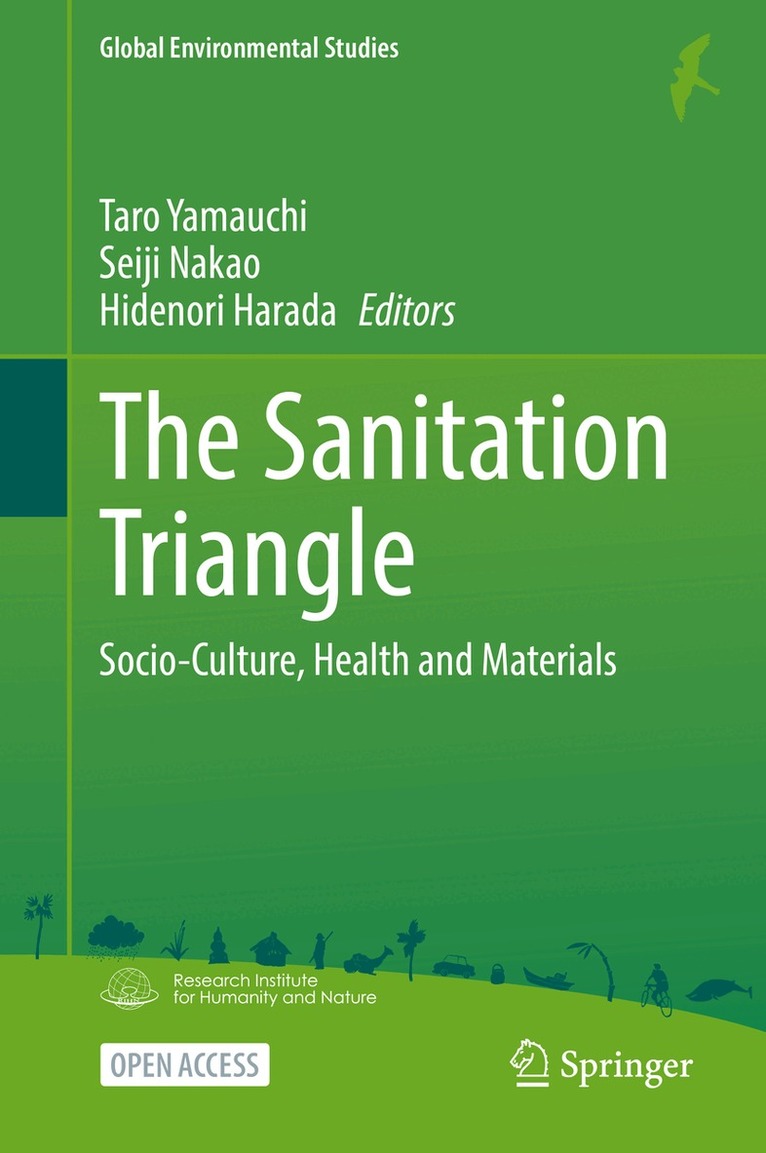
    Sanitation Triangle

    Socio-Culture, Health and Materials

    AvTaro Yamauchi,Seiji Nakao

    Inbunden, Engelska, 2022

    Del i serien Global Environmental Studies

    563 kr

    Beställningsvara. Skickas inom 10-15 vardagar. Fri frakt över 249 kr.

    Beskrivning

    This open access book deals with global sanitation, where SDG 6.2 sets a target of enabling access to sanitation services for all, but has not yet been achieved in low- and middle-income countries. The transition from the United Nations MDGs to the SDGs requires more consideration based on the socio-cultural aspects of global sanitation. In other words, equitable sanitation for those in vulnerable situations could be based on socio-cultural contexts. Sanitation is a system that comprises not only a latrine but also the works for the treatment and disposal of human waste. Sanitation systems do not function by themselves but have significance only through social management. The process of decision-making also largely depends on socio-cultural conditions, and the importance of sanitation needs to be socially acknowledged. The health benefits of sanitation improvement—among the significant contributions of sanitation—also need to be considered in the socio-cultural milieu. Further, the social-culture itself is affected, and potentially even created, by sanitation. In this context, more progress on the improvement of sanitation requires a more holistic approach across disciplines.In this book, we present the concept of the Sanitation Triangle, which considers the interconnections of health, materials, and socio-culture in sanitation, as a holistic approach, and the case studies based on the Sanitation Triangle by diverse disciplines such as Cultural Anthropology, Development Studies, Health Sciences, Engineering, and Science Communication. By the deep theoretical examinations and inter-dialogues between the different disciplines, this book explores the potentialities of inter-disciplinary studies on global sanitation.

    Produktinformation

    • Utgivningsdatum:2022-03-01
    • Mått:155 x 235 x 21 mm
    • Vikt:582 g
    • Format:Inbunden
    • Språk:Engelska
    • Serie:Global Environmental Studies
    • Antal sidor:264
    • Förlag:Springer Verlag, Singapore
    • ISBN:9789811677106

    Utforska kategorier

    • Centralt styre och förvaltning inom Samhälle och politik
    • Miljövetenskap och miljöpolitik inom Naturvetenskap och teknik
    • Sociologi inom Samhälle och politik

    Mer om författaren

    Prof. Taro Yamauchi is a professor at the Research Institute for Humanity and Nature, and the Faculty of Health Sciences, Hokkaido University. He has a B.S., a M.S. and a Ph.D. in Health Sciences from the University of Tokyo. He does intensive fieldwork in hunter-gatherer society, rural villages, and urban slums in developing countries to understand the lifestyle and health of local populations and adaptation to living environments. His research interests also include sanitation and participatory action research involving local children, youth and adults. He is Vice-President of the International Association of Physiological Anthropology (IAPA) and an executive member of the International Society for the Study of Human Growth and Clinical Auxology (ISGA).Dr. Seiji Nakao is an assistant professor at the Graduate School of Asian and African Area Studies, Kyoto University. He has an M.S. and Ph.D. in Anthropology at Nanzan University. He does fieldwork and archival work in the Francophone West African countries, especially Burkina Faso and Mali for the history of Islam, politics, and economy of Inland West Africa to grasp the modernity in terms of the longue durée. He also engages in interdisciplinary collaborations with engineering, architecture, contemporary art, and science communication, and makes up the auto-ethnographies on these collaborations which happen the (dis)communications between different disciplines from the point of Anthropology of Science and Technology. He is Deputy editor-in-chief of Sanitation Value Chain (SVC) and on the editorial boards of African Study Monographs (ASM).Dr. Hidenori Harada is an associate professor in the Graduate School of Asian and African Area Studies, Kyoto University, Japan. He received a doctoral and a master’s degree in global environmental studies from Kyoto University, and also a bachelor of engineering (environmental engineering) degreefrom Kyoto University. He specializes field-based research on water, sanitation, and hygiene for development. His research topics include septic tank and fecal sludge management, microbial exposure and diarrhea risk assessment, greenhouse gas emission from sanitation services, resources-oriented sanitation, and material flow analysis for low and middle-income countries. He currently serves on the board of directors of Nippon International Cooperation for Community Development (NICCO). He is also on the editorial boards of the journals Sanitation Value Chain (SVC) and African Study Monographs (ASM).

    Innehållsförteckning

    • Introduction.- Part ISocio-Culture.- Chapter 1: Socio-Cultural Aspects of Sanitation.- Chapter 2: Ideas and Practices for Restoring the Humanity of Sanitation Workers in India.- Chapter 3: Dissociation between National Policy and Local Communities in regard to Water Supply Management.- Chapter 4: Gender and Culture Matters: Considerations for Menstrual Hygiene Management.- Part II Health.- Chapter 5: Interactions between Health and Socio-Culture in Sanitation.- Chapter 6: Influence of Water, Sanitation, and Hygiene (WASH) on Children’s Health in an Urban Slum in Indonesia.- Chapter 7: Social Allocation of the Health Risks in Sanitation.- Chapter 8: Participatory Action Research for WASH by Children and Youth in Peri-Urban Communities.- Part III Materials.- Chapter 9: Interactions between Materials and Socio-Culture in Sanitation.- Chapter 10: Social Integration and Acceptance of Emerging Sanitation Infrastructure in Japan.- Chapter 11: Acceptability of Urine-Diversion Dry Toilets and Resource Values of Excreta in Rural Societies.- Chapter 12: Social Relationships and Material Flow in the Co-Creation of Sanitation Systems.- Conclusion.