• Fri frakt över 249 kr
  • •
  • Snabba leveranser
  • •
  • Billiga böcker
Kundservice

Du är på sajten för privatpersoner.

Företag, bibliotek eller offentlig verksamhet?

Du handlar på classic.bokus.com, där alla dina funktioner finns intakta.
Till classic.bokus.com
Bokus logotyp. Gå till startsidan.
  • Erbjudanden
  • Nyheter
  • Student
  • Topplistor
  • Barn & ungdom
  • Bokus Play
  • E-böcker
  • Pocketböcker
  • Spel & pussel

Må bättre, för mindre! Upp till 50% rabatt på hälsoböcker

Sidfot

Mina sidor

    Hjälp

    • Kundservice
    • Vanliga frågor och svar
    • Frakt och leverans
    • Retur vid ångerrätt
    • Reklamera vara
    • Betalning
    • Köpvillkor
    • Allmänna villkor
    • Information om webbplatsens tillgänglighet

    Om Bokus

    • Om oss
    • Pressrum
    • För studenter
    • För företag
    • För bibliotek och offentlig verksamhet
    • För leverantörer
    • Hållbarhet

    Populärt

    • Aktuella erbjudanden
    • Presentkort
    • Studentlitteratur
    • Nya böcker
    • Topplistor
    • Signerade böcker
    • Engelska böcker

    Inspiration

    • Boktips
    • BookTok
    • Populära bokserier
    • Barnbokskaraktärer
    • Populära författare
    Logotyp för Bokus
    Följ oss på Facebook (extern länk)Följ oss på Instagram (extern länk)Följ oss på YouTube (extern länk)Följ oss på TikTok (extern länk)
    bokus @ CookiesAnpassa cookiesIntegritetspolicyKöpvillkor
    Till Citymail hemsida (extern länk)Till Budbee hemsida (extern länk)Till Postnord hemsida (extern länk)Till Schenker hemsida (extern länk)Till Early Bird hemsida (extern länk)Till Walleys hemsida (extern länk)
    1. Psykologi och pedagogik
    2. Pedagogik
    3. Högskola och universitet

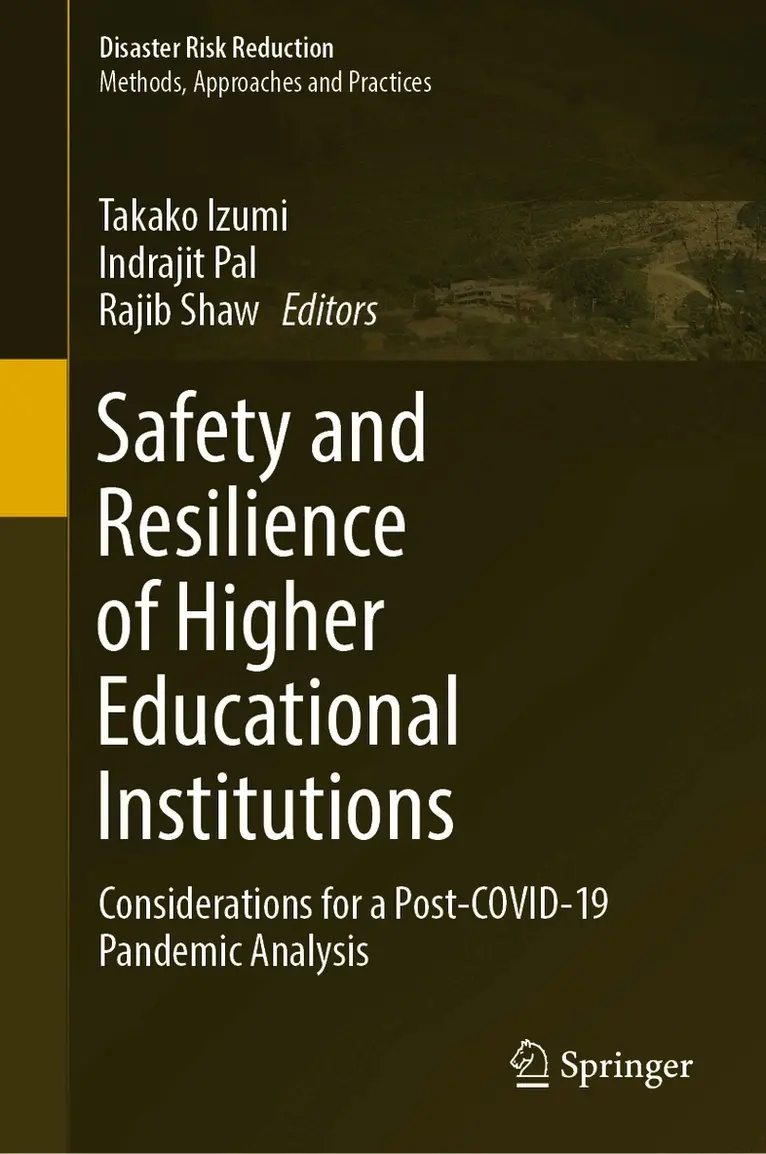
    Safety and Resilience of Higher Educational Institutions

    Considerations for a Post-COVID-19 Pandemic Analysis

    AvTakako Izumi,Indrajit Pal

    Inbunden, Engelska, 2022

    Del i serien Disaster Risk Reduction

    1 518 kr

    Beställningsvara. Skickas inom 10-15 vardagar. Fri frakt över 249 kr.

    Beskrivning

    The world has spent the majority of 2020 enduring an unpreceded crisis caused by the COVID-19 pandemic. The impact of this crisis has been enormous, and the situation has yet to be resolved. It is still difficult to anticipate when the pandemic will end and how our lives will have changed after the crisis.Higher educational institutions (HEIs) have also had to undergo tremendous transformation, in particular, changing a conventional educational, teaching, and learning system to a digital and online mode and cancelling or postponing important events such as graduation and entrance ceremonies and entrance examinations. In addition, a number of HEIs have been facing financial constraints due to reduced enrolment, particularly from overseas. Students have missed opportunities to meet their family and friends, causing profound psychosocial impact and stress for all concerned.Simultaneously, however, the situation has given HEIs a good opportunity to consider their disaster preparedness, response, and recovery capacity on campus. Some surveys have highlighted a lack of preparedness for pandemic and other hazardous risks beyond natural hazards. Safety issues are a top priority at HEIs because they bring together a number of students, faculty, and staff.This book covers the experiences and lessons learned from HEIs in preparedness, response, and recovery during the COVID-19 pandemic to prepare for such calamities beyond natural disasters in the future. The book consists of 15 chapters divided into three major sections. They highlight the importance of HEIs’ governance issues in disaster risk management, examine the challenges that HEIs have faced during the pandemic and the implementation of new teaching and learning methodologies, and provide innovative responses and preparedness by HEIs based on science and technology, respectively.

    Produktinformation

    • Utgivningsdatum:2022-06-22
    • Mått:155 x 235 x 21 mm
    • Vikt:576 g
    • Format:Inbunden
    • Språk:Engelska
    • Serie:Disaster Risk Reduction
    • Antal sidor:264
    • Förlag:Springer Verlag, Singapore
    • ISBN:9789811911927

    Utforska kategorier

    • Högskola och universitet inom Psykologi och pedagogik
    • Miljövetenskap och miljöpolitik inom Naturvetenskap och teknik
    • Byggnadsteknik inom Naturvetenskap och teknik

    Mer om författaren

    Takako Izumi is an associate professor at the International Research Institute of Disaster Science (IRIDeS), Tohoku University, Japan, a position she has held since 2013. She teaches and supervises graduate students in Graduate School of International Cultural Studies/ Graduate Program in Global Governance and Sustainable Development, Tohoku University. She also serves as a program director of the Multi-Hazards Program under the Association of Pacific Rim Universities (APRU), which comprises more than 60 universities and academic institutes in the Pacific Rim. Her research interests include international and regional frameworks and strategies for disaster risk reduction (DRR), international humanitarian assistance, and DRR initiatives at the local and community levels. Prior to this work, she acquired more than 15 years of experience with an international NGO and United Nations (UN) agencies including UN-Habitat, the UN Office for Coordination of Humanitarian Affairs (UNOCHA), the UN International Strategy for Disaster Risk Reduction (UNISDR - current UNDRR), and others for disaster risk reduction, response,recovery, and development especially in Asia. Since May 2015, she has been a member of the UN Office for Disaster Risk Reduction (UNDRR) Asian-Pacific Science Technology Academia Advisory Group (APSTAAG) to support the effort of governments and stakeholders in the implementation of the Sendai Framework for DRR. She received a Ph.D. in global environmental study from Kyoto University, Japan.Indrajit Pal is an associate professor and the chair in the Disaster Preparedness, Mitigation and Management (DPMM) academic program in the Asian Institute of Technology (AIT), Thailand. Dr. Pal. is Deputy Director of the Research Center "South- and South East Asia Multi-disciplinary Applied Research Network on Transforming Societies of Global South (SMARTS)" in AIT. He has more than 18 years of experience in research, teaching, training, advocacy, andconsultancy primarily focused on disaster risk governance, incident command systems, hazard and risk assessment, community-based disaster risk management, public health risk, disaster resilience, and DRR Education. Dr. Pal served as a faculty member at the Centre for Disaster Management at the Lal Bahadur Shastri National Academy of Administration, Mussoorie, India (a premier national institute for training Indian administrative services officers). He is a member of the Board of Directors of the Global Alliance of Disaster Research Institutes (GADRI), Japan, and also a visiting professor of disaster risk management at the Philippines School of Business Administration (PSBA, Manila). He is supervising a number of doctoral and masters degree researchers across Asia and Africa in the field of disaster risk management and governance. Dr. Pal has published 12 books and over 100 academic papers and book chapters. Some of his ongoing research includes disaster resilience and sustainable development education in Asia, risk characterization in Asian Delta communities in the "Living Deltas HUB" of the UK Research and Innovation–Global Challenges Research Fund (UKRI-GCRF) project.Rajib Shaw is a professor in the Graduate School of Media and Governance in Keio University, Japan. He is also a senior fellow of the Institute of Global Environmental Strategies (IGES) Japan, and the chairperson of the Sustainable Environment and Ecological Development Society (SEEDS) Asia and the Church World Service (CWS) Japan, two Japanese NGOs. He is a co-founder of a Delhi (India)-based social entrepreneur startup, the Resilience Innovation Knowledge Academy (RIKA). Earlier, he was the executive director of the Integrated Research on Disaster Risk (IRDR) and was a professor in Kyoto University. His expertise includes disaster governance, community-based disaster risk management, climate change adaptation, urban risk management, and disaster and environmental education. Professor Shaw was the chair of the United Nations Science Technology Advisory Group (STAG) for disaster risk reduction and currently is the co-chair of the Asia Pacific Science Technology Academic Advisory Group (APSTAAG). He is also the coordinating lead author (CLA) for the Asia chapter’s 6th Assessment Report of the Intergovernmental Panel on Climate Change (IPCC).  He is the editor-in-chief of the journal Progress in Disaster Science and series editor of a Springer book series on disaster risk reduction. Prof. Shaw has published 56 books and over 400 academic papers and book chapters.

    Innehållsförteckning

    • Overview and Introduction to the Role of Higher Educational Institution in Disaster Risk Management.- Post-pandemic Management in Higher Educational Institutions.- New Perspectives of Campus Safety Initiatives in Universities.- Regional Overview of Lessons from the Asia-Pacific Regions.- Regional Overview of Lessons from Africa: the Impact on the Awareness of the Sector’s Resilience.- Disaster Risk Governance in the midst of the COVID-19 Pandemic in Central America: the Case of Guatemala.- Looking Ahead While Leaving No One Behind: Resourcefulness and Resiliency among North American Universities.- University Networking in Improvising Academic Resilience to the COVID-19 Pandemic: Experiences from Bangladesh.- New Role of Universities: Experiences from Taiwan.- Vigorous, Vital, Vulnerable: Universities and COVID-19, Aotearoa New Zealand.- Applying New Technologies and Innovation in Taiwan.- Applying New Technologies and Innovation in Hong Kong: Teaching Health Emergency and Disaster Risk Management (Health-EDRM) Using Massive Open Online Course to Enhance Resilience in Higher Educational Institutions.- Scope of Civil Society and University Partnership in Enhancing Resilience.- Private Sector and Higher Education Institution Partnerships to Enhance Resilience in the Philippines: The Experience of the National Resilience Council.- Impacts, opportunities and potentials in HEIs: During and Post Pandemic Perspectives.