Häftad, Engelska, 2024
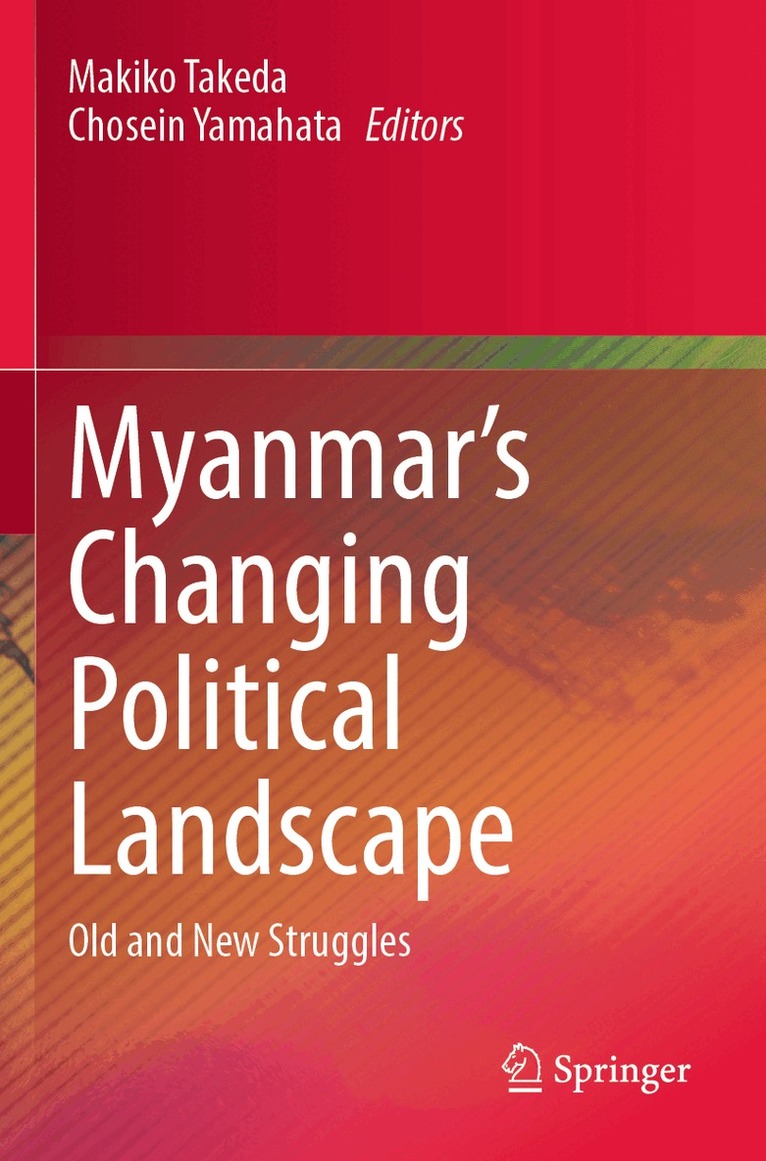
Myanmar’s Changing Political Landscape
Av Makiko Takeda, Chosein Yamahata
1641 kr
Beställningsvara. Skickas inom 10-15 vardagar. Fri frakt över 249 kr.
Beskrivning
Myanmar has faced numerous divisions that hinder its democratization and peacebuilding processes since emerging out of decades of military dictatorship. The coup d’état in 2021 terminated Myanmar’s limited and nascent democratization under the civilian leadership of the National League for Democracy (NLD); not only did the coup regime resurface old struggles, but also created new ones. Against the backdrop of Myanmar’s changing political landscapes from military to quasi-civilian to civilian rule in 2016, and back to military rule in 2021, the book discusses the various forms of interconnected struggles, both old and new. In this process, the contributed chapters come together to highlight the changing dynamics of stakeholders, relations between agents and beneficiaries, and the generated evolutionary processes in Myanmar’s democratization and its reversal. This book brings an even mix of researchers both within and outside of Myanmar to critically discuss how different agents and their interactions, in the form of center-periphery as well as state-non-state relations, continuously shape today’s political landscape. Its interdisciplinary composition also invites readers from various backgrounds to grasp with engaged research that identifies the various challenges and addresses ways in which to facilitate change from local and international perspectives.
Produktinformation
- Utgivningsdatum: 2024-04-07
- Mått: 155 x 235 x 16 mm
- Vikt: 423 g
- Format: Häftad
- Språk: Engelska
- Antal sidor: 259
- Förlag: Springer Verlag, Singapore
- ISBN: 9789811993596
Utforska kategorier
Betyg & recensioner
0 recensioner
Inga recensioner tillgängliga.