• Fri frakt över 249 kr
  • •
  • Snabba leveranser
  • •
  • Billiga böcker
Kundservice

Du är på sajten för privatpersoner.

Företag, bibliotek eller offentlig verksamhet?

Du handlar på classic.bokus.com, där alla dina funktioner finns intakta.
Till classic.bokus.com
Bokus logotyp. Gå till startsidan.
  • Erbjudanden
  • Nyheter
  • Student
  • Topplistor
  • Barn & ungdom
  • Bokus Play
  • E-böcker
  • Pocketböcker
  • Spel & pussel

10% rabatt på allt med kod NYSTART10 →

Sidfot

Mina sidor

    Hjälp

    • Kundservice
    • Vanliga frågor och svar
    • Frakt och leverans
    • Retur vid ångerrätt
    • Reklamera vara
    • Betalning
    • Köpvillkor
    • Allmänna villkor
    • Information om webbplatsens tillgänglighet

    Om Bokus

    • Om oss
    • Pressrum
    • För studenter
    • För företag
    • För bibliotek och offentlig verksamhet
    • För leverantörer
    • Hållbarhet

    Populärt

    • Aktuella erbjudanden
    • Presentkort
    • Studentlitteratur
    • Nya böcker
    • Topplistor
    • Signerade böcker
    • Engelska böcker

    Inspiration

    • Boktips
    • BookTok
    • Populära bokserier
    • Barnbokskaraktärer
    • Populära författare
    Logotyp för Bokus
    Följ oss på Facebook (extern länk)Följ oss på Instagram (extern länk)Följ oss på YouTube (extern länk)Följ oss på TikTok (extern länk)
    bokus @ CookiesAnpassa cookiesIntegritetspolicyKöpvillkor
    Till Citymail hemsida (extern länk)Till Budbee hemsida (extern länk)Till Postnord hemsida (extern länk)Till Schenker hemsida (extern länk)Till Early Bird hemsida (extern länk)Till Walleys hemsida (extern länk)
    1. Naturvetenskap och teknik
    2. Teknik och industri
    3. Elektronik och kommunikationer

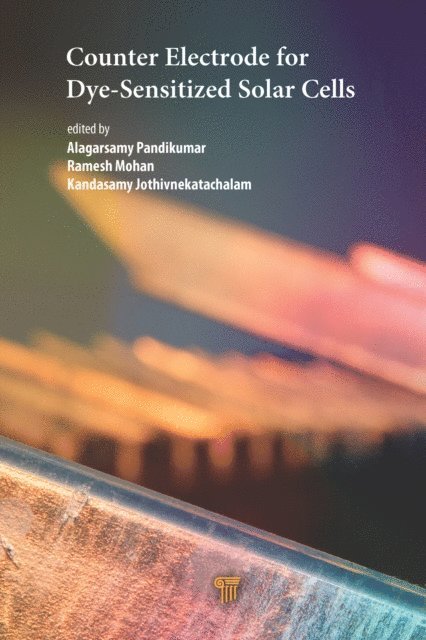
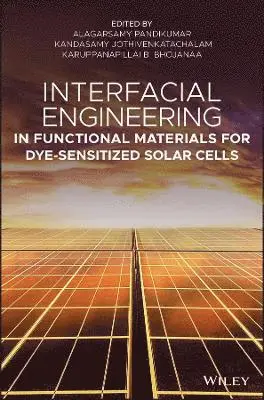
    Counter Electrode for Dye‐Sensitized Solar Cells

    AvAlagarsamy Pandikumar,Kandasamy Jothivnekatachalam

    Inbunden, Engelska, 2021

    1 637 kr

    Beställningsvara. Skickas inom 10-15 vardagar. Fri frakt över 249 kr.

    Beskrivning

    Renewable energies have become an attractive option to overcome the energy demands in sustainable and affordable ways. It has been estimated that one-third of the total renewable energies would be generated from photovoltaics (PVs). A solar or PV cell is a device that directly converts sunlight into electricity by taking benefit of the photoelectric effect. In the third-generation solar PVs, dye-sensitized solar cells (DSSCs) are believed to be the most promising and have attracted wide attention. The optimization of a DSSC is focused on four main components: (i) metal oxide semiconductor, (ii) photosensitizer, (iii) redox couple electrolyte, and (iv) counter electrode. Among these, the counter electrode undertakes three functions: (i) as a catalyst, (ii) as a positive electrode of primary cells, and (iii) as a mirror. To obey these functions, the electrode material should have high catalytic activity, high conductivity, high reflectivity, high surface area, and electrochemical and mechanical stability. To improve the performance of DSSCs, many scientists have developed new counter electrodes made of platinum, carbon materials, transition metals, conductive polymers, and composites. This book converses the various aspects of materials for the fabrication of counter electrodes especially for the DSSCs.

    Produktinformation

    • Utgivningsdatum:2021-06-25
    • Mått:152 x 229 x 22 mm
    • Vikt:660 g
    • Format:Inbunden
    • Språk:Engelska
    • Antal sidor:266
    • Förlag:Jenny Stanford Publishing
    • ISBN:9789814877381

    Utforska kategorier

    • Elektronik och kommunikationer inom Naturvetenskap och teknik
    • Fysikalisk kemi inom Naturvetenskap och teknik
    • Maskinteknik och material inom Naturvetenskap och teknik

    Mer om författaren

    Alagarsamy Pandikumar is a scientist at the Organic and Materials Electrochemistry Division of the CSIR-Central Electrochemical Research Institute, Karaikudi, Tamil Nadu, India. He obtained his PhD in chemistry (2014) from the Madurai Kamaraj University, India, and completed his postdoctoral fellowship (2014–2016) from the University of Malaya, Malaysia, under its High Impact Research grant. He then joined the Functional Materials Division of the CSIR-Central Electrochemical Research Institute. His current research involves development of novel materials with graphene and graphitic carbon nitride, in combination with metals, metal oxides, polymers, and carbon nanotubes, for photocatalysis, photoelectrocatalysis, dye-sensitized solar cells, and electrochemical sensor applications.Ramesh Mohan is a scientist at the CSIR-Central Electronics Engineering Research Institute, Pilani, India. He received his master’s degree in materials science (2007) as well as in engineering and polymer science and technology (2009) from Pondicherry University, India, and Anna University, India, respectively. He obtained his PhD in materials science and technology (2013) from the National Chiao Tung University, Taiwan. He was an INSPIRE Faculty-DST in the Functional Materials Division of the CSIR-Central Electrochemical Research Institute from 2016 to 2020. His research interests include organic electronics, dye-sensitized solar cells, organic–inorganic hybrid materials, and supercapacitors.Kandasamy Jothivnekatachalam is a professor and head of the Department of Chemistry, Anna University, BIT campus, Tiruchirappalli, India. He obtained his PhD in chemistry from the University of Madras, Chennai, India. His current research focuses on photocatalysis for energy and environmental applications and his other research interests are functional materials, photocatalysis, photoelectrochemistry, photoelectrocatalysis, and dye-sensitized solar cells.

    Innehållsförteckning

    • 1. Functions of Counter Electrode and Its Characterizations  2. Metal Oxides as Counter Electrode Materials3. Transition Metal Carbides as Counter Electrode Materials 4. Transition Metal Nitrides as Counter Electrode Materials 5. Transition Metal Sulphides as Counter Electrode Materials  6. Chalcogenides as Counter Electrode Materials  7. Carbon Nanotubes and Their Composites as Counter Electrode Materials  8. Carbon Nanofibers and Their Composites as Counter Electrode Materials  9. Quantum Dots as Counter Electrode Materials