• Fri frakt över 249 kr
  • •
  • Snabba leveranser
  • •
  • Billiga böcker
Kundservice

Du är på sajten för privatpersoner.

Företag, bibliotek eller offentlig verksamhet?

Du handlar på classic.bokus.com, där alla dina funktioner finns intakta.
Till classic.bokus.com
Bokus logotyp. Gå till startsidan.
  • Erbjudanden
  • Nyheter
  • Student
  • Topplistor
  • Barn & ungdom
  • Bokus Play
  • E-böcker
  • Pocketböcker
  • Spel & pussel

10% rabatt på allt med kod NYSTART10 →

Sidfot

Mina sidor

    Hjälp

    • Kundservice
    • Vanliga frågor och svar
    • Frakt och leverans
    • Retur vid ångerrätt
    • Reklamera vara
    • Betalning
    • Köpvillkor
    • Allmänna villkor
    • Information om webbplatsens tillgänglighet

    Om Bokus

    • Om oss
    • Pressrum
    • För studenter
    • För företag
    • För bibliotek och offentlig verksamhet
    • För leverantörer
    • Hållbarhet

    Populärt

    • Aktuella erbjudanden
    • Presentkort
    • Studentlitteratur
    • Nya böcker
    • Topplistor
    • Signerade böcker
    • Engelska böcker

    Inspiration

    • Boktips
    • BookTok
    • Populära bokserier
    • Barnbokskaraktärer
    • Populära författare
    Logotyp för Bokus
    Följ oss på Facebook (extern länk)Följ oss på Instagram (extern länk)Följ oss på YouTube (extern länk)Följ oss på TikTok (extern länk)
    bokus @ CookiesAnpassa cookiesIntegritetspolicyKöpvillkor
    Till Citymail hemsida (extern länk)Till Budbee hemsida (extern länk)Till Postnord hemsida (extern länk)Till Schenker hemsida (extern länk)Till Early Bird hemsida (extern länk)Till Walleys hemsida (extern länk)
    1. Djur och Natur
    2. Naturböcker
    3. Växtböcker

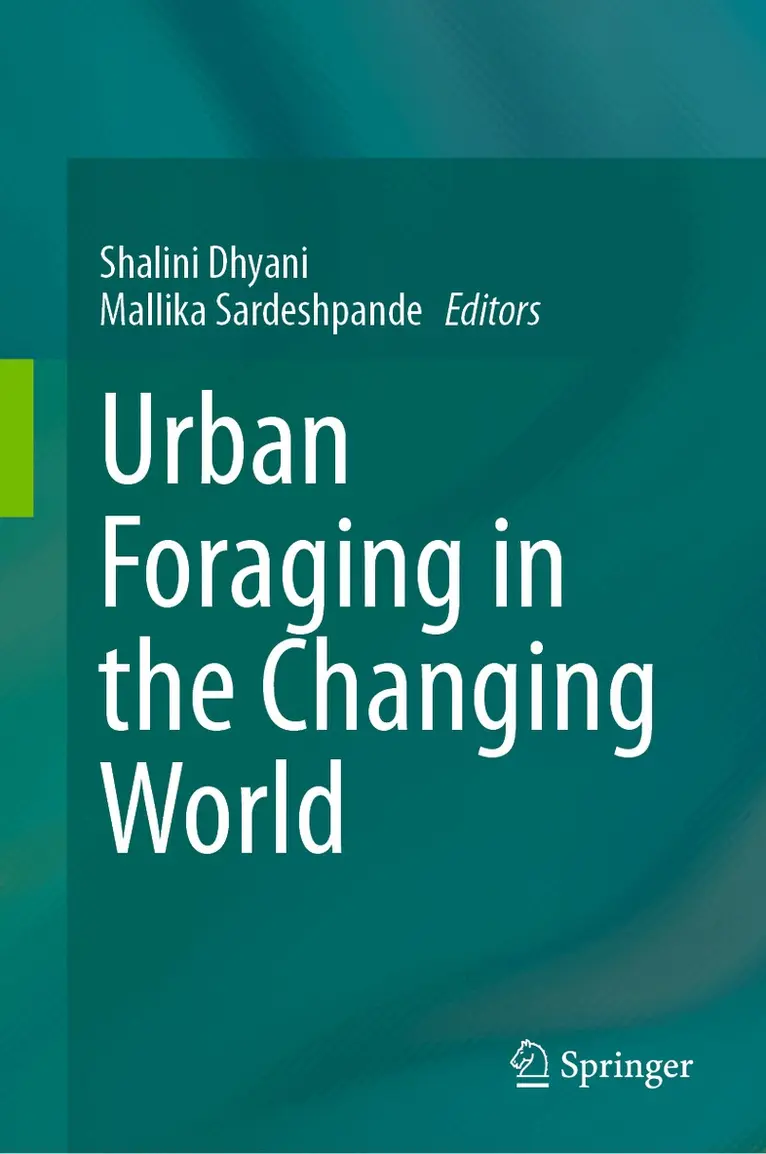
    Urban Foraging in the Changing World

    AvShalini Dhyani,Mallika Sardeshpande

    Inbunden, Engelska, 2024

    2 378 kr

    Beställningsvara. Skickas inom 10-15 vardagar. Fri frakt över 249 kr.

    Beskrivning

    This volume brings together theoretical, experiential, and creative perspectives on the phenomenon of urban foraging. In a rapidly urbanising world, foraging is (re)raining popularity as a way to connect with nature and cope with uncertainty. Authors from various disciplines and geographies make sense of what this means for humanity.Urban foraging represents a multifaceted movement that provides people with avenues for sustenance, socialising, and spirituality. Motivations and implications of urban foraging vary across the socioeconomic spectrum, as do barriers and enablers. Urban foraging can help people adapt to change, and build resilience to shocks, but its spontaneous and unregulated nature makes it attractive to many. Recognising and promoting sustainable urban foraging therefore is a delicate balancing act. This collection discusses the philosophical and practical considerations towards this aim.The book is of interest to researchers, practitioners, entrepreneurs, and creatives, inviting readers to envisage scenarios that are desirable and achievable. It is of special interest to those working in urban and landscape planning, social-ecological systems, non-government organisations, municipal and development corporations, and the environment.

    Produktinformation

    • Utgivningsdatum:2024-06-29
    • Mått:155 x 235 x 30 mm
    • Vikt:832 g
    • Format:Inbunden
    • Språk:Engelska
    • Antal sidor:426
    • Upplaga:2024
    • Förlag:Springer Verlag, Singapore
    • ISBN:9789819703449

    Utforska kategorier

    • Växtböcker inom Djur och Natur
    • Miljövetenskap och miljöpolitik inom Naturvetenskap och teknik
    • Biovetenskap inom Naturvetenskap och teknik

    Mer om författaren

    Shalini Dhyani (PhD) is a principal scientist at the National Environment Engineering Research Institute, a constituent laboratory under the Council for Science and Industrial Research, India. She is Asia vice chair and steering committee member in the Commission on Ecosystems Management of the International Union for Conservation of Nature (IUCN). She is a UNESCO-TWAS (The World Academy of Science) Associate and visiting scientist at the Center for International Forestry Research (CIFOR), Bogor. She has been the lead author in the IPBES global thematic assessment on the sustainable use of wild species and the Asia-Pacific regional assessment of biodiversity and ecosystem services. She works on interlinkages between socio-ecological systems, following diverse knowledge systems and sustainability science approaches for mainstreaming the relevance of ecosystems and biodiversity, as well as multi-sectoral and people-centric approaches in decision-making. She is involved inthe editorial boards of Sustainability Science, PLOS One, and Anthropocene Science journals. Mallika Sardeshpande (PhD) is a researcher affiliated with the Centre for Transformative Food Systems at the University of KwaZulu-Natal, South Africa, and the Ashoka Trust for Research in Ecology and the Environment, India. She works on natural resource systems with a focus on agroecology, biodiversity, forestry, and urban systems. Her primary work involves the design and development of productive spaces with indigenous species in collaboration with communities, local governments, and non-government organizations. She also works with various global consortia to synthesize research and policy to make food systems ecologically, nutritionally, and socially sustainable and to increase urban resilience through green infrastructure management. She is an associate editor at Cities and the Environment Journal

    Innehållsförteckning

    • Section 1 : Why do foragers forage.- Chapter-01_We who forage: a broad reflection on the theory and practice of urban foraging.- Chapter-02_Making sense of diversity of foragers.- chapter-03_Experience foraging: connecting with nature and each other through Foraging Field Courses in Kent, England.- Chapter_04 - Practices and Perceptions of Foraging in Lagos Metropolis, Nigeria.-  Chapter_05 - Traditional Connect to Urban Foraging: Experiences from Bali, Indonesia.- Section 2: What is foraged?.- Chapter_06 - Rampant urbanization, loss of green spaces, depleting foraging wisdom for nutrition, health and protecting urban greenscapes: Lessons from populous Uttar Pradesh, India.- Chapter_07 - Contribution of underutilized wild edibles extracted from urban landscapes for food security and socio-ecological resilience in Kashmir.- Chapter_08 - Diversity and distribution of forageable tree species across greenspace types in fast-growing city in India: Lessons from Nagpur, India.- Section 3: Where is it foraged?.- Chapter_ 09 - Accessing culturally significant species in New York City, USA’s urban forest: The case of Ginkgo biloba and Morus spp harvesting from street trees by Chinese-American residents and their descendents.-  Chapter_10 - Designing Edible British Cities: Foraging and Wild Herbalism.- Chapter_11 - Encountering the Hidden Bounty of the Urban Forest: Community Foraging Practices and Policies in Canada.- Section 4: How do foragers forage?.- Chapter_12 - Learning to find the “food beneath your feet”: Urban foraging, social-meetups, and mobile social-ecological memory in Philadelphia, USA.-  Chapter_13 - Urban foraging for social-ecological resilience in the Global South.- Chapter_14 - Foraging in fast-expanding urban areas in the Indian Himalayas.- Section 5 : Practitioner Perspectives.- Chapter_15 - Foraging as Sustenance and Dissent in Villages bordering Bengaluru.- Chapter_16 - Foraging – finding food and cure.- Chapter_17 - The Ubiquitous Dhekia and its ‘deep roots’ to nurture people’s Lives- A Case of urban foraging from Assam.-  Chapter_18 - Exploring Urban Foraging in Edible Cities: Cultivating Sustainable Urban Environments for Social Cohesion and Economic Growth.- Section 6 : Looking to the future.- Chapter_19 - Expanding availability and consumption of Cerrado biome species and Non-Conventional Food Plants in urban and peri-urban spaces of Brasilia.- Chapter_20 - More-than-human urban foraging: designing landscapes for multispecies sustainability in shrinking urban Japan.-  Chapter_21 - We who forage: a personal reflection on the theory and practice of urban foraging.