• Fri frakt över 249 kr
  • •
  • Snabba leveranser
  • •
  • Billiga böcker
Kundservice

Du är på sajten för privatpersoner.

Företag, bibliotek eller offentlig verksamhet?

Du handlar på classic.bokus.com, där alla dina funktioner finns intakta.
Till classic.bokus.com
Bokus logotyp. Gå till startsidan.
  • Erbjudanden
  • Nyheter
  • Student
  • Topplistor
  • Barn & ungdom
  • Bokus Play
  • E-böcker
  • Pocketböcker
  • Spel & pussel

10% studentrabatt med kod TERM26

Sidfot

Mina sidor

    Hjälp

    • Kundservice
    • Vanliga frågor och svar
    • Frakt och leverans
    • Retur vid ångerrätt
    • Reklamera vara
    • Betalning
    • Köpvillkor
    • Allmänna villkor
    • Information om webbplatsens tillgänglighet

    Om Bokus

    • Om oss
    • Pressrum
    • För studenter
    • För företag
    • För bibliotek och offentlig verksamhet
    • För leverantörer
    • Hållbarhet

    Populärt

    • Aktuella erbjudanden
    • Presentkort
    • Studentlitteratur
    • Nya böcker
    • Topplistor
    • Signerade böcker
    • Engelska böcker

    Inspiration

    • Boktips
    • BookTok
    • Populära bokserier
    • Barnbokskaraktärer
    • Populära författare
    Logotyp för Bokus
    Följ oss på Facebook (extern länk)Följ oss på Instagram (extern länk)Följ oss på YouTube (extern länk)Följ oss på TikTok (extern länk)
    bokus @ CookiesAnpassa cookiesIntegritetspolicyKöpvillkor
    Till Citymail hemsida (extern länk)Till Budbee hemsida (extern länk)Till Postnord hemsida (extern länk)Till Schenker hemsida (extern länk)Till Early Bird hemsida (extern länk)Till Walleys hemsida (extern länk)
    1. Samhälle och politik
    2. Samhälle och kultur
    3. Kultur och medier
    4. Kulturvetenskap

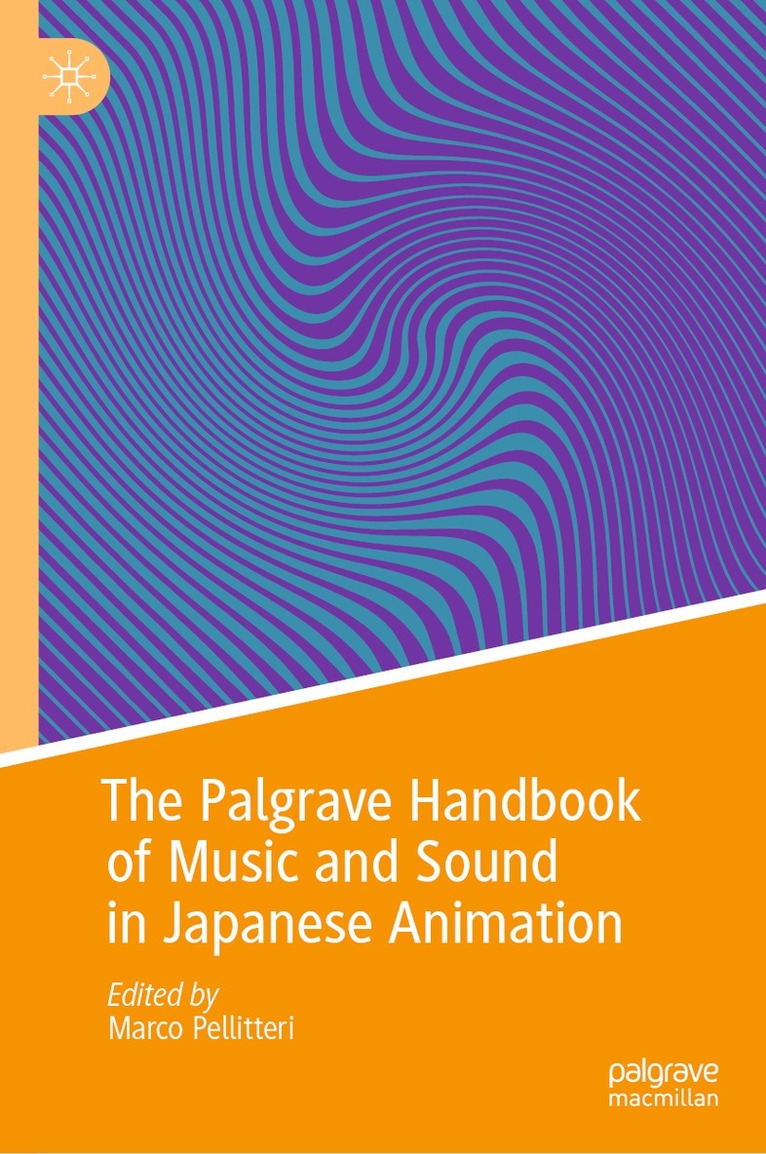
    Palgrave Handbook of Music and Sound in Japanese Animation

    AvMarco Pellitteri

    Inbunden, Engelska, 2024

    Del i serien Palgrave Studies in Sound

    3 135 kr

    Beställningsvara. Skickas inom 10-15 vardagar. Fri frakt över 249 kr.

    Beskrivning

    This handbook fills a substantial gap in the international academic literature on animation at large, on music studies, and on the aural dimensions of Japanese animation more specifically. It offers a unique contribution at the intersection between music and popular culture studies on the one hand, and research on Japanese animated productions (often called ‘anime’) as popular art forms and formats of entertainment, on the other. The book is designed as a reference work consisting of an organic sequence of theory-grounded essays on the development of music, sounds, and voices in Japanese animation for cinema and television since the 1930s. Each chapter deals with a phase of this history, focusing on composers and performers, films, series, and genres used in the soundtracks for animations made in Japan. The chapters also offer valuable interviews with prominent figures of music in Japanese animation, as well as chapter boxes clarifying specific aspects.

    Produktinformation

    • Utgivningsdatum:2024-09-14
    • Mått:155 x 235 x 50 mm
    • Vikt:2 051 g
    • Format:Inbunden
    • Språk:Engelska
    • Serie:Palgrave Studies in Sound
    • Antal sidor:1 040
    • Förlag:Springer Verlag, Singapore
    • ISBN:9789819704286

    Utforska kategorier

    • Kulturvetenskap inom Samhälle och politik
    • Filmmusik, musikaler och teatermusik inom Kultur
    • Film inom Kultur

    Mer om författaren

    Marco Pellitteri is associate professor of Media and Communication at Xi’an Jiaotong-Liverpool University, China. He is the author of several monographs, among which The Dragon and the Dazzle (2010), Mazinga Nostalgia (1999; 4th revised edition 2018), and I manga. Introduzione al fumetto giapponese (‘Manga: An introduction to Japanese comics’, 2021); with H.-w. Wong, he is the editor of Japanese Animation in Asia: Transnational Industry, Audiences, and Success (2021).

    Innehållsförteckning

    • About this book.- Praises for The Palgrave Handbook of Music and Sound in Japanese animation.- Acknowledgements.- Editorial Note .- List of Contributors.- List of Images and Tables.- Foreword. Birth and structure of the Handbook.- Introduction. Tool kits / 0: Presenting Japanese animation and a summary of selected sources on music and animation.- Part I. Early history, theoretical framing, and practice of music and sound in Japanese animation.- Chapter 1. Tool kits / 1: Hearing moods, emotions, pictures. A basic overview on the rhetoric of music.- Chapter 2. Tool kits / 2: Key concepts of music language in anime.- Chapter 3. Tool kits / 3: A short outlook of anison from 1963 to the 21st century.- Chapter 4. Tool kits / 4: Mapping anime’s voice acting industry.- Chapter 5. Early history / 1: Introducing European music to Meiji Japan.- Chapter 6. Early history / 2: The early period of music in Japanese animation. From the 1930s to the advent of Tōei Dōga (1956).- Chapter 7. Early history / 3: Shiftingpractice, industry, and ideology in the first decade of TV anime songs (1962-72). From Torirō Miki to Michiaki Watanabe.- PART II. Music and sound for animation in Japan from the 1970s to the 2010s.- Chapter 8. Scoring Japan’s pasts and futures / 1: Legends, folklore, monsters, and his-torical drama.- Chapter 9. Scoring Japan’s pasts and futures / 2: Drama, trauma, and sonic eclecticism in mainstream music scores for giant armour-themed and SF animated se-ries of the 1970s.- Chapter 10. Scoring Japan’s pasts and futures / 3: The soundtrack of Shunsuke Kikuchi for UFO Robo Grendizer. Composition and selection criteria.- Chapter 11. Transcultural musical encounters / 1: Jō Hisaishi and Yūji Nomi. Variation, citation, and emulation.- Chapter 12. Transcultural musical encounters / 2: A cultural history of Dvořák’s Largo from Meiji era to anime.- Chapter 13. Transcultural musical encounters / 3: Kōji Morimoto, Yōko Kanno, and the Zagreb school of animation.- Chapter 14. Transcultural musical encounters / 4: The power of alternative music in Japanese animation. Can the beats and vibes of anime change the world?.- Chapter 15. Authorship in music and sound design / 1: Isao Takahata and his music di-rection.- Chapter 16. Authorship in music and sound design / 2: Geinō Yamashirogumi and Akira.- Chapter 17. Authorship in music and sound design / 3: The music and method of Kenji Kawai.- Chapter 18. Authorship in music and sound design / 4: Kōji Yamamura and Satoshi Kon.- Chapter 19. Authorship in music and sound design / 5: Tenmon and his musics for Ma-koto Shinkai’s films.- Chapter 20. Authorship in music and sound design / 6: Four outstanding cases in the anime industry, 1995-2016.- Chapter 21. Extra-musical sonic environments / 1: Voice actresses performing boy characters. Historical, political, social, and cultural significance in postwar Japan.- Chapter 22. Extra-musical sonic environments / 2: Sonic embedment and spatial “worlding”. Soundscapes, psychoacoustics, and post-human sonics inShin-seiki Evangelion.- Part III. Musics, songs, and voices for Japanese animation beyond Japan.- Chapter 23. Re-written songs, musics, and dubbing for anime / 1: United States.- Chapter 24. Re-written songs, musics, and dubbing for anime / 2: Italy.- Chapter 25. Re-written songs, musics, and dubbing for anime / 3: Philippines.- Chapter 26. Re-written songs, musics, and dubbing for anime / 4: Indonesia.- Chapter 27. Re-written songs, musics, and dubbing for anime / 5: Latin America.- Chapter 28. Re-written songs, musics, and dubbing for anime / 6: Four outstanding cases in Europe and the United States.- Chapter 29. Re-written songs, musics and dubbing for anime / 7: Finland.- Chapter 30. Re-written songs, musics, and dubbing for anime / 8: Cultural strategies of anime’s re-dubbing in Italy, France, Germany, and Spain.- Chapter 31. Anime’s impact on pop music in the two European leading markets / 1: France.- Chapter 32. Anime’s impact on pop music in the two European leading markets / 2: Italy.- Part IV. Interviews, supplemental essays, appendixes.- Chapter 33. Brief guide on sound design in the anime industry.- Chapter 34. Isao Tomita and his collaborations with Osamu Tezuka: Music’s versatility between crosscultural epigonism and ultimate mastery.- Chapter 35. Ambiguities of post-dubbing in the United States.- Chapter 36. Interview with Shunsuke Kikuchi.- Chapter 37. Interview with Michiaki Watanabe.- Chapter 38. Interview with Mitsuko Horie.- Chapter 39. Interview with Kentarō Anai.- Chapter 40. Conversations with four outstanding animators: what they have to say.- Chapter 41. Interview with Takuya Imahori.- Chapter 42. Interview with Kenji Kawai.- Chapter 43. Appendix 1: The main music score composers in the history of anime.- Chapter 44. Appendix 2: The main vocal performers in the history of anison.- Chapter 45. Appendix 3: Historic composers for animation in Japan, 1920s-1950s.- Afterword.- Glossary. Basic keywords of Japanese animation, music, and sound.- Filmography and videography.- Discography and dubs.- Editor and Contributors.- Index.