• Fri frakt över 249 kr
  • •
  • Snabba leveranser
  • •
  • Billiga böcker
Kundservice

Du är på sajten för privatpersoner.

Företag, bibliotek eller offentlig verksamhet?

Du handlar på classic.bokus.com, där alla dina funktioner finns intakta.
Till classic.bokus.com
Bokus logotyp. Gå till startsidan.
  • Erbjudanden
  • Student
  • Topplistor
  • Barn & ungdom
  • Bokus Play
  • E-böcker
  • Ljudböcker
  • Pocketböcker
  • Spel & pussel

10% rabatt på allt med kod NYSTART10 →

Sidfot

Mina sidor

    Hjälp

    • Kundservice
    • Vanliga frågor och svar
    • Frakt och leverans
    • Retur vid ångerrätt
    • Reklamera vara
    • Betalning
    • Köpvillkor
    • Allmänna villkor
    • Information om webbplatsens tillgänglighet

    Om Bokus

    • Om oss
    • Pressrum
    • För studenter
    • För företag
    • För bibliotek och offentlig verksamhet
    • För leverantörer
    • Hållbarhet

    Populärt

    • Aktuella erbjudanden
    • Presentkort
    • Studentlitteratur
    • Nya böcker
    • Topplistor
    • Signerade böcker
    • Engelska böcker

    Inspiration

    • Boktips
    • BookTok
    • Populära bokserier
    • Barnbokskaraktärer
    • Populära författare
    Logotyp för Bokus
    Följ oss på Facebook (extern länk)Följ oss på Instagram (extern länk)Följ oss på YouTube (extern länk)Följ oss på TikTok (extern länk)
    bokus @ CookiesAnpassa cookiesIntegritetspolicyKöpvillkor
    Till Citymail hemsida (extern länk)Till Budbee hemsida (extern länk)Till Postnord hemsida (extern länk)Till Schenker hemsida (extern länk)Till Early Bird hemsida (extern länk)Till Walleys hemsida (extern länk)
    1. Naturvetenskap och teknik
    2. Matematik och naturvetenskap
    3. Matematik
    4. Matematisk statistik

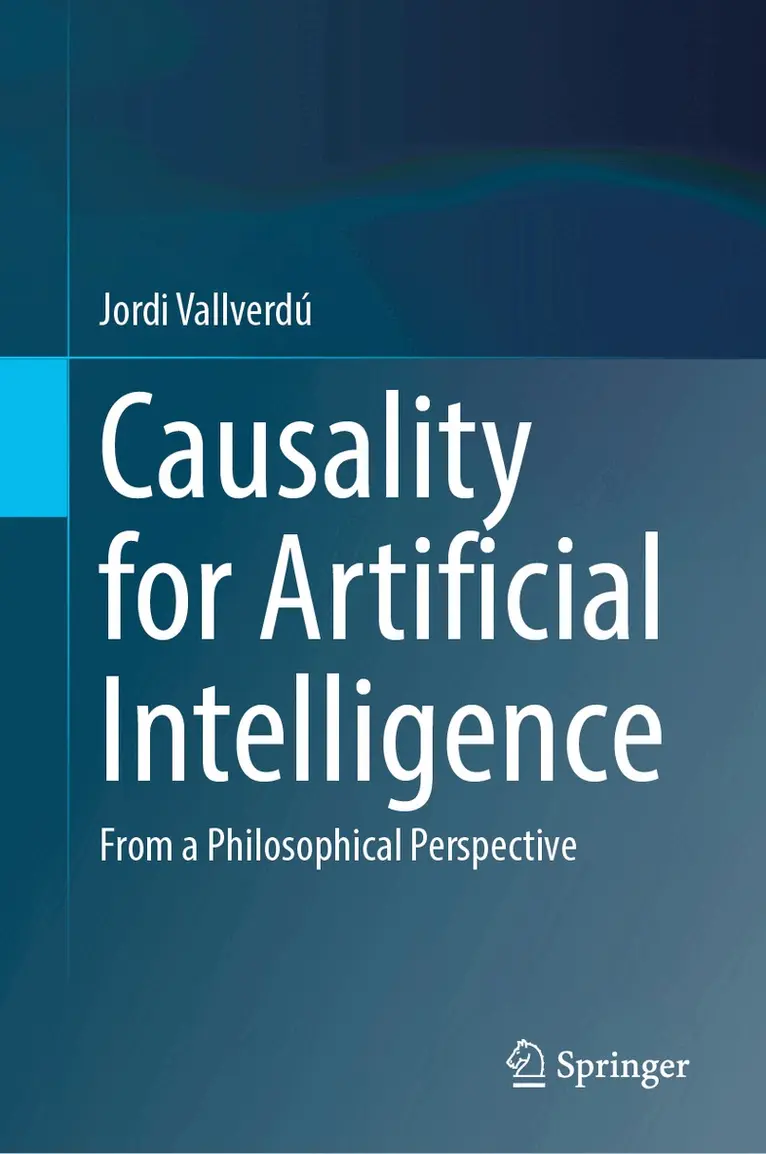
    Causality for Artificial Intelligence

    From a Philosophical Perspective

    AvJordi Vallverdú

    Inbunden, Engelska, 2024

    653 kr

    Beställningsvara. Skickas inom 10-15 vardagar. Fri frakt över 249 kr.

    Fler format och utgåvor

    E-bok

    868 kr

    Häftad

    653 kr

    Beskrivning

    How can we teach machine learning to identify causal patterns in data?  This book explores the very notion of “causality”, identifying from a naturalistic and evolutionary perspective how living systems deal with causal relationships. At the same time, using this knowledge to identify the best ways to apply such biological models in machine learning scenarios.One of the more fundamental challenges for AI experts is to design machines that can understand the world, identifying the basic rules that govern reality.  Statistics are powerful and fundamental for this process, but they are only one of the necessary tools. Counterfactual thinking is the other part of the necessary process that will help machines to become intelligent. This book explains the paths that can lead to algorithmic causality.It is essential reading for those who are not afraid of thinking at the interface of various academic disciplines or fields (AI, machine learning, philosophy,  neuroscience, anthropology, psychology, computer sciences), and who are interested in the analysis of causal thinking and the ways in which cognitive systems (natural or artificial) can act in order to understand their environment.Professor Vallverdú is currently working on biomimetic cognitive architectures and multicognitive systems. His research has explored two main areas: epistemology and cognition. Since his early Ph.D. research on epistemic controversies, he has analyzed several aspects of computational epistemology.His latest research has focused on the causal challenges of machine learning techniques, particularly deep learning. One of his most promising advances is statistics meets causal graph reasoning (via Directed Acyclic Graphs), which still has several conceptual paths that need to be explored and identified. Counterfactual reasoning is a fundamental part of these open debates, which are under the analysis of Prof. Vallverdú.His current research is supported as part of the following projects: GEHUCT and ICREA Acadèmia.

    Produktinformation

    • Utgivningsdatum:2024-06-29
    • Mått:155 x 235 x 13 mm
    • Vikt:354 g
    • Format:Inbunden
    • Språk:Engelska
    • Antal sidor:99
    • Förlag:Springer Verlag, Singapore
    • ISBN:9789819731862

    Utforska kategorier

    • Matematisk statistik inom Naturvetenskap och teknik
    • Naturvetenskapens filosofi inom Naturvetenskap och teknik
    • Artificiell intelligens inom Data och IT

    Mer om författaren

    Prof. Dr. Jordi Vallverdú, Ph.D., M.Sci., B.Mus, B.Phil, is Tenure Professor (Accredited Full Professor) at Universitat Autònoma de Barcelona (Catalonia, Spain), where he teaches philosophy and history of science and computing. His research focuses on the cognitive and epistemic aspects of the philosophy of computing, philosophy of science, and AI, with a special interest in emotional modeling. He was recently awarded an ICREA grant for Causality in Deep Learning. In 2011, he won a Japanese JSPS fellowship to pursue research on computational HRI interfaces at Nishidalab, Kyoto University. He has written and edited more than 15 books, including: (2009) Handbook of Research on Synthetic Emotions and Sociable Robotics: New Applications in Affective Computing and AI; (2010) Thinking Machines and the Philosophy of Computer Science: Concepts and Principles; (2012) Creating Synthetic Emotions Through Technological and Robotic Advancements; (2015) Synthesizing Human Emotion in Intelligent Systems and Robotics; (2016) Bayesians Versus Frequentists. A Philosophical Debate on Statistical Reasoning; and (2019) Blended Cognition. The Robotic Challenge; and (2023) Gender in AI and Robotics. The Gender Challenges from an Interdisciplinary Perspective.

    Innehållsförteckning

    • Chapter 1. Ground Zone: Definitions and Concepts about Causality.- Chapter 2. Causality and Artificial Intelligence.- Chapter 3. How Causality Works in non-Human Minds.- Chapter 4. Do Humans Think Causally, and How? Chapter 5. Pitfalls and Triumphs of Causal AI.- Chapter 6. Generative AI and Causality.- Chapter 7. Counterfactual Thinking for Machines.- Chapter 8. Defining and Debating Algorithmic Causality.- Chapter 9. Open Paradoxes: Retrocausality.- Chapter 10. My Kingdom for a Causal Algorithm.