• Fri frakt över 249 kr
  • •
  • Snabba leveranser
  • •
  • Billiga böcker
Kundservice

Du är på sajten för privatpersoner.

Företag, bibliotek eller offentlig verksamhet?

Du handlar på classic.bokus.com, där alla dina funktioner finns intakta.
Till classic.bokus.com
Bokus logotyp. Gå till startsidan.
  • Erbjudanden
  • Nyheter
  • Student
  • Topplistor
  • Barn & ungdom
  • Bokus Play
  • E-böcker
  • Pocketböcker
  • Spel & pussel

10% rabatt på allt med kod NYSTART10 →

Sidfot

Mina sidor

    Hjälp

    • Kundservice
    • Vanliga frågor och svar
    • Frakt och leverans
    • Retur vid ångerrätt
    • Reklamera vara
    • Betalning
    • Köpvillkor
    • Allmänna villkor
    • Information om webbplatsens tillgänglighet

    Om Bokus

    • Om oss
    • Pressrum
    • För studenter
    • För företag
    • För bibliotek och offentlig verksamhet
    • För leverantörer
    • Hållbarhet

    Populärt

    • Aktuella erbjudanden
    • Presentkort
    • Studentlitteratur
    • Nya böcker
    • Topplistor
    • Signerade böcker
    • Engelska böcker

    Inspiration

    • Boktips
    • BookTok
    • Populära bokserier
    • Barnbokskaraktärer
    • Populära författare
    Logotyp för Bokus
    Följ oss på Facebook (extern länk)Följ oss på Instagram (extern länk)Följ oss på YouTube (extern länk)Följ oss på TikTok (extern länk)
    bokus @ CookiesAnpassa cookiesIntegritetspolicyKöpvillkor
    Till Citymail hemsida (extern länk)Till Budbee hemsida (extern länk)Till Postnord hemsida (extern länk)Till Schenker hemsida (extern länk)Till Early Bird hemsida (extern länk)Till Walleys hemsida (extern länk)
    1. Samhälle och politik
    2. Samhälle och kultur
    3. Kultur och medier
    4. Kulturvetenskap

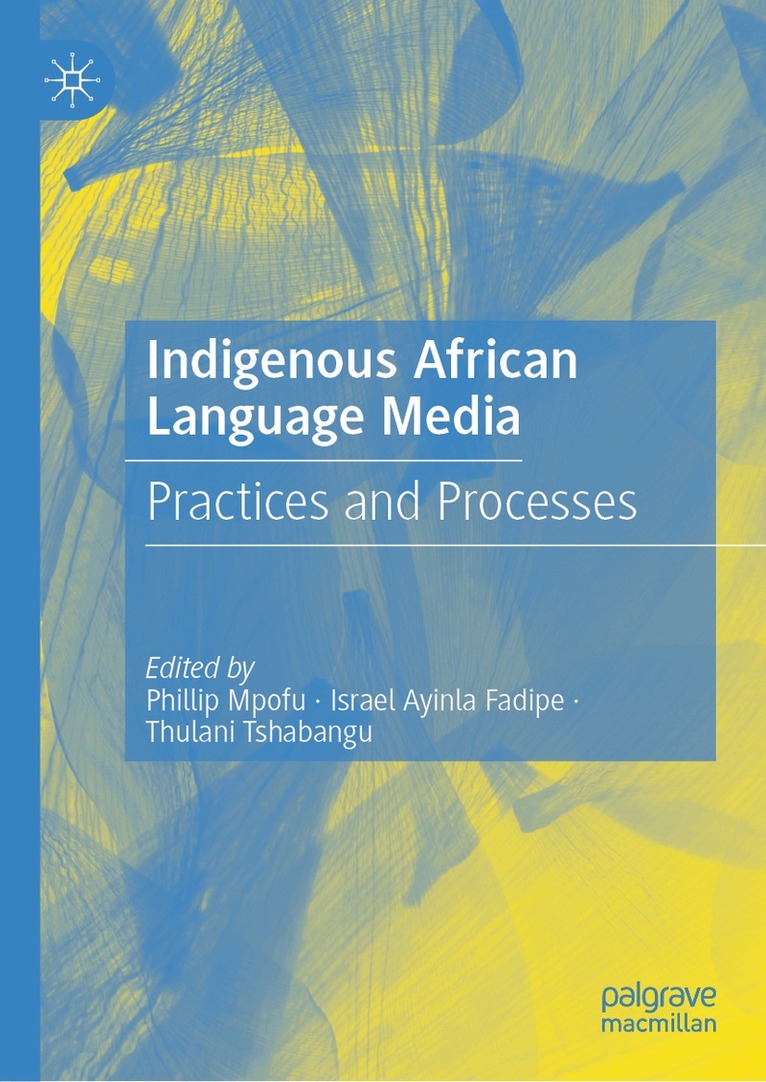
    Indigenous African Language Media

    Practices and Processes

    AvPhillip Mpofu,Israel Ayinla Fadipe

    Inbunden, Engelska, 2023

    1 562 kr

    Beställningsvara. Skickas inom 10-15 vardagar. Fri frakt över 249 kr.

    Beskrivning

    The book contributes to the sparse academic literature on African and minority language media research. It serves as a compendium of experiences, activities and case studies on the use of native language media.  Chapters in this book make theoretical, methodical and empirical contributions about indigenous African language media that are affected by structural factors of politics, technology, culture and economy and how they are creatively produced and appropriated by their audiences across African cultures and contexts. This book explores indigenous African language media about media representations, media texts and contents, practice-based activities, audience reception and participation, television, popular culture and cinema, peace and conflict resolution, health and environmental crisis communication, citizen journalism, ethnic and identity formation, beat analysis and investigative journalism, and corporate communication. There are hardly any similar works that focus on the various issues relating to this body of knowledge. The book provides a valuable companion for scholars in various fields like communication, media studies, African studies, African languages, popular culture, journalism, health and environmental communication.

    Produktinformation

    • Utgivningsdatum:2023-04-27
    • Mått:148 x 210 x 31 mm
    • Vikt:728 g
    • Format:Inbunden
    • Språk:Engelska
    • Antal sidor:444
    • Förlag:Springer Verlag, Singapore
    • ISBN:9789819903047

    Utforska kategorier

    • Kulturvetenskap inom Samhälle och politik
    • Medievetenskap inom Samhälle och politik
    • Referensverk och tvärvetenskap inom Samhälle och politik

    Mer om författaren

    Phillip Mpofu, DLitt et Phil, is an Extraordinary Researcher at North West University, Mafikeng Campus, South Africa, in the Indigenous Language Media in Africa (ILMA) research entity. He is also a Senior Lecturer in the Department of Languages, Literature & Cultural Studies at Midlands State University, Zimbabwe. His research combines sociolinguistics, language politics, language policy, virtual communities and African language media. Israel Ayinla Fadipe is postdoctoral fellow in Indigenous Language Media in Africa research entity, Faculty of Humanities, North-West University, South Africa. He specialises in communication, cultural and gender studies, and has published articles and chapters in both local and international journals. He graduated from the Department of Communication and Language Arts, University of Ibadan, with BA in Creative Writing, MA in Popular Music and PhD in Applied and Gender Communication.Thulani Tshabangu is an emerging academic who holds a PhD in Journalism from Stellenbosch University in South Africa. He is currently a post-doctoral fellow at North West University research institute of Indigenous Languages Media in Africa where he researches about democracy and development communication in Africa; the management and political economy of African media.

    Innehållsförteckning

    • SECTION I: AUDIENCE PERCEPTION, PARTICIPATION, ETHNIC, IDENTITY FORMATION AND INDIGENOUS LANGUAGE MEDIA.- 1. Appreciating indigenous African language media’ practices and processes- a transdisciplinary approach, Philip Mpofu, Israel A. Fadipe and Thulani Tsabangu.- 2. Kulfi is like a Tanzanian: The reception of an Indian Television Drama dubbed in Kiswahili, by Daines Nicodem Sanga, Mona Mwakalinga and Issau Athumani Mbura submitted Tanzania.- 3. Language Politics, Development and Sustainability of Books in the Nigerian Languages, by Osarobu Emmanuel Igudia.- 4. Time to be Represented: The Imperative for Investment in Igbo Language Radio, by Malachy O. Udejinta.- 5. Slang and the Semantic Sense of Sameness: A Sociolinguistic Analysis of Shona Back Slang, by Enock Nyambo.- 6. Mass Communication and African Indigenous Societies: The Meeting Point, by Charles Oguntoye.- 7. Mission Statements, Role of Political Actors in Community Radio Stations-The Ghanaian Experience, by Mavis Essandoh.- 8. Expanding Language? Struggles that characterise the development of new words and meanings on Eswatini’s national radio, by Maxwell Vusumuzi Mthembu and Nqobile Ndzinisa.- 9. African Languages and the Rhetoric of Gender Identity in Marginal Films Made Outside the Mainstream Film Industry in South Africa, by Gilbert Motsaathebe.- SECTION II: MEDIA REPRESENTATIONS, TEXT, CONTEXT AND INDIGENOUS INDIGENOUS LANGUAGE MEDIA.- 10. Re-tooling the Nigerian Society to combat Crime and Criminality: The Strategic importance of Proverbs in Child and Personality Development, by Mustapha Olalekan Rufai.- 11. Evaluation of an African indigenous Language Programme on Poly Ilaro 92.1 FM, Ogun State Nigeria, by Odu, Adejare Samuel & Alabi Oluwole Folaranmi.- 12. Examining the place of female musicians in Zimbabwe’s music industry, by Edith Katiji and Richard Muranda.- 13. Ivbie edo nuzomo, wa ghima kweko kugbe:Themes in Edo (Bini) language Nollywood movies as development communication, Francis Amenaghawon.- 14. Use of non-verbal cues as Alternative to Verbal Communication before Tyrants in Selected Yoruba Films, Matthew Kolawole Oni.- 15. Multilingual online responses on the ‘Hollywood-style’ arrest of a defence lawyer in a high-profile case, Gilbert Motsaathebe.- SECTION III: HEALTH AND ENVIRONMENTAL CRISIS AND INDIGENOUS INDIGENOUS LANGUAGE MEDIA.- 16. Impact of Covid-19 on an indigenous newspaper, Kwayedza, by Takunda Maodza.- 17. Imole Yoruba Coverage of COVID-19 Pandemic in South West Nigeria, by Hassan Biodun Suleiman.- 18. Exploring Music Videos in Indigenous Languages and Behavioural Change towards Waste Management in Lagos State, Nigeria, by Babatunde Adeyeye, Evaristus Adesina, Darlynton Yartey and Emeka Uwam.- SECTION VI: BEAT ANALYSIS, PEACE JOURNALISM AND INDIGENOUS INDIGENOUSE LANGUAGE MEDIA.- 19. Indigenous Language as a Factor for Sustainable Development, by Akinwalere Ifedayo Nigeria.- 20. A Study of the Yoruba Language Newspapers in the Colonial Era,by Akangbe Adeniyi Clement.-21. Coverage of Development Issues, And Identity Formation in Alaroye Newspapers, by Stephen Odebiyi.- 22. Livelihood Improvement Through Participatory Mass Communications; A Study on Community Radio and the Lives of Women in Northern Ghana by Manfred Kofi Antwi Asuman and Subeshini Moodley.- 23. Building a Culture of Peace and Conflict Resolution through Indigenous Language Media (ILM), by Toyosi Olugbenga Samson OWOLABI & Hassan Adeniyi OLALEKAN.- 24. Indigenous Language Use in Advertising Campaigns: A Study of Airtel Nigeria’s Users, by Adeniji O.C. and Akinbode S.A.