
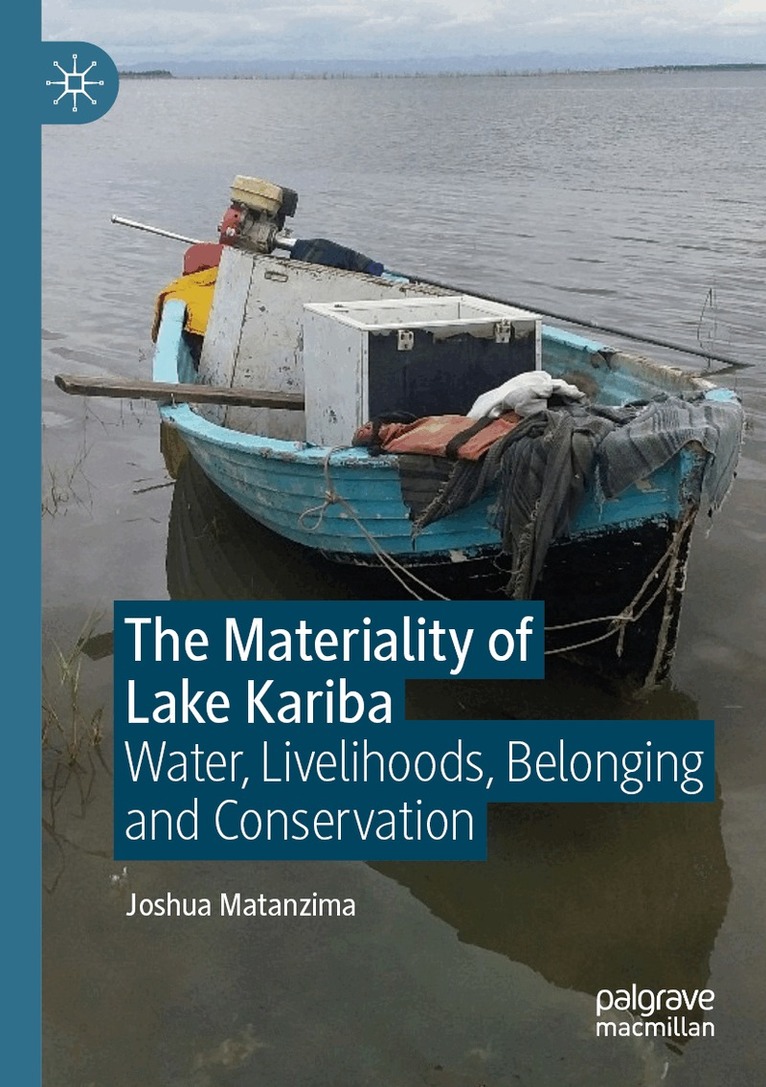
Materiality of Lake Kariba
Water, Livelihoods, Belonging and Conservation
Inbunden, Engelska, 2024
1 213 kr
Beställningsvara. Skickas inom 10-15 vardagar. Fri frakt över 249 kr.
Fler format och utgåvor
Beskrivning
This book is an exploration of one of the world’s largest man-made reservoirs, Lake Kariba, created along the Zambezi River in central Africa. Originally built for electricity generation, as the lake reached its full capacity in 1963 it attracted other socioeconomic activities such as tourism, recreation, fisheries, and conservation. The material properties of the waterscape (including waves, strong winds, water volumes, deities and aquatic species) have shaped these socioeconomic activities since its creation. Community interpretations of the reservoir feature stories of fear, death, income generation, livelihoods, illegal cross-border trade, religion and everyday conflicts with wild animals. Drawing on extended ethnographic research and the author’s personal experience growing up around Lake Kariba, this empirically-rich book provides a nuanced discussion of the ways in which the waterscape shapes people’s lives and livelihoods. Additionally, the book explores the challenges of sustaining and preserving Lake Kariba's unique ecosystem amidst environmental pressures and competing demands for resources. Readers will gain a nuanced perspective of the significance of the lake, its relationship with neighboring communities, and its evolution over time.
Produktinformation
Utforska kategorier
Mer om författaren
Innehållsförteckning
Hoppa över listan


Mer från samma författare
Natural Resource-Based Conflicts in Rural Zimbabwe
Joshua Matanzima, Patience Chadambuka, Kirk Helliker
Inbunden, 2024
2 464 kr
Natural Resource-Based Conflicts in Rural Zimbabwe
Joshua Matanzima, Patience Chadambuka, Kirk Helliker
Häftad, 2025
637 kr
Natural Resource-Based Conflicts in Rural Zimbabwe
Kirk Helliker, Patience Chadambuka, Joshua Matanzima
E-bok
2024748 kr
Natural Resource-Based Conflicts in Rural Zimbabwe
Kirk Helliker, Patience Chadambuka, Joshua Matanzima
E-bok
2024748 kr
Livelihoods of Ethnic Minorities in Rural Zimbabwe
Kirk Helliker, Patience Chadambuka, Joshua Matanzima
Inbunden, 2022
1 433 kr
Livelihoods of Ethnic Minorities in Rural Zimbabwe
Joshua Matanzima, Patience Chadambuka, Kirk Helliker
E-bok
20221 728 kr
Hoppa över listan

Du kanske också är intresserad av
- 10% rabatt på allt
Natural Resource-Based Conflicts in Rural Zimbabwe
Joshua Matanzima, Patience Chadambuka, Kirk Helliker
Inbunden, 2024
2 464 kr
Natural Resource-Based Conflicts in Rural Zimbabwe
Kirk Helliker, Patience Chadambuka, Joshua Matanzima
E-bok
2024748 kr
Lived Experiences of Borderland Communities in Zimbabwe : Livelihoods, Conservation, War and Covid-19
Nedson Pophiwa, Joshua Matanzima
652 kr