Inbunden, Engelska, 2026
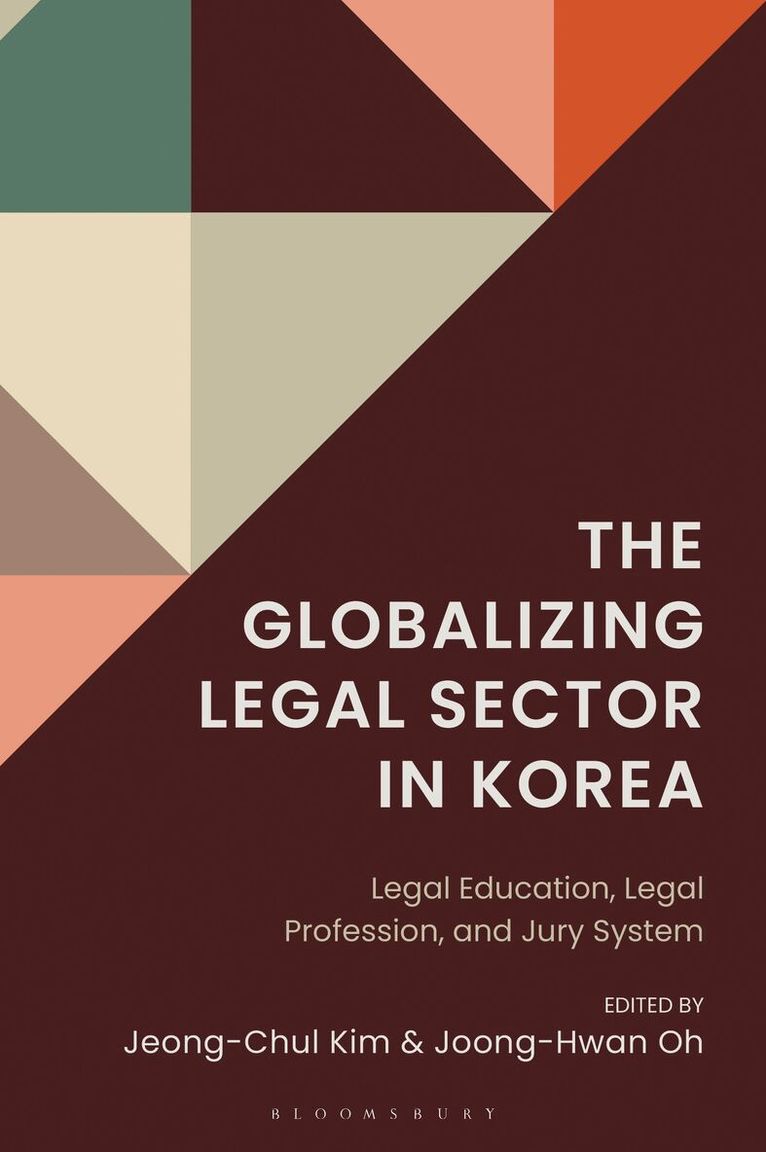
Globalizing Legal Sector in Korea
Legal Education, Legal Profession, and Jury System
Av Jeong-Chul Kim, Joong-Hwan Oh
Del i serien Korean Communities across the World
1172 kr
Beställningsvara. Skickas inom 10-15 vardagar. Fri frakt över 249 kr.
Beskrivning
Produktinformation
- Utgivningsdatum: 2026-06-25
- Mått: 154 x 230 x 20 mm
- Vikt: 520 g
- Format: Inbunden
- Språk: Engelska
- Serie: Korean Communities across the World
- Antal sidor: 258
- Förlag: Bloomsbury Publishing Plc
- ISBN: 9798216277699
Utforska kategorier
Mer om författaren
Jeong-Chul Kim is an independent researcher and works as a civil servant at the Donggu Office in Gwangju, KOR.Joong-Hwan Oh is a Professor of Sociology at Hunter College of The City University of New York, USA.
Recensioner i media
In an era of rapid institutional change, this book reveals the tensions and innovations driving Korea’s legal transformation. It offers a penetrating account of how legal institutions evolve under pressure from globalization and domestic reform. The chapters examine shifts in legal education, the restructuring of the profession, the evolution of lay participation in criminal trials, and emerging debates in areas such as insolvency and international adoption. This is an essential read for scholars and policymakers interested in Korean legal studies, comparative law, and legal sociology.
Betyg & recensioner
0 recensioner
Inga recensioner tillgängliga.