• Fri frakt över 249 kr
  • •
  • Snabba leveranser
  • •
  • Billiga böcker
Kundservice

Du är på sajten för privatpersoner.

Företag, bibliotek eller offentlig verksamhet?

Du handlar på classic.bokus.com, där alla dina funktioner finns intakta.
Till classic.bokus.com
Bokus logotyp. Gå till startsidan.
  • Erbjudanden
  • Nyheter
  • Student
  • Topplistor
  • Barn & ungdom
  • Bokus Play
  • E-böcker
  • Pocketböcker
  • Spel & pussel

10% rabatt på allt med kod NYSTART10 →

Sidfot

Mina sidor

    Hjälp

    • Kundservice
    • Vanliga frågor och svar
    • Frakt och leverans
    • Retur vid ångerrätt
    • Reklamera vara
    • Betalning
    • Köpvillkor
    • Allmänna villkor
    • Information om webbplatsens tillgänglighet

    Om Bokus

    • Om oss
    • Pressrum
    • För studenter
    • För företag
    • För bibliotek och offentlig verksamhet
    • För leverantörer
    • Hållbarhet

    Populärt

    • Aktuella erbjudanden
    • Presentkort
    • Studentlitteratur
    • Nya böcker
    • Topplistor
    • Signerade böcker
    • Engelska böcker

    Inspiration

    • Boktips
    • BookTok
    • Populära bokserier
    • Barnbokskaraktärer
    • Populära författare
    Logotyp för Bokus
    Följ oss på Facebook (extern länk)Följ oss på Instagram (extern länk)Följ oss på YouTube (extern länk)Följ oss på TikTok (extern länk)
    bokus @ CookiesAnpassa cookiesIntegritetspolicyKöpvillkor
    Till Citymail hemsida (extern länk)Till Budbee hemsida (extern länk)Till Postnord hemsida (extern länk)Till Schenker hemsida (extern länk)Till Early Bird hemsida (extern länk)Till Walleys hemsida (extern länk)
    1. Naturvetenskap och teknik
    2. Geovetenskap
    3. Miljövetenskap och miljöpolitik

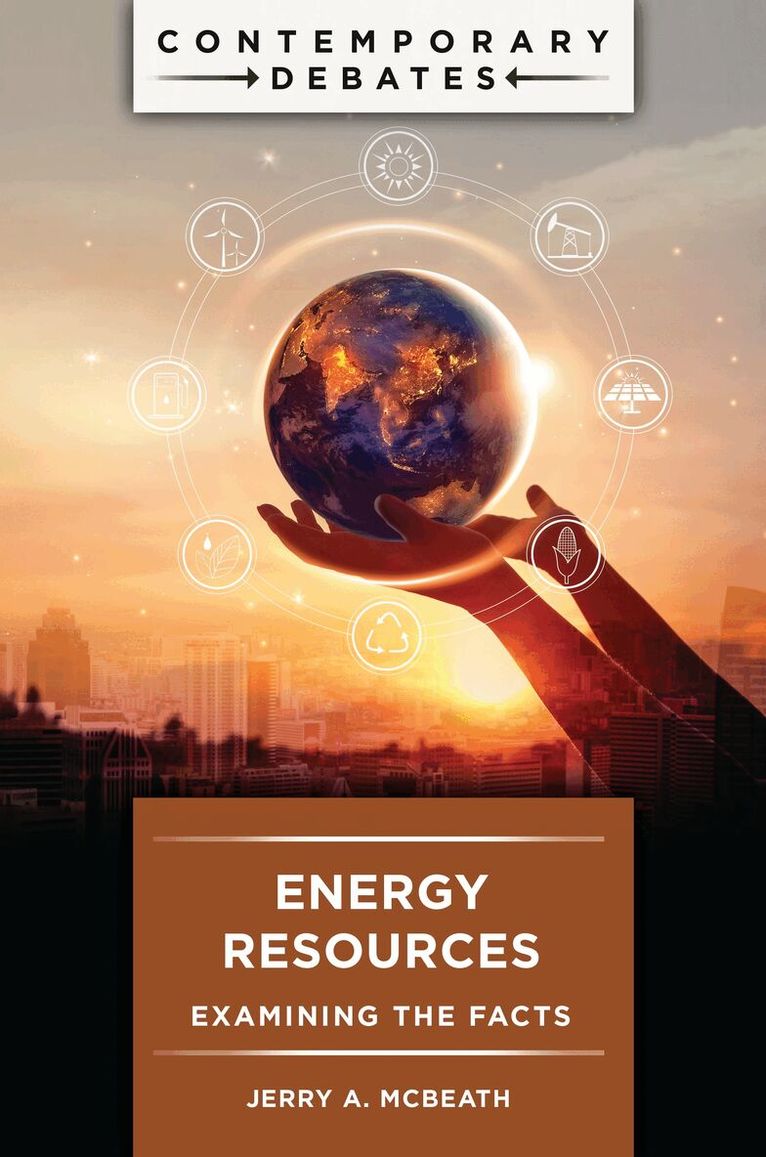
    Energy Resources

    Examining the Facts

    AvJerry A. McBeath

    Häftad, Engelska, 2026

    Del i serien Contemporary Debates

    287 kr

    Beställningsvara. Skickas inom 10-15 vardagar. Fri frakt över 249 kr.

    Fler format och utgåvor

    Inbunden

    771 kr

    E-bok

    830 kr

    E-bok

    306 kr

    Beskrivning

    An authoritative, comprehensive overview of economic, political, and environmental drivers of America's energy picture, from trends in the production and consumption of fossil fuels and renewables to the state of the national energy grid.Energy Resources: Examining the Facts is part of a series that uses evidence-based documentation to examine the veracity of claims and beliefs about high-profile issues in American culture and politics. Each book in the Contemporary Debates series is intended to puncture rather than perpetuate myths that diminish our understanding of important policies and positions; to provide needed context for misleading statements and claims; and to confirm the factual accuracy of other assertions.This installment in the series provides a comprehensive overview of all energy resources used in the United States, including fossil fuels (oil, gas, coal), nuclear power, hydropower, other major renewables (solar and wind), and even smaller energy sources, such as wood products (biomass), ethanol, plant-based fluids/gases, and geothermal, that have meaningful potential for future growth. The framework of laws and regulations in which energy resources are developed, produced, and overseen is described, as are the ways in which economic development powered by different energy resources is impacting people and ecosystems in the United States and around the world.

    Produktinformation

    • Utgivningsdatum:2026-03-19
    • Mått:154 x 232 x 16 mm
    • Vikt:420 g
    • Format:Häftad
    • Språk:Engelska
    • Serie:Contemporary Debates
    • Antal sidor:280
    • Förlag:Bloomsbury Publishing Plc
    • ISBN:9798216461104

    Utforska kategorier

    • Miljövetenskap och miljöpolitik inom Naturvetenskap och teknik
    • Upphandlingsrätt inom Juridik
    • Naturvetenskap:allmänt inom Naturvetenskap och teknik

    Mer om författaren

    Jerry A. McBeath, PhD, is Professor Emeritus of Political Science at the University of Alaska-Fairbanks, USA.

    Innehållsförteckning

    • AcknowledgmentsHow to Use This BookIntroduction1. Fossil FuelsQ1. Is the United States likely to run out of fossil fuels by 2045?Q2. Has market concentration increased among U.S. oil and gas producers?Q3. Is the United States dependent on Middle Eastern oil?Q4. Did U.S. plans over several administrations to achieve "energy independence" bring about a large increase of shale oil and gas supplies during the 2010s?Q5. Have market conditions that favor natural gas and renewable energy and place coal at a competitive disadvantage been too great for pro-coal politicians and the coal industry to effectively counter?Q6. Are total federal and state subsidies greater for fossil fuels than for the major renewables?Q7. Are electric vehicles (EVs) likely to replace up to 30 percent of the current market share of gas-guzzling transport in the United States by 2045?Q8. Do some experts expect renewables to account for the majority of American energy consumption by 2045?2. Major RenewablesQ9. Is it realistic for the United States to develop an energy system entirely based on renewable power by 2050?Q10. Is it feasible to double the amount of hydropower in the U.S. energy mix in the mid- to long term (25–50 years)?Q11. Is it feasible to double the amount of nuclear power in the U.S. energy mix in the mid- to long term (25–50 years)?Q12. Is development of wind and solar power lagging because of an insufficient production of metals (e.g., cobalt, cadmium, lithium, and rare earth elements) used in those technologies?Q13. Are conflicts over public land use on the increase between anti–fossil fuel groups and the (oil/gas/coal) industry?Q14. Are state ballot propositions to limit fossil fuels and renewables becoming more popular?3. AlternativesQ15. Will use of biomass to generate energy significantly increase by 2045?Q16. Will a higher percentage of ethanol in fuel (E15) dominate the transportation energy market by 2025?Q17. Are alternative fuels and gases from renewable sources likely to become more important for heating/electricity generation by 2045?Q18. Will geothermal and tidal/wave power significantly increase in the U.S. energy profile by 2045?4. Energy in ActionQ19. Does the current power grid have sufficient reliability and resilience to meet expected blackouts?Q20. Will the electricity grid of the United States have sufficient capability by 2030 to meet expected needs for power in the next generation?Q21. Is the U.S. power grid sustainable?Q22. Is electricity affordable for most Americans?Q23. Can the U.S. energy grid be protected against environmental and security threats and pressures?Q24. Can the U.S. power grid be adequately protected against risks of electronic disruptions from hackers, terrorist organizations, and hostile nations (e.g., Iran, Russia, China)?5. Legal and Regulatory FrameworksQ25. Has divided control of the executive and legislative branches constrained presidential administrations from making major changes in U.S. energy policy in recent years?Q26. Are partisan political considerations increasingly dictating how federal agencies and departments — including those related to the energy industry — operate and who leads them?Q27. Did the Trump administration politicize scientific research in U.S. energy and environmental policymaking?Q28. Did regulatory reforms proposed by the Trump administration resemble those of any other president in the postwar era?Q29. Have federal departments and regulatory agencies been "captured" by the industries and business interests they are responsible for regulating?Q30. Have federal–state conflicts over energy and environmental policies increased in the last decade?6. Trade-OffsQ31. Has the Clean Air Act and subsequent amendments improved U.S. air quality in the last decade?Q32. Have CAFE (Corporate Average Fuel Economy) standards reduced carbon dioxide emissions?Q33. Do most Americans believe that continued consumption of fossil fuels will increase the severity of climate change?Q34. Have clean water laws and regulations improved U.S. water quality?Q35. Have oil and gas exploration and development reduced critical habitat of endangered species in the United States?Q36. Did environmental nongovernmental organizations (NGOs) file fewer lawsuits against government agencies in the 2010s than the 1970s?Q37. Is the proposed green new deal (GND) a feasible model for environmental improvement in the United States?7. ConclusionsQ38. Has the U.S. energy transition from fossil fuels to renewables been stopped or merely delayed by economic volatility and the Covid-19 global health crisis?Q39. Have the separation of powers (especially the courts' increasing strength) and federalism become major determinants of U.S. energy and environmental outcomes?AbbreviationsIndex