• Fri frakt över 249 kr
  • •
  • Snabba leveranser
  • •
  • Billiga böcker
Kundservice

Du är på sajten för privatpersoner.

Företag, bibliotek eller offentlig verksamhet?

Du handlar på classic.bokus.com, där alla dina funktioner finns intakta.
Till classic.bokus.com
Bokus logotyp. Gå till startsidan.
  • Erbjudanden
  • Nyheter
  • Student
  • Topplistor
  • Barn & ungdom
  • Bokus Play
  • E-böcker
  • Pocketböcker
  • Spel & pussel

10% rabatt på allt med kod: NYSTART10 →

Sidfot

Mina sidor

    Hjälp

    • Kundservice
    • Vanliga frågor och svar
    • Frakt och leverans
    • Retur vid ångerrätt
    • Reklamera vara
    • Betalning
    • Köpvillkor
    • Allmänna villkor
    • Information om webbplatsens tillgänglighet

    Om Bokus

    • Om oss
    • Pressrum
    • För studenter
    • För företag
    • För bibliotek och offentlig verksamhet
    • För leverantörer
    • Hållbarhet

    Populärt

    • Aktuella erbjudanden
    • Presentkort
    • Studentlitteratur
    • Nya böcker
    • Topplistor
    • Signerade böcker
    • Engelska böcker

    Inspiration

    • Boktips
    • BookTok
    • Populära bokserier
    • Barnbokskaraktärer
    • Populära författare
    Logotyp för Bokus
    Följ oss på Facebook (extern länk)Följ oss på Instagram (extern länk)Följ oss på YouTube (extern länk)Följ oss på TikTok (extern länk)
    bokus @ CookiesAnpassa cookiesIntegritetspolicyKöpvillkor
    Till Citymail hemsida (extern länk)Till Budbee hemsida (extern länk)Till Postnord hemsida (extern länk)Till Schenker hemsida (extern länk)Till Early Bird hemsida (extern länk)Till Walleys hemsida (extern länk)
    1. Samhälle och politik
    2. Samhälle och kultur
    3. Sociala grupper och identitet

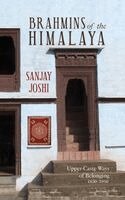
    Brahmins of the Himalaya

    Upper-Caste Ways of Belonging, 1850–1950

    AvSanjay Joshi

    Inbunden, Engelska, 2026

    Del i serien SUNY series in Hindu Studies

    1 408 kr

    Kommande

    Beskrivning

    Uses the everyday histories of Brahmin clans, communities, and families in a prominent small town in the Indian Himalaya to challenge the assumption that only grand metanarratives such as colonialism and nationalism matter.This everyday history of clans, communities, and elite families in Almora, a prominent town in the Indian Himalaya, puts questions of belonging at the heart of an expansive examination of elite Hinduism. Studying a mountainous region sometimes considered marginal within Indian history, Sanjay Joshi explores critically important mainstream concerns via attention to the periphery. Revealing the connections between two meanings of "belonging"—one as a source of identity, the other indicating possession—he addresses large questions: What is the idea of belonging among upper-caste Hindus? How do their ideas of belonging and community change over time? And to what effect? Refusing to conflate the ordinary and everyday with the trivial, Joshi challenges the frequent assumption that only metanarratives such as colonialism and nationalism matter. His exploration of big issues incorporates a plea for attention to the local and the quotidian as equally essential for a proper historical understanding. In addition to state and institutional archives, Joshi draws on unconventional and previously untapped sources: novels, poetry, local-language newspapers, and over six hundred family papers, including rare examples of women's writing within family contexts.

    Produktinformation

    • Utgivningsdatum:2026-09-01
    • Mått:152 x 229 x 19 mm
    • Vikt:544 g
    • Format:Inbunden
    • Språk:Engelska
    • Serie:SUNY series in Hindu Studies
    • Antal sidor:322
    • Förlag:State University of New York Press
    • ISBN:9798855809169

    Utforska kategorier

    • Sociala grupper och identitet inom Samhälle och politik
    • Asiens historia inom Historia och arkeologi
    • Socialhistoria och kulturhistoria inom Historia och arkeologi

    Mer om författaren

    Sanjay Joshi is Professor of History at Northern Arizona University. He is the author of Fractured Modernity: The Making of a Middle Class in Colonial North India, and the editor of The Middle Class in Colonial India.

    Recensioner i media

    "Since readable academic history is often something of an oxymoron, this book is especially welcome. Joshi discusses academic concepts through an analysis of commonplace social and political events to which nonspecialists can relate. His history of the local and its particularities deepens our understanding of caste, clan, and social power by suggesting the need to use but remain wary of the possible obscurities of concepts, theorizations, and overarching frameworks. The everyday, local, and even personal issues examined here make for a more intimate appreciation of larger social and political developments. This stands in contrast, though not in contradiction, to the more standard histories and metahistories written up as imposing and impersonal grand sagas." — Chetan Singh, author of Himalayan Histories: Economy, Polity, Religious Traditions

    Innehållsförteckning

    • Acknowledgements Glossary of Hindi and Kumaoni Terms Abbreviations IntroductionThe "Other" Woman and What it Means to Belong Almora and the Local Elite Structure of the Book Ideas of "Belonging" Beyond Almora: Missing Narratives Complicated Belonging 1. Conversion, Conflict, and Community: Names and the Making of Kumaoni Elites, 1850–1900 Miss Sunday of Almora and Miss 1933 the Film Missionaries and Brahmins Upper-Caste Converts Juniya: Understanding Lower-Caste Conversion The Gendered Convert Returning to Miss Sunday 2. Clans, Community, and Belonging in Colonial Kumaon, C. 1850–1930 Almora and Kumaon's Brahmin ElitesCommunities and the Historiography of South Asia Bholadutt Pande and Overseas Travel Community and Capital Emotional Ties of Community Gender: The Missing Variable About Communities and Belonging 3. Resentful Docility and Incomplete Belonging: Women, Men, and Marriages in Almora 1890–1940s My Grandfather's Diary A Wife as Companion Making Marriages and Marital TensionsWalking the Talk: Performing Conjugality Living a Married Life The Widow's Might "Resentful Docility": The Quiet Insubordination of Married Women Incomplete and Conflicted Belonging Afterword: Listening to the Archives 4. Belonging in the Public: Caste, Gender, and the Limits of Kumaoni Elite Power in the Twentieth Century The Erosion of Dominance: Brahmins, Shilpakars, and Nayaks Belonging in Public: Changing Contexts and Anxieties Nayaks and New Notions of Conjugality Shilpakars and Differences in Ideas of Belonging Nayaks and Gendered Belonging A Fragile Hegemony Crumbling Hegemony: Resistance to Elite Ideas of Belonging Reinscribing Belonging: Mixed Results Epilogue 5. Conclusions Emotions, Power, and the Incompleteness of Belonging What Can Almora Tell Us About Belonging? History and "Hagi-Muti Baat": The Importance of Subordinated Histories Bibliography Index