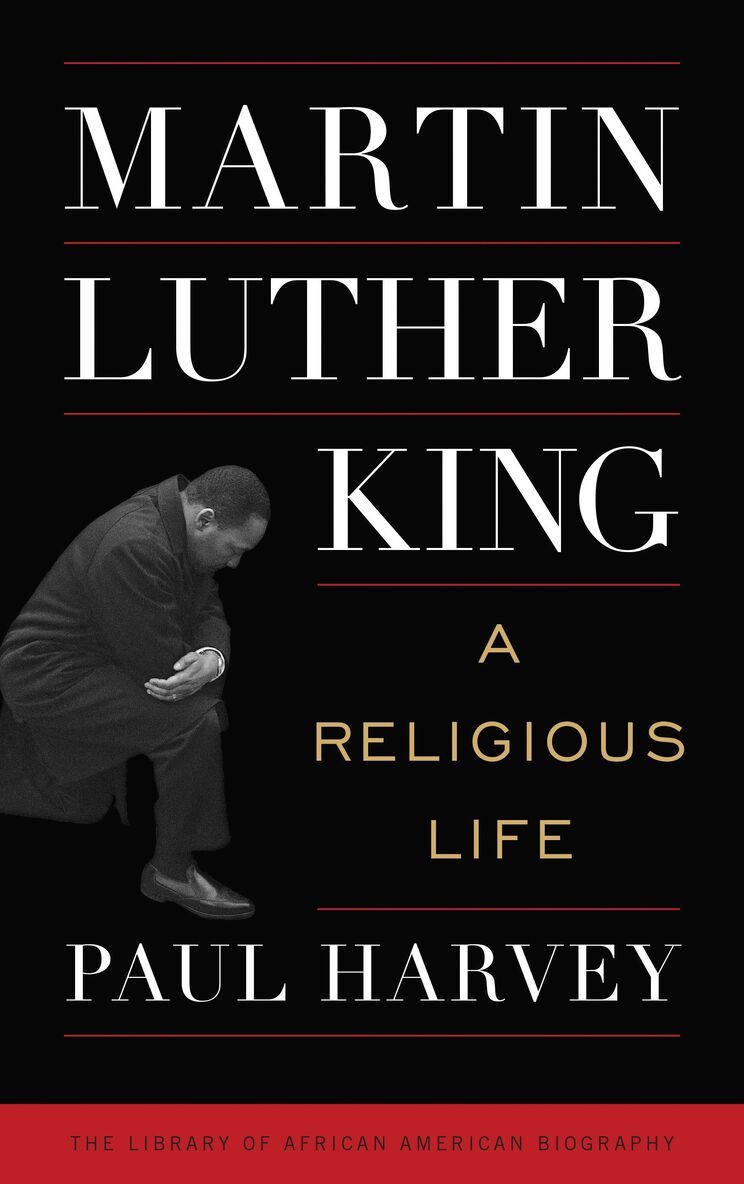
Häftad, Engelska, 2024
Martin Luther King
A Religious Life
Av Paul Harvey, John David Smith
Del i serien Library of African American Biography
307 kr
Beställningsvara. Skickas inom 10-15 vardagar. Fri frakt över 249 kr.
Beskrivning
Produktinformation
- Utgivningsdatum: 2024-10-15
- Mått: 150 x 228 x 14 mm
- Vikt: 371 g
- Format: Häftad
- Språk: Engelska
- Serie: Library of African American Biography
- Antal sidor: 224
- Förlag: Bloomsbury Publishing Plc
- ISBN: 9798881803896
Utforska kategorier
Mer om författaren
Paul Harvey is distinguished professor of history and presidential teaching Scholar at the University of Colorado at Colorado Springs, and the author of numerous books on American religious history including, with Rowman & Littlefield, Through the Storm, Through the Night: A History of African American Christianity (CHOICEOutstanding), and Bounds of Their Habitation: Race and Religion in American History. He is the coauthor with Edward J. Blum of The Color of Christ: The Son of God and the Saga of Race in American History, named as one of the top 25 academic books of the year by CHOICE and as one of the Best 5 Books on Religion for 2012 by Publishers Weekly.
Recensioner i media
Historian and professor Harvey (The Color of Christ) plumbs the background and writings of Martin Luther King Jr. to provocatively build a religious frame around the civil rights leader’s beliefs and tactics. Delving into the formative intellectual and theological influences on King’s writings and activities, Harvey’s approach is not primarily as a biographer but rather a close reader of the evolution of King’s thought; as Harvey notes, “King’s radicalism had deep roots. The black religious tradition informed him through its history of protest and proclamation.” King’s ways of thinking are considered across his accomplishments and failures in civil rights campaigns including in Montgomery, Selma, and Chicago. Throughout, Harvey stresses King’s unwavering commitment to nonviolence; his political realism, derived in part from his study of Reinhold Niebuhr; and his fundamental economic radicalism. (King first read Karl Marx in 1949 while in seminary.) Harvey also acknowledges King’s “anxiety reduction” practices of drinking and sexual dalliance (which the FBI surveilled obsessively). Importantly, Harvey takes on in an epilogue the “distortions” (or “symbolism [over] substance”) of King’s message in the decades following his 1968 assassination. This careful and of-the-moment examination of King’s fundamentally religious worldview should take a prominent place on the shelf of literature about the man who changed 20th century America.
Betyg & recensioner
0 recensioner
Inga recensioner tillgängliga.