• Fri frakt över 249 kr
  • •
  • Snabba leveranser
  • •
  • Billiga böcker
Kundservice

Du är på sajten för privatpersoner.

Företag, bibliotek eller offentlig verksamhet?

Du handlar på classic.bokus.com, där alla dina funktioner finns intakta.
Till classic.bokus.com
Bokus logotyp. Gå till startsidan.
  • Erbjudanden
  • Nyheter
  • Student
  • Topplistor
  • Barn & ungdom
  • Bokus Play
  • E-böcker
  • Pocketböcker
  • Spel & pussel

10% rabatt på allt med kod: NYSTART10 →

Sidfot

Mina sidor

    Hjälp

    • Kundservice
    • Vanliga frågor och svar
    • Frakt och leverans
    • Retur vid ångerrätt
    • Reklamera vara
    • Betalning
    • Köpvillkor
    • Allmänna villkor
    • Information om webbplatsens tillgänglighet

    Om Bokus

    • Om oss
    • Pressrum
    • För studenter
    • För företag
    • För bibliotek och offentlig verksamhet
    • För leverantörer
    • Hållbarhet

    Populärt

    • Aktuella erbjudanden
    • Presentkort
    • Studentlitteratur
    • Nya böcker
    • Topplistor
    • Signerade böcker
    • Engelska böcker

    Inspiration

    • Boktips
    • BookTok
    • Populära bokserier
    • Barnbokskaraktärer
    • Populära författare
    Logotyp för Bokus
    Följ oss på Facebook (extern länk)Följ oss på Instagram (extern länk)Följ oss på YouTube (extern länk)Följ oss på TikTok (extern länk)
    bokus @ CookiesAnpassa cookiesIntegritetspolicyKöpvillkor
    Till Citymail hemsida (extern länk)Till Budbee hemsida (extern länk)Till Postnord hemsida (extern länk)Till Schenker hemsida (extern länk)Till Early Bird hemsida (extern länk)Till Walleys hemsida (extern länk)
    1. Filosofi och religion
    2. Religion och tro
    3. Judendom

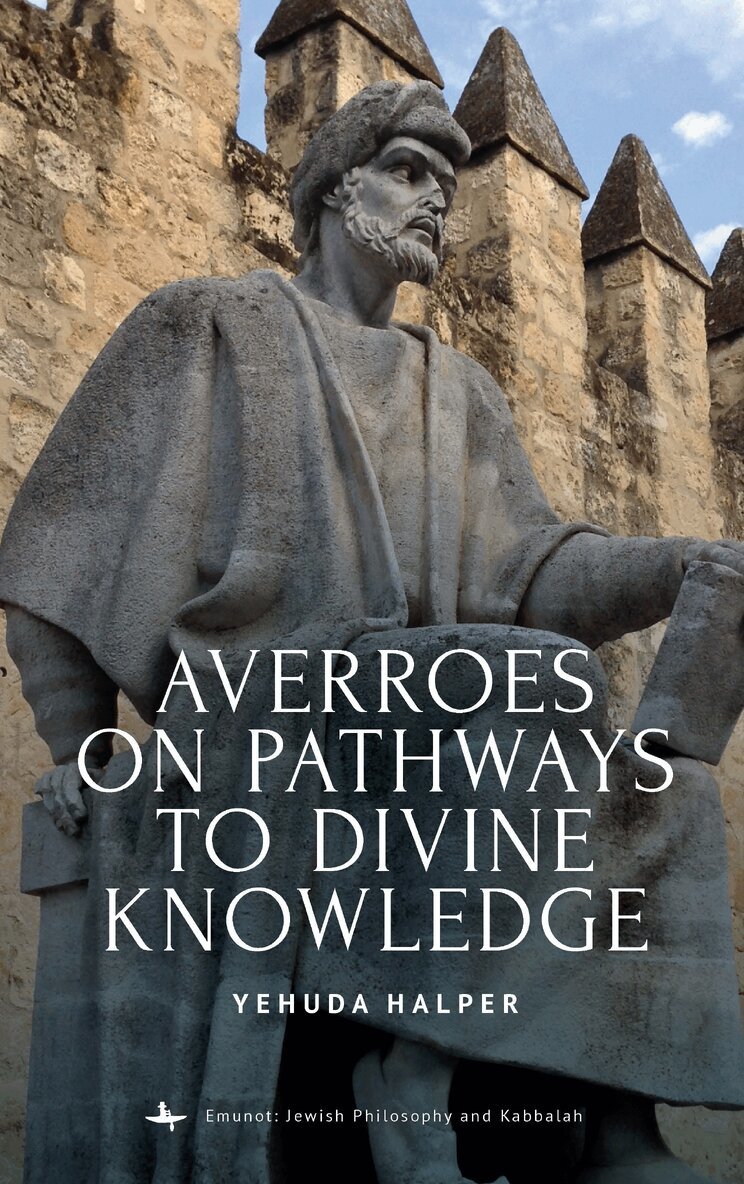
    Averroes on Pathways to Divine Knowledge

    AvYehuda Halper

    Inbunden, Engelska, 2025

    Del i serien Emunot: Jewish Philosophy and Kabbalah

    1 529 kr

    Beställningsvara. Skickas inom 5-8 vardagar. Fri frakt över 249 kr.

    Fler format och utgåvor

    E-bok

    2 163 kr

    E-bok

    2 163 kr

    Beskrivning

    The twelfth-century Andalusian philosopher Averroes sought to understand the divine in a way independent of religious theology, by turning to the philosophical works of Aristotle and, to a lesser extent, Plato. In doing so, he established standards of scientific inquiry into God that were and remain highly influential on Jewish and Christian thought. Averroes, however, does not provide much in the way of demonstrative knowledge of God, and most of his arguments remain dialectical, rhetorical, or political. This volume explores the various pathways towards attaining divine knowledge that we find in Averroes’ commentaries on Aristotle’s De Anima, Metaphysics, and Nicomachean Ethics, and on Plato’s Republic, along with Averroes’ Epistle on Divine Knowledge, Decisive Treatise, and more.

    Produktinformation

    • Utgivningsdatum:2025-07-24
    • Mått:155 x 233 x 15 mm
    • Vikt:449 g
    • Format:Inbunden
    • Språk:Engelska
    • Serie:Emunot: Jewish Philosophy and Kabbalah
    • Antal sidor:188
    • Förlag:Academic Studies Press
    • ISBN:9798887197616

    Utforska kategorier

    • Judendom inom Filosofi och religion
    • Religion: allmänt inom Filosofi och religion
    • Filosofi inom Filosofi och religion

    Mer om författaren

    Yehuda Halper is Professor in the Department of Jewish Philosophy at Bar Ilan University. His first monograph, Jewish Socratic Questions in an Age without Plato (Brill, 2021) won the Goldstein-Goren Book Award for the best book in Jewish Thought in 2019-2021. He is currently directing the ISF grant (#622/22) "Samuel Ibn Tibbon's Explanation of Foreign Terms and the Foundations of Philosophy in Hebrew".

    Recensioner i media

    “In Averroes on Pathways to Divine Knowledge, Yehuda Halper guides his readers through a transformative exploration of Averroes’s metaphysical thought, uncovering the manifold ways the Commentator illuminates humanity’s longing for divine truth. Through careful analysis of Averroes’s engagement with Aristotle’s Metaphysics and Plato’s Republic, Halper reveals a thinker grappling earnestly with the deepest questions of intentionality, dialectics, and the very nature and purpose of philosophical inquiry. Moving deftly between Averroes’s Arabic texts and their broader historical-philosophical implications, this work not only elucidates the enduring tensions between dialectic and demonstration, human reason and divine intellect, but also positions Averroes as a partner in a continued philosophical journey begun in antiquity. Halper’s study is invaluable to scholars in medieval thought, but also richly rewarding for contemporary philosophers, historians, and theologians navigating epistemology, politics, metaphysics, and the timeless quest for the divine. A luminous contribution, elegantly composed and profoundly insightful, this book invites its readers into  the inexhaustible dialogue of philosophy itself.” — Katja Krause, Professor for the History of Science, Technische Universität Berlin, Research Group Leader, Max Planck Institute for the History of ScienceThis valuable publication brings together in a single volume eight insightful articles by Halper providing analyses of various writings of Ibn Rushd / Averroes relating directly or indirectly to the Cordoban’s dialectical and metaphysical aspirations to divine knowledge. This collection is particularly successful in acquainting readers with several dialectical efforts on metaphysical issues." — Dr. Richard C. Taylor, Professor of Philosophy, Marquette University, and annual Visiting Professor, Katholieke Universiteit, Leuven

    Innehållsförteckning

    • AcknowledgementsIntroduction1. Averroes on Intentionality and the Human Experience of the Natural World2. Averroes’s Epistle on Divine Knowledge as a Dialectical Work: Between Forbidden Interpretation and Philosophical Training3. Dialecticians and Dialectics in Averroes’s Long Commentary on Gamma 2 of Aristotle’s Metaphysics4. The Hierarchy of Terms in the Short Commentary on Metaphysics Δ5. Averroes’s Rewrite of Aristotle’s Metaphysics Δ: Establishing the Plain Meaning of the Text in the Midde Commentary6. Losing Focus: Notes on Averroes’s Introduction to Aristotle’s Metaphysics Δ in the Long Commentary7. Happiness, Eros, and the Active Intellect: Understanding Erotic Desire in Averroes’s Long Commentary on Aristotle’s Metaphysics Λ in light of the Middle Commentary on the Nicomachean Ethics8. Expelling Dialectics from the Ideal State: Making the World Safe for Philosophy in Averroes’s Commentary on Plato’s “Republic”