A. Poljakoff-Mayber – författare
Visar alla böcker från författaren A. Poljakoff-Mayber. Handla med fri frakt och snabb leverans.
4 produkter
4 produkter
E-bok
Engelska, 2014756 kr
Läs direkt efter köp
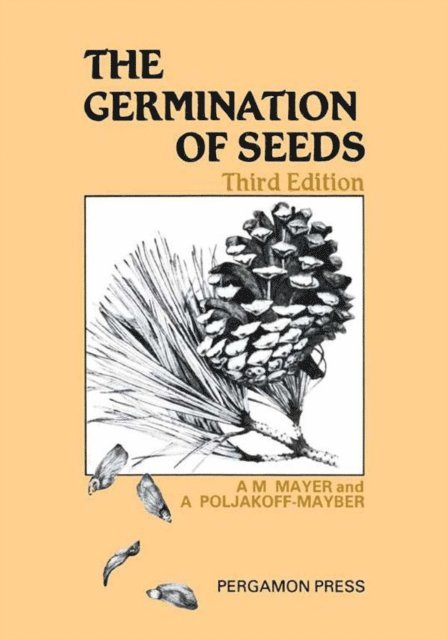
The Germination of Seeds, Third Edition discusses topics concerning seed germination. The book is comprised of seven chapters that tackle subjects relating to the field of germination. Chapter 1 discusses the structure of seeds and seedlings, while Chapter 2 covers the chemical composition of seeds. Chapter 3 tackles the factors affecting germination, and Chapter 4 deals with dormancy, germination inhibition, and stimulation. Chapter 5 talks about the metabolism of germinating seeds, and Chapter 6 discusses the effect of germination inhibitors and stimulators on metabolism and their possible regulatory role. Chapter 7 covers the ecology of germination. The book will be of great interest to botanists, who are particularly concerned with plant physiology.
E-bok
Engelska, 1982763 kr
Läs direkt efter köp
The Germination of Seeds, Third Edition contains the same content in the previous edition, but with modifications in each section, containing updated information. As the first two editions, this edition attempts to treat critically the available information on seed germination and to assimilate this information. This text first discusses the structure and chemical composition of seeds. This book then explains germination and related concepts, such as factors affecting this process, inhibition and stimulation, and seed metabolism. This selection concludes by explaining the ecology of germination. This publication will be invaluable to those in the field of agriculture, as well as students and layperson interested in seed germination.
E-bok
PDF, Engelska, 20121 408 kr
Läs direkt efter köp
A. POLJAKOFF-MAYBER and J. GALE The response of plants to saline environments is of interest to people of many disciplines. In agriculture the problem of salinity becomes more severe every year as the non-saline soils and the non-saline waters become more intensively and more extensively exploited. Further expansion of agriculture must consider the cultivation of saline soils and the use of water with a relatively high content of soluble, salts. Moreover, industrial development in many countries is causing severe water pollution, especially of rivers, and mismanagement in agriculture often induces secondary salinization of soils and sources of irrigation water. From the point of view of agriculture it is, therefore, of the utmost importance to know the various responses of plants to salinity and to understand the nature of the damage caused by salinity to agricultural crops. Botanists and plant physiologists study plants, their form, growth, metabolism and response to external stimuli. A challenging problem for them is to understand the differences between glycophytes, plants growing in a non-saline environment and halophytes, plants which normally grow in salt marshes, in sea water or in saline soils. This includes the elucidation of structural and functional adaptations which enable halophytes to tolerate the saline environment, and also questions as to whether they only tolerate the saline environment or actually thrive in it. Ecologists and environmentalists are interested in the interrelationships be tween the organism, in this case the plant, and its environment, from the climatic, edaphic and biotic points of view.
Häftad, Engelska, 2011
1 123 kr
Skickas inom 10-15 vardagar
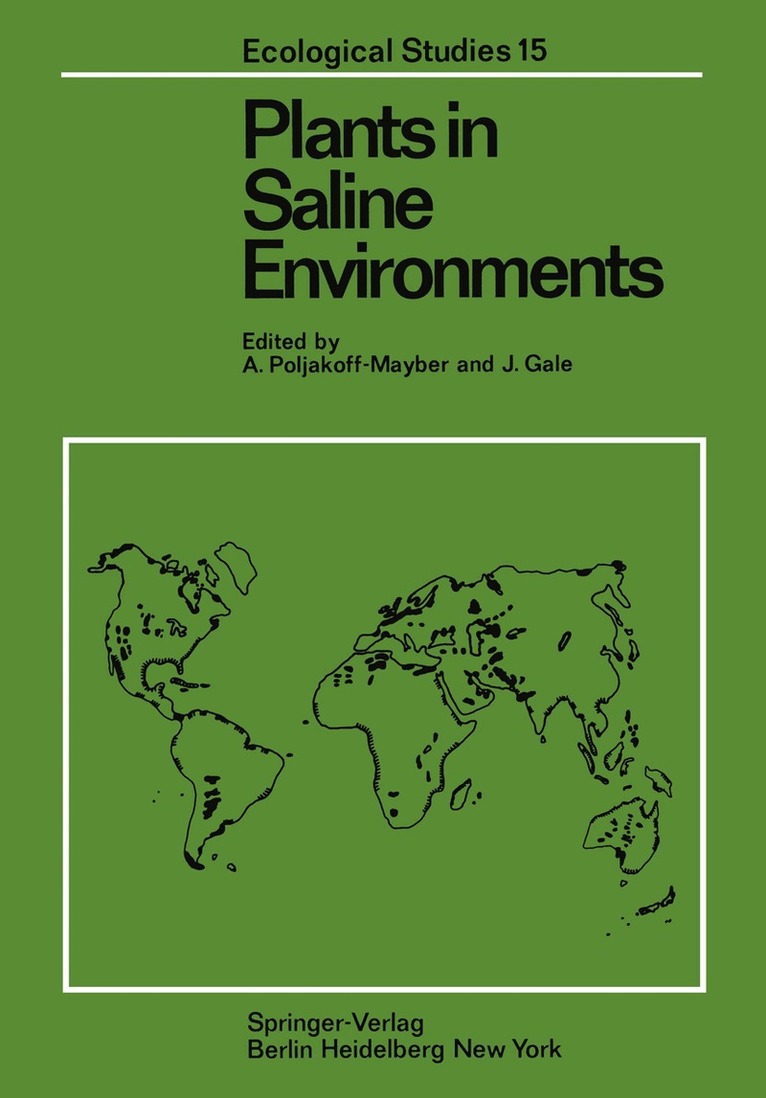
A. POLJAKOFF-MAYBER and J. GALE The response of plants to saline environments is of interest to people of many disciplines. In agriculture the problem of salinity becomes more severe every year as the non-saline soils and the non-saline waters become more intensively and more extensively exploited. Further expansion of agriculture must consider the cultivation of saline soils and the use of water with a relatively high content of soluble, salts. Moreover, industrial development in many countries is causing severe water pollution, especially of rivers, and mismanagement in agriculture often induces secondary salinization of soils and sources of irrigation water. From the point of view of agriculture it is, therefore, of the utmost importance to know the various responses of plants to salinity and to understand the nature of the damage caused by salinity to agricultural crops. Botanists and plant physiologists study plants, their form, growth, metabolism and response to external stimuli. A challenging problem for them is to understand the differences between glycophytes, plants growing in a non-saline environment and halophytes, plants which normally grow in salt marshes, in sea water or in saline soils. This includes the elucidation of structural and functional adaptations which enable halophytes to tolerate the saline environment, and also questions as to whether they only tolerate the saline environment or actually thrive in it. Ecologists and environmentalists are interested in the interrelationships be tween the organism, in this case the plant, and its environment, from the climatic, edaphic and biotic points of view.