Aaron Gerow - Böcker
Visar alla böcker från författaren Aaron Gerow. Handla med fri frakt och snabb leverans.
5 produkter
5 produkter
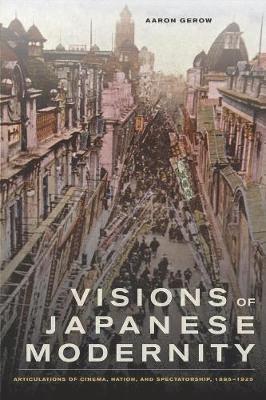
Visions of Japanese Modernity
Articulations of Cinema, Nation, and Spectatorship, 1895-1925
Häftad, Engelska, 2010
299 kr
Skickas inom 7-10 vardagar
Japan has done marvelous things with cinema, giving the world the likes of Kurosawa, Mizoguchi, and Ozu. But cinema did not arrive in Japan fully formed at the end of the nineteenth century, nor was it simply adopted into an ages-old culture. Aaron Gerow explores the processes by which film was defined, transformed, and adapted during its first three decades in Japan. He focuses in particular on how one trend in criticism, the 'Pure Film Movement', changed not only the way films were made, but also how they were conceived. Looking closely at the work of critics, theorists, intellectuals, benshi artists, educators, police, and censors, Gerow finds that this trend established a way of thinking about cinema that would reign in Japan for much of the twentieth century.
Visions of Japanese Modernity
Articulations of Cinema, Nation, and Spectatorship, 1895-1925
Inbunden, Engelska, 2010
1 560 kr
Skickas inom 3-6 vardagar
Japan has done marvelous things with cinema, giving the world the likes of Kurosawa, Mizoguchi, and Ozu. But cinema did not arrive in Japan fully formed at the end of the nineteenth century, nor was it simply adopted into an ages-old culture. Aaron Gerow explores the processes by which film was defined, transformed, and adapted during its first three decades in Japan. He focuses in particular on how one trend in criticism, the 'Pure Film Movement', changed not only the way films were made, but also how they were conceived. Looking closely at the work of critics, theorists, intellectuals, benshi artists, educators, police, and censors, Gerow finds that this trend established a way of thinking about cinema that would reign in Japan for much of the twentieth century.
1 425 kr
Skickas inom 10-15 vardagar
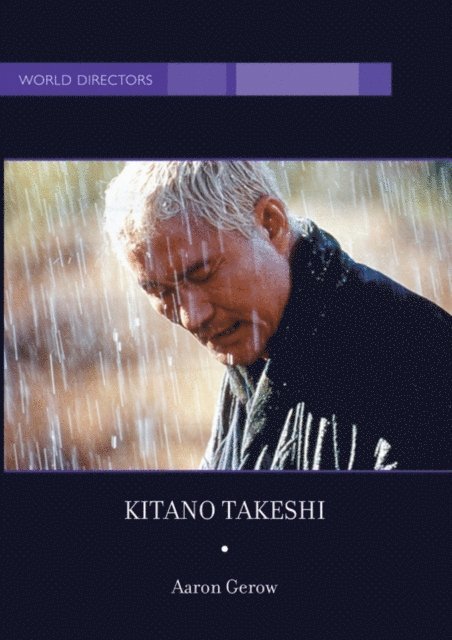
Combining a detailed account of the situation in Japanese film and criticism with unique close analyses of Kitano's films from Violent Cop to Takeshis, the author relates the director to issues of contemporary cinema, Japanese national identity, and globalism.
261 kr
Skickas inom 7-10 vardagar
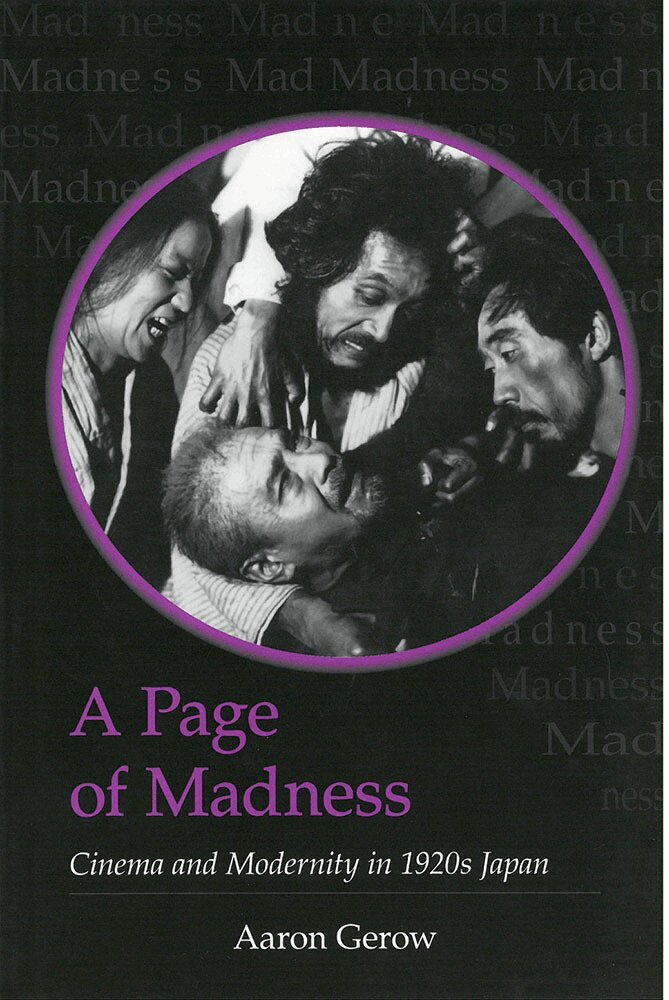
Kinugasa Teinosuke’s 1926 film A Page of Madness (Kurutta ichipeiji) is celebrated as one of the masterpieces of silent cinema. It was an independently produced, experimental, avant-garde work from Japan whose brilliant use of cinematic technique was equal to if not superior to that of contemporary European cinema. Those studying Japan, focusing on the central involvement of such writers as Yokomitsu Riichi and the Nobel Prize winner Kawabata Yasunari, have seen it as a pillar of the close relationship in the Taisho era between film and artistic modernism, as well as a marker of the uniqueness of prewar Japanese film culture. But is this film really what it seems to be? Aaron Gerow brings meticulous research to the film’s production, distribution, exhibition, and reception and closely analyzes the film’s shooting script and shooting notes, which were recently made available. He draws a new picture of this complex work, revealing a film divided between experiment and convention, modernism and melodrama, the image and the word, cinema and literature, conflicts that play out in the story and structure of the film and its context. A Page of Madness, a film fundamentally about differing perceptions and conflicting worlds, was received at the time in different versions and with varying interpretations, and ironically, the film that exists today is not in fact the one originally released. Including a detailed analysis of the film and translations of contemporary reviews and shooting notes for scenes missing from the current print, Gerow’s book offers provocative insight into the fascinating film A Page of Madness was—and still is—and into the struggles over this work that tried to articulate the place of cinema in Japanese society and modernity.
304 kr
Skickas inom 7-10 vardagar
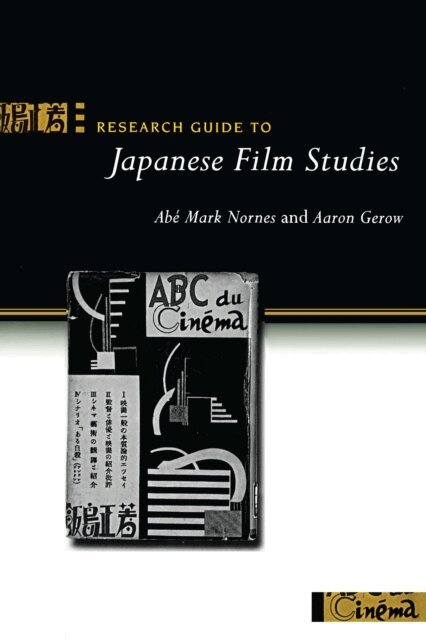
The Research Guide to Japanese Film Studies provides a snapshot of all the archival and bibliographic resources available to students and scholars of Japanese cinema. Among the nations of the world, Japan has enjoyed an impressively lively print culture related to cinema. The first film books and periodicals appeared shortly after the birth of cinema, proliferating wildly in the 1910s with only the slightest pause in the dark days of World War II. The numbers of publications match the enormous scale of film production, but with the lack of support for film studies in Japan, much of it remains as uncharted territory, with few maps to negotiate the maze of material. This book is the first comprehensive guide ever published for approaching the complex archive for Japanese cinema. It lists all the libraries and film archives in the world with significant collections of film prints, still photographs, archival records, books, and periodicals. It provides a full annotated bibliography of the core books and magazines for the field. And it supplies hints for how to find and access materials for any research project. Above and beyond that, Nornes and Gerow’s Research Guide to Japanese Film Studies constitutes a comprehensive overview of the impressive dimensions and depth of the print culture surrounding Japanese film, and a guideline for future research in the field. This is an essential book for anyone seriously thinking about Japan and its cinema.