Adam Arenson - Böcker
Visar alla böcker från författaren Adam Arenson. Handla med fri frakt och snabb leverans.
5 produkter
5 produkter
776 kr
Skickas inom 7-10 vardagar
This innovative study presents a new, integrated view of the Civil War and Reconstruction and the history of the western United States. Award-winning historians such as Steven Hahn, Martha Sandweiss, William Deverell, Virginia Scharff, and Stephen Kantrowitz offer original essays on lives, choices, and legacies in the American West, discussing the consequences for American Indian nations, the link between Reconstruction and suffrage movements, and cross-border interactions with Canada and Mexico. In the West, Civil War battle fields and Civil War politics engaged a wide range of ethnic and racial distinctions, raising questions that would arise only later in places farther east. Histories of Reconstruction in the South ignore the connections to previous occupation efforts and citizenship debates in the West. The stories contained in this volume complicate our understanding of the paths from slavery to freedom for white as well as non-white Americans.By placing the histories of the American West and the Civil War and Reconstruction period within one sustained conversation, this volume expands the limits of both by emphasizing how struggles over land, labor, sovereignty, and citizenship shaped the U.S. nation-state in this tumultuous era. This volume highlights significant moments and common concerns of this continuous conflict, as it stretched across the continent and throughout the nineteenth century. Publishing on the 150th anniversary of the end of the Civil War, this collection brings eminent historians into conversation, looking at the Civil War from several Western perspectives, and delivers a refreshingly disorienting view intended for scholars, general readers, and students. Published in Cooperation with the William P Clements Center for Southwest Studies, Southern Methodist University.
250 kr
Skickas inom 7-10 vardagar
This innovative study presents a new, integrated view of the Civil War and Reconstruction and the history of the western United States. Award-winning historians such as Steven Hahn, Martha Sandweiss, William Deverell, Virginia Scharff, and Stephen Kantrowitz offer original essays on lives, choices, and legacies in the American West, discussing the consequences for American Indian nations, the link between Reconstruction and suffrage movements, and cross-border interactions with Canada and Mexico. In the West, Civil War battlefields and Civil War politics engaged a wide range of ethnic and racial distinctions, raising questions that would arise only later in places farther east. Histories of Reconstruction in the South ignore the connections to previous occupation efforts and citizenship debates in the West. The stories contained in this volume complicate our understanding of the paths from slavery to freedom for white as well as non-white Americans.By placing the histories of the American West and the Civil War and Reconstruction period within one sustained conversation, this volume expands the limits of both by emphasizing how struggles over land, labor, sovereignty, and citizenship shaped the U.S. nation-state in this tumultuous era. This volume highlights significant moments and common concerns of this continuous conflict, as it stretched across the continent and throughout the nineteenth century. Publishing on the 150th anniversary of the end of the Civil War, this collection brings eminent historians into conversation, looking at the Civil War from several Western perspectives, and delivers a refreshingly disorienting view intended for scholars, general readers, and students. Published in Cooperation with the William P Clements Center for Southwest Studies, Southern Methodist University.
461 kr
Skickas inom 10-15 vardagar
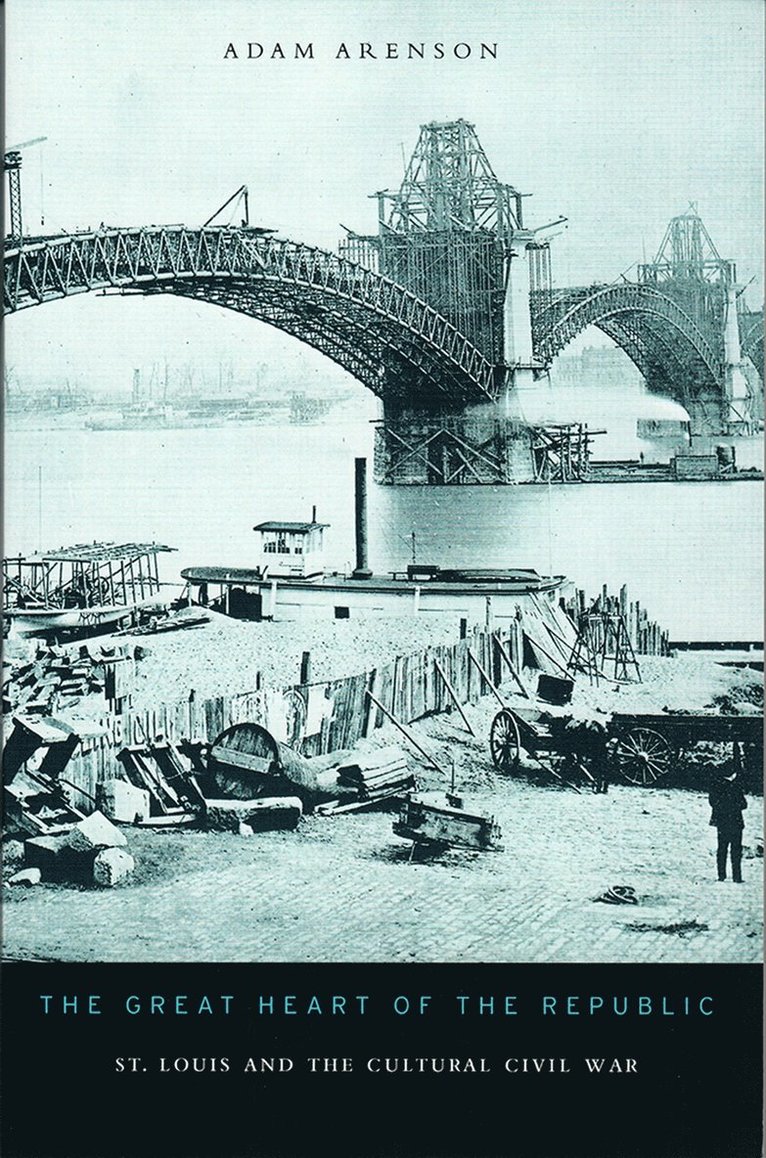
The Civil War revealed what united as well as what divided Americans in the nineteenth century—not only in its deadly military conflict, but also in the broader battle of ideas, dueling moral systems, and competing national visions that preceded and followed. This cultural civil war was the clash among North, South, and West, as their leaders sought to shape Manifest Destiny and slavery politics.No site embodied this struggle more completely than St. Louis, the largest city along the border of slavery and freedom. In this sweeping history, Adam Arenson reveals a city at the heart of the cultural civil war. St. Louisans heralded a new future, erasing old patterns as the United States stretched across the continent. They tried to reorient the nation’s political landscape, with westerners in the vanguard and St. Louis as the cultural, commercial, and national capital. John C. Calhoun, Frederick Douglass, Walt Whitman, and John Brown tracked the progress of the cultural contest by monitoring events in St. Louis, observing how the city’s leaders tried yet ultimately failed to control the national destiny.The interplay of local ambitions and national meanings reveals the wider cultural transformation brought about by westward expansion, political strife, and emancipation in the era of the Civil War and Reconstruction. This vibrant and beautifully written story enriches our understanding of America at a crossroads.
653 kr
Skickas inom 5-8 vardagar
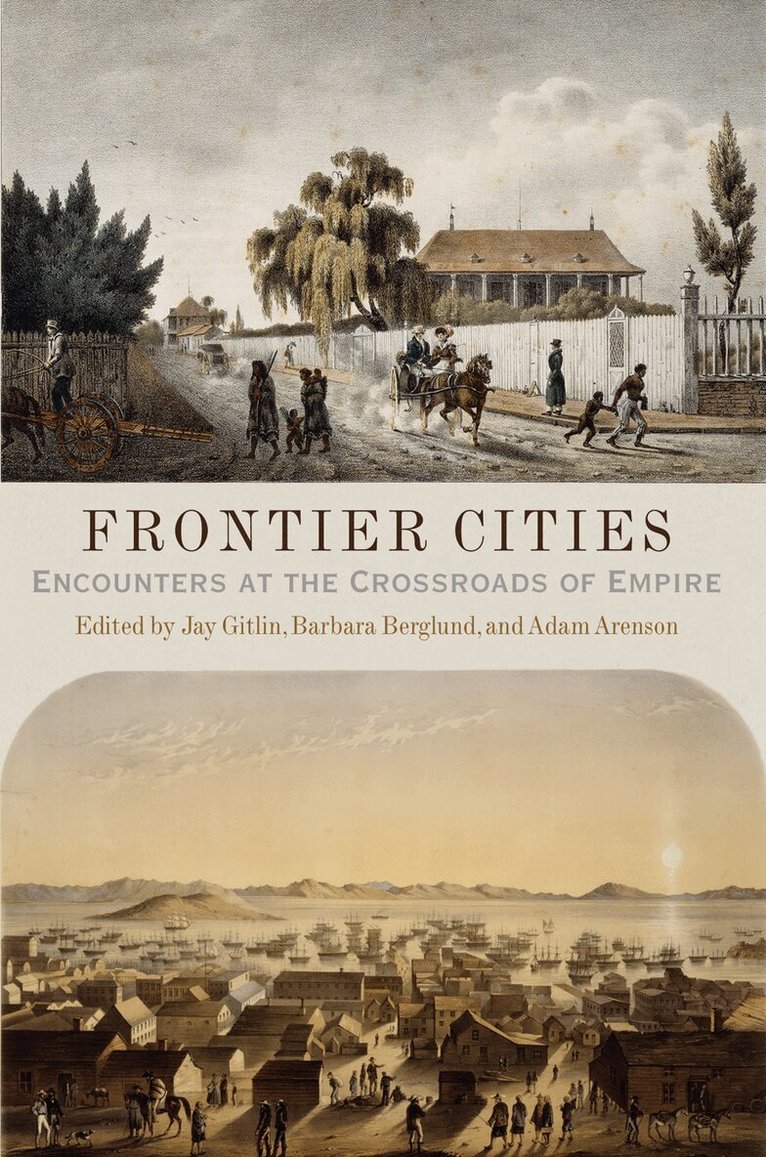
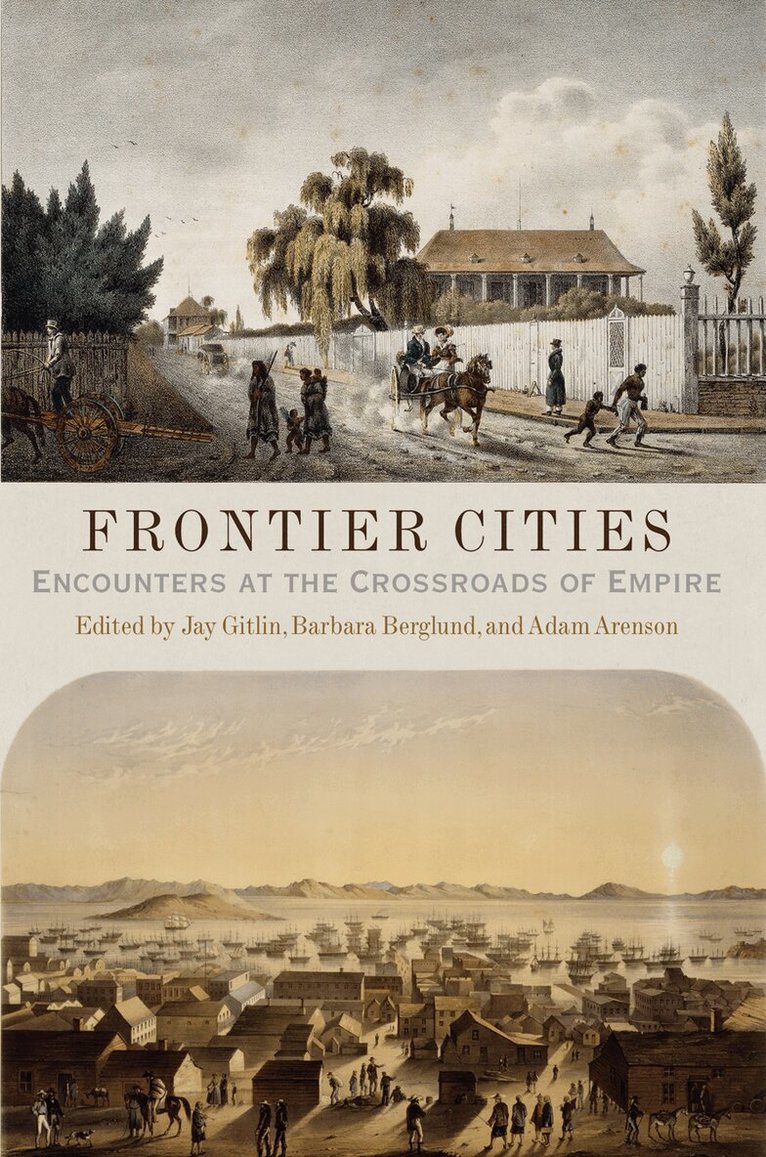
Macau, New Orleans, St. Louis, Pittsburgh, and San Francisco. All of these metropolitan centers were once frontier cities, urban areas irrevocably shaped by cross-cultural borderland beginnings. Spanning a wide range of periods and locations, and including stories of eighteenth-century Detroit, nineteenth-century Seattle, and twentieth-century Los Angeles, Frontier Cities recovers the history of these urban places and shows how, from the start, natives and newcomers alike shared streets, buildings, and interwoven lives. Not only do frontier cities embody the earliest matrix of the American urban experience; they also testify to the intersections of colonial, urban, western, and global history.The twelve essays in this collection paint compelling portraits of frontier cities and their inhabitants: the French traders who bypassed imperial regulations by throwing casks of brandy over the wall to Indian customers in eighteenth-century Montreal; Isaac Friedlander, San Francisco's "Grain King"; and Adrien de Pauger, who designed the Vieux CarrÉ in New Orleans. Exploring the economic and political networks, imperial ambitions, and personal intimacies of frontier city development, this collection demonstrates that these cities followed no mythic line of settlement, nor did they move lockstep through a certain pace or pattern of evolution. An introduction puts the collection in historical context, and the epilogue ponders the future of frontier cities in the midst of contemporary globalization. With innovative concepts and a rich selection of maps and images, Frontier Cities imparts a crucial untold chapter in the construction of urban history and place.
Banking on Beauty
Millard Sheets and Midcentury Commercial Architecture in California
Inbunden, Engelska, 2018
494 kr
Skickas inom 7-10 vardagar
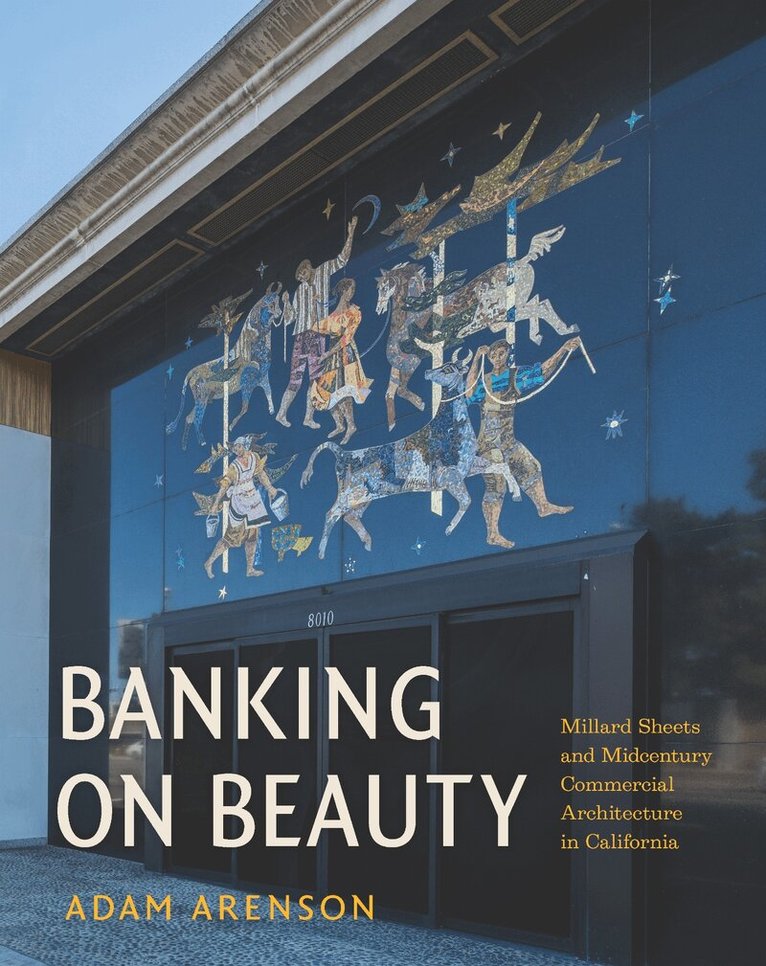
Winner, Docomomo US Modernism in America Citation of Merit, 2018PROSE Award, Architecture and Urban Planning ,Association of American Publishers (AAP), 2019“I want buildings that will be exciting seventy-five years from now,” financier Howard Ahmanson told visual artist Millard Sheets, offering him complete control of design, subject, decoration, and budget for his Home Savings and Loan branch offices. The partnership between Home Savings-for decades, the nation’s largest savings and loan-and the Millard Sheets Studio produced more than 160 buildings in California, Texas, Florida, New York, Ohio, Illinois, and Missouri over the course of a quarter century. Adorned with murals, mosaics, stained glass, and sculptures, the Home Savings (and Savings of America) branches displayed a celebratory vision of community history and community values that garnered widespread acclaim.Banking on Beauty presents the first history of this remarkable building program. Drawing extensively on archival materials, site visits, and oral history interviews, Adam Arenson tells a fascinating story of how the architecture and art were created, the politics of where the branches were built, and why the Sheets Studio switched from portraying universal family scenes to celebrating local history amid the dramatic cultural and political changes of the 1960s. Combining urban history, business history, and art and architectural history, Banking on Beauty reveals how these institutions shaped the corporate and cultural landscapes of Southern California, where many of the branches were located. Richly illustrated and beautifully written, Banking on Beauty builds a convincing case for preserving these outstanding examples of Midcentury Modern architecture, which currently face an uncertain future.