Andrew R. Graybill - Böcker
Visar alla böcker från författaren Andrew R. Graybill. Handla med fri frakt och snabb leverans.
6 produkter
6 produkter
776 kr
Skickas inom 7-10 vardagar
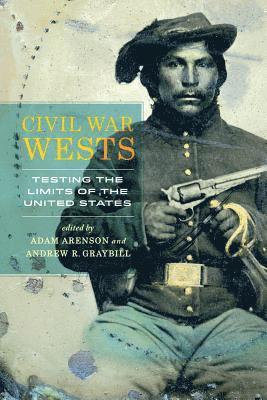
This innovative study presents a new, integrated view of the Civil War and Reconstruction and the history of the western United States. Award-winning historians such as Steven Hahn, Martha Sandweiss, William Deverell, Virginia Scharff, and Stephen Kantrowitz offer original essays on lives, choices, and legacies in the American West, discussing the consequences for American Indian nations, the link between Reconstruction and suffrage movements, and cross-border interactions with Canada and Mexico. In the West, Civil War battle fields and Civil War politics engaged a wide range of ethnic and racial distinctions, raising questions that would arise only later in places farther east. Histories of Reconstruction in the South ignore the connections to previous occupation efforts and citizenship debates in the West. The stories contained in this volume complicate our understanding of the paths from slavery to freedom for white as well as non-white Americans.By placing the histories of the American West and the Civil War and Reconstruction period within one sustained conversation, this volume expands the limits of both by emphasizing how struggles over land, labor, sovereignty, and citizenship shaped the U.S. nation-state in this tumultuous era. This volume highlights significant moments and common concerns of this continuous conflict, as it stretched across the continent and throughout the nineteenth century. Publishing on the 150th anniversary of the end of the Civil War, this collection brings eminent historians into conversation, looking at the Civil War from several Western perspectives, and delivers a refreshingly disorienting view intended for scholars, general readers, and students. Published in Cooperation with the William P Clements Center for Southwest Studies, Southern Methodist University.
250 kr
Skickas inom 7-10 vardagar
This innovative study presents a new, integrated view of the Civil War and Reconstruction and the history of the western United States. Award-winning historians such as Steven Hahn, Martha Sandweiss, William Deverell, Virginia Scharff, and Stephen Kantrowitz offer original essays on lives, choices, and legacies in the American West, discussing the consequences for American Indian nations, the link between Reconstruction and suffrage movements, and cross-border interactions with Canada and Mexico. In the West, Civil War battlefields and Civil War politics engaged a wide range of ethnic and racial distinctions, raising questions that would arise only later in places farther east. Histories of Reconstruction in the South ignore the connections to previous occupation efforts and citizenship debates in the West. The stories contained in this volume complicate our understanding of the paths from slavery to freedom for white as well as non-white Americans.By placing the histories of the American West and the Civil War and Reconstruction period within one sustained conversation, this volume expands the limits of both by emphasizing how struggles over land, labor, sovereignty, and citizenship shaped the U.S. nation-state in this tumultuous era. This volume highlights significant moments and common concerns of this continuous conflict, as it stretched across the continent and throughout the nineteenth century. Publishing on the 150th anniversary of the end of the Civil War, this collection brings eminent historians into conversation, looking at the Civil War from several Western perspectives, and delivers a refreshingly disorienting view intended for scholars, general readers, and students. Published in Cooperation with the William P Clements Center for Southwest Studies, Southern Methodist University.
Policing the Great Plains
Rangers, Mounties, and the North American Frontier, 1875-1910
Häftad, Engelska, 2007
378 kr
Skickas inom 10-15 vardagar
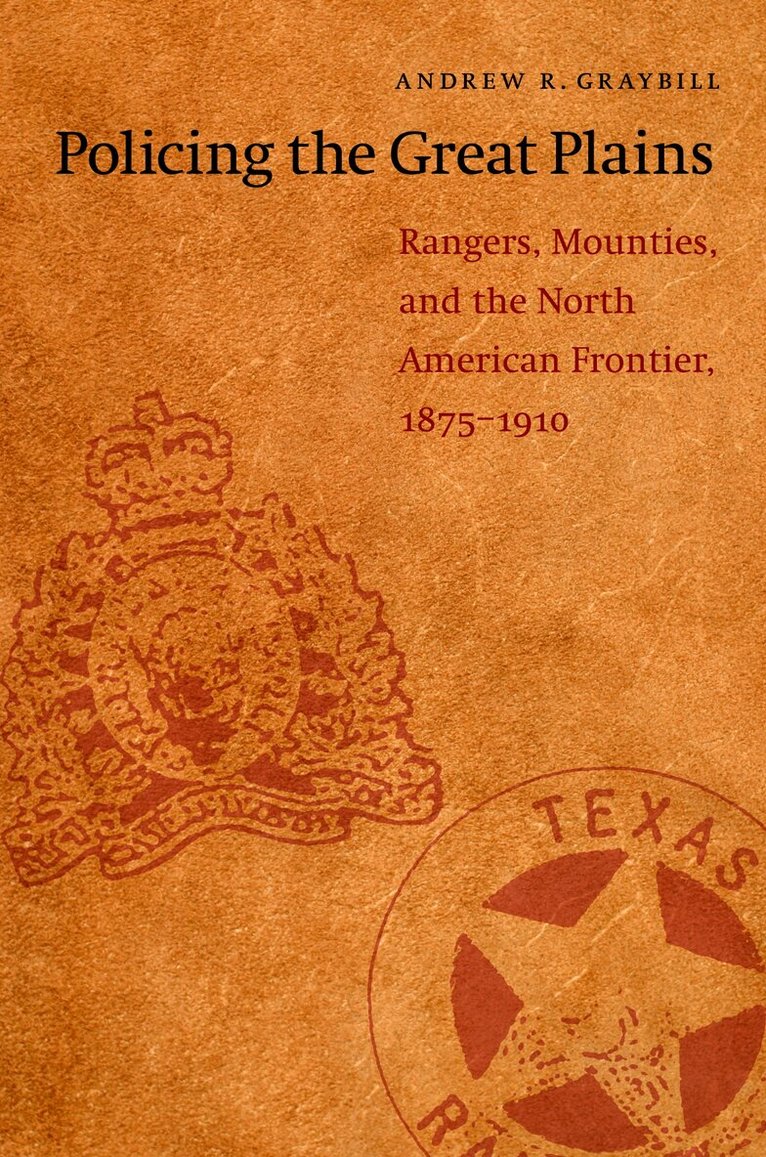
Published in Cooperation with the William P. Clements Center for Southwest Studies, Southern Methodist University.In the late nineteenth century, the Texas Rangers and Canada’s North-West Mounted Police were formed to bring the resource-rich hinterlands at either end of the Great Plains under governmental control. Native and rural peoples often found themselves squarely in the path of this westward expansion and the law enforcement agents that led the way. Though separated by nearly two thousand miles, the Rangers and Mounties performed nearly identical functions, including subjugating Indigenous groups; dispossessing peoples of mixed ancestry; defending the property of big cattlemen; and policing industrial disputes. Yet the means by which the two forces achieved these ends sharply diverged; while the Rangers often relied on violence, the Mounties usually exercised restraint, a fact that highlights some of the fundamental differences between the U.S. and Canadian Wests. Policing the Great Plains presents the first comparative history of the two most famous constabularies in the world.
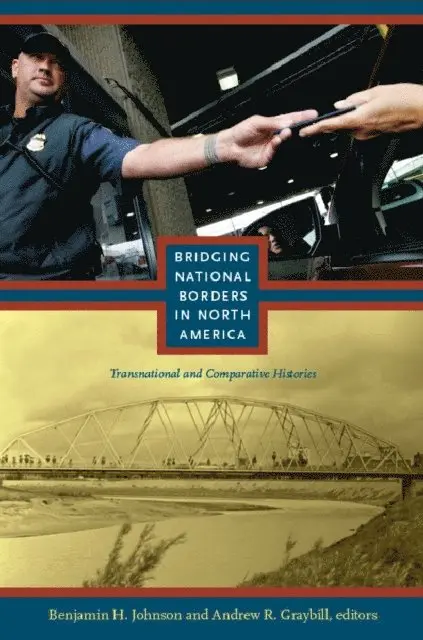
Bridging National Borders in North America
Transnational and Comparative Histories
Inbunden, Engelska, 2010
1 737 kr
Skickas inom 7-10 vardagar
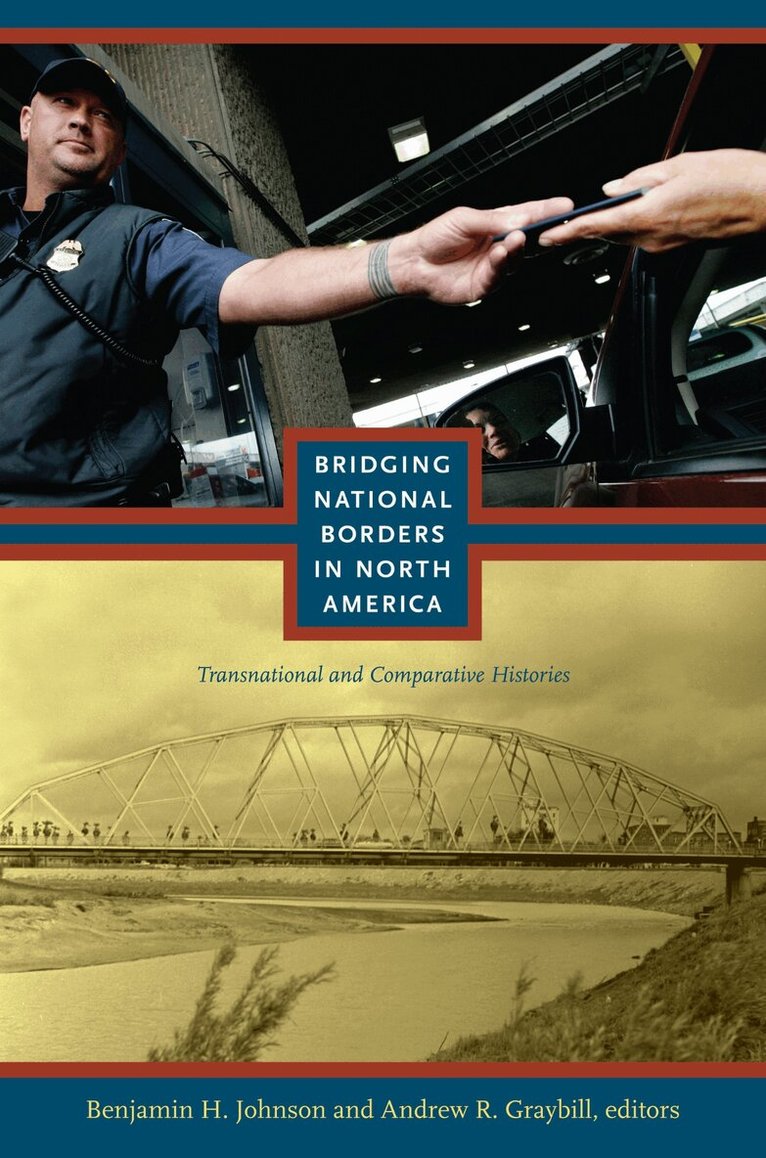
Despite a shared interest in using borders to explore the paradoxes of state-making and national histories, historians of the U.S.-Canada border region and those focused on the U.S.-Mexico borderlands have generally worked in isolation from one another. A timely and important addition to borderlands history, Bridging National Borders in North America initiates a conversation between scholars of the continent’s northern and southern borderlands. The historians in this collection examine borderlands events and phenomena from the mid-nineteenth century through the mid-twentieth. Some consider the U.S.-Canada border, others concentrate on the U.S.-Mexico border, and still others take both regions into account.The contributors engage topics such as how mixed-race groups living on the peripheries of national societies dealt with the creation of borders in the nineteenth century, how medical inspections and public-health knowledge came to be used to differentiate among bodies, and how practices designed to channel livestock and prevent cattle smuggling became the model for regulating the movement of narcotics and undocumented people. They explore the ways that U.S. immigration authorities mediated between the desires for unimpeded boundary-crossings for day laborers, tourists, casual visitors, and businessmen, and the restrictions imposed by measures such as the Chinese Exclusion Act of 1882 and the 1924 Immigration Act. Turning to the realm of culture, they analyze the history of tourist travel to Mexico from the United States and depictions of the borderlands in early-twentieth-century Hollywood movies. The concluding essay suggests that historians have obscured non-national forms of territoriality and community that preceded the creation of national borders and sometimes persisted afterwards. This collection signals new directions for continental dialogue about issues such as state-building, national expansion, territoriality, and migration.Contributors: Dominique BrÉgent-Heald, Catherine Cocks, Andrea Geiger, Miguel Ángel GonzÁlez Quiroga, Andrew R. Graybill, Michel Hogue, Benjamin H. Johnson, S. Deborah Kang, Carolyn Podruchny, Bethel Saler, Jennifer Seltz, Rachel St. John, Lissa WadewitzPublished in cooperation with the William P. Clements Center for Southwest Studies, Southern Methodist University.
Bridging National Borders in North America
Transnational and Comparative Histories
Häftad, Engelska, 2010
426 kr
Skickas inom 7-10 vardagar
Despite a shared interest in using borders to explore the paradoxes of state-making and national histories, historians of the U.S.-Canada border region and those focused on the U.S.-Mexico borderlands have generally worked in isolation from one another. A timely and important addition to borderlands history, Bridging National Borders in North America initiates a conversation between scholars of the continent’s northern and southern borderlands. The historians in this collection examine borderlands events and phenomena from the mid-nineteenth century through the mid-twentieth. Some consider the U.S.-Canada border, others concentrate on the U.S.-Mexico border, and still others take both regions into account.The contributors engage topics such as how mixed-race groups living on the peripheries of national societies dealt with the creation of borders in the nineteenth century, how medical inspections and public-health knowledge came to be used to differentiate among bodies, and how practices designed to channel livestock and prevent cattle smuggling became the model for regulating the movement of narcotics and undocumented people. They explore the ways that U.S. immigration authorities mediated between the desires for unimpeded boundary-crossings for day laborers, tourists, casual visitors, and businessmen, and the restrictions imposed by measures such as the Chinese Exclusion Act of 1882 and the 1924 Immigration Act. Turning to the realm of culture, they analyze the history of tourist travel to Mexico from the United States and depictions of the borderlands in early-twentieth-century Hollywood movies. The concluding essay suggests that historians have obscured non-national forms of territoriality and community that preceded the creation of national borders and sometimes persisted afterwards. This collection signals new directions for continental dialogue about issues such as state-building, national expansion, territoriality, and migration.Contributors: Dominique BrÉgent-Heald, Catherine Cocks, Andrea Geiger, Miguel Ángel GonzÁlez Quiroga, Andrew R. Graybill, Michel Hogue, Benjamin H. Johnson, S. Deborah Kang, Carolyn Podruchny, Bethel Saler, Jennifer Seltz, Rachel St. John, Lissa WadewitzPublished in cooperation with the William P. Clements Center for Southwest Studies, Southern Methodist University.
164 kr
Tillfälligt slut
At dawn on January 23, 1870, four hundred men of the Second U.S. Cavalryattacked and butchered a Piegan camp near the Marias River in Montana inone of the worst slaughters of Indians by American military forces in U.S.history. Coming to avenge the murder of their father—a former fur-trader namedMalcolm Clarke who had been killed four months earlier by their Piegan mother’scousin—Clarke ’s own two sons joined the cavalry in a slaughter of many of theirown relatives. In this groundbreaking work of American history, Andrew R. Graybillplaces the Marias Massacre within a larger, three-generation saga of the Clarke family,particularly illuminating the complex history of native-white intermarriage in theAmerican Northwest.