Aditya Pratap - Böcker
Visar alla böcker från författaren Aditya Pratap. Handla med fri frakt och snabb leverans.
11 produkter
11 produkter
2 264 kr
Skickas inom 7-10 vardagar
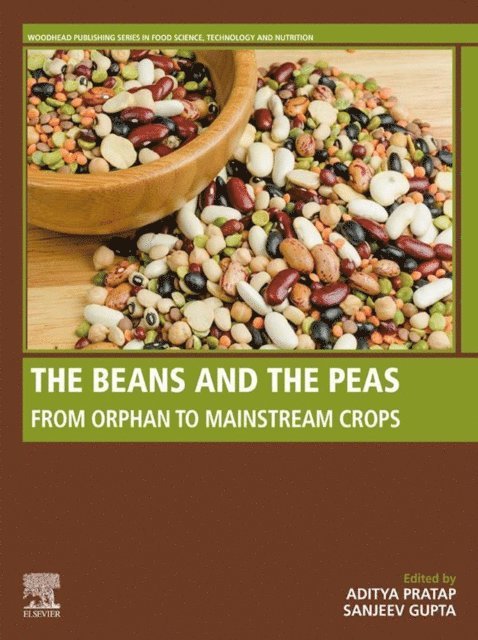
The Beans and the Peas: From Orphan to Mainstream Crops presents a comprehensive literature resource on the most important food legume crops previously known as "orphans," but which are increasingly becoming mainstream as their production opportunities have been improved through genetic improvement and biotechnology, and their role as an important nutrient source gains urgency. This book focuses on 12 important food legumes and discusses all relevant aspects on their economic importance, crop statistics, botany, and their general description. It also provides exhaustive information on plant genetic resources and their use, genetic improvement, resistance to biotic and abiotic stresses, improved varieties, agronomy, seed system, and use of information and communication tools in each individual food legume.Development of innovative biotechnological tools, genetic transformation, and the genome sequencing information has also been covered in each chapter providing the readers with state-of-the-art information on pulses. All chapters have been supported by relevant figures, illustrations, and tables, which make the contents accessible and easy to understand.Each of the chapters has been authored by globally known scientists/researchers presenting up-to-date information on various aspects of food legumes. This book provides a current and comprehensive treatise to the readers and will be tremendously helpful in furthering their academic and research pursuits. Provides a single-volume resource on the most important food legumes having a prominent role in food and nutritional security Written by experts with a focus on providing foundational information for further research and development Presents both theoretical aspects and application-based case studies Supported by relevant figures, illustrations, and tables
Alien Gene Transfer in Crop Plants, Volume 1
Innovations, Methods and Risk Assessment
Inbunden, Engelska, 2013
1 578 kr
Skickas inom 10-15 vardagar
Genetic engineering and biotechnology along with conventional breeding have played an important role in developing superior cultivars by transferring economically important traits from distant, wild and even unrelated species to the cultivated varieties which otherwise could not have been possible with conventional breeding. There is a vast amount of literature pertaining to the genetic improvement of crops over last few decades. However, the wonderful results achieved by crop scientists in food legumes’ research and development over the years are scattered in different journals of the World. The two volumes in the series ‘Alien Gene Transfer in Crop Plants’ address this issue and offer a comprehensive reference on the developments made in major food crops of the world. These volumes aim at bringing the contributions from globally renowned scientists at one platform in a reader-friendly manner. The 1st volume entitled, ‘Alien Gene Transfer in Crop Plants: Innovations, Methods and Risk Assessment” will deal exclusively with the process and methodology. The contents of this volume have been designed to appraise the readers with all the theoretical and practical aspects of wide hybridization and gene transfer like processes and methods of gene transfer, role of biotechnology with special reference to embryo rescue, genetic transformation, protoplast fusion and molecular marker technology, problems such as cross incompatibility and barriers to distant hybridization and solutions to overcome them. Since wild and weedy relatives of crop plants may have negative traits associated with them, there are always possibilities of linkage drag while transferring alien alleles. Therefore, problems and limitations of alien gene transfer from these species will also be discussed in this series. Further, the associated risks with this and assessment of risks will also be given due weightage.
1 578 kr
Skickas inom 10-15 vardagar
Genetic engineering and biotechnology along with conventional breeding have played an important role in developing superior cultivars by transferring economically important traits from distant, wild and even unrelated species to the cultivated varieties which otherwise could not have been possible with conventional breeding. There is a vast amount of literature pertaining to the genetic improvement of crops over last few decades. However, the wonderful results achieved by crop scientists in food legumes’ research and development over the years are scattered in different journals of the World. The two volumes in the series ‘Alien Gene Transfer in Crop Plants’ address this issue and offer a comprehensive reference on the developments made in major food crops of the world. These volumes aim at bringing the contributions from globally renowned scientists at one platform in a reader-friendly manner. The second volume entitled, “Alien Gene Transfer in Crop Plants: Achievements and Impact” will deal more with the practical aspects. This volume will cover achievements of alien gene transfer in major food crops of the world and their impact on development of newer genetic variability and additional avenues for selection; development of superior cultivars for increased yield, resistance to biotic and abiotic stresses, improved nutritional and industrial quality; innovation of new techniques and positive as well as negative environmental implications. This volume has been divided into four groups with an aim to cover all major cereals, pulses, oilseeds and other crops (vegetable and horticultural crops) which are of economic importance.
Alien Gene Transfer in Crop Plants, Volume 1
Innovations, Methods and Risk Assessment
Häftad, Engelska, 2016
1 578 kr
Skickas inom 10-15 vardagar
Genetic engineering and biotechnology along with conventional breeding have played an important role in developing superior cultivars by transferring economically important traits from distant, wild and even unrelated species to the cultivated varieties which otherwise could not have been possible with conventional breeding. There is a vast amount of literature pertaining to the genetic improvement of crops over last few decades. However, the wonderful results achieved by crop scientists in food legumes’ research and development over the years are scattered in different journals of the World. The two volumes in the series ‘Alien Gene Transfer in Crop Plants’ address this issue and offer a comprehensive reference on the developments made in major food crops of the world. These volumes aim at bringing the contributions from globally renowned scientists at one platform in a reader-friendly manner. The 1st volume entitled, ‘Alien Gene Transfer in Crop Plants: Innovations, Methods and Risk Assessment” will deal exclusively with the process and methodology. The contents of this volume have been designed to appraise the readers with all the theoretical and practical aspects of wide hybridization and gene transfer like processes and methods of gene transfer, role of biotechnology with special reference to embryo rescue, genetic transformation, protoplast fusion and molecular marker technology, problems such as cross incompatibility and barriers to distant hybridization and solutions to overcome them. Since wild and weedy relatives of crop plants may have negative traits associated with them, there are always possibilities of linkage drag while transferring alien alleles. Therefore, problems and limitations of alien gene transfer from these species will also be discussed in this series. Further, the associated risks with this and assessment of risks will also be given due weightage.
1 170 kr
Skickas inom 10-15 vardagar
Genetic engineering and biotechnology along with conventional breeding have played an important role in developing superior cultivars by transferring economically important traits from distant, wild and even unrelated species to the cultivated varieties which otherwise could not have been possible with conventional breeding. There is a vast amount of literature pertaining to the genetic improvement of crops over last few decades. However, the wonderful results achieved by crop scientists in food legumes’ research and development over the years are scattered in different journals of the World. The two volumes in the series ‘Alien Gene Transfer in Crop Plants’ address this issue and offer a comprehensive reference on the developments made in major food crops of the world. These volumes aim at bringing the contributions from globally renowned scientists at one platform in a reader-friendly manner. The second volume entitled, “Alien Gene Transfer in Crop Plants: Achievements and Impact” will deal more with the practical aspects. This volume will cover achievements of alien gene transfer in major food crops of the world and their impact on development of newer genetic variability and additional avenues for selection; development of superior cultivars for increased yield, resistance to biotic and abiotic stresses, improved nutritional and industrial quality; innovation of new techniques and positive as well as negative environmental implications. This volume has been divided into four groups with an aim to cover all major cereals, pulses, oilseeds and other crops (vegetable and horticultural crops) which are of economic importance.
1 511 kr
Skickas inom 7-10 vardagar
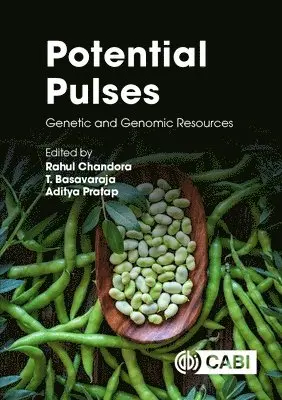
The fight against global hunger demands a fresh perspective. Lesser-known legumes, often called 'potential pulses', can play a pivotal role. These underutilized powerhouses, including adzuki bean, bambara groundnut, faba bean, cowpea, grass pea and horse gram, among others, are currently untapped resources. Their potential goes beyond their ability to thrive in harsh environments (caused by high temperature, drought, etc.) and fix nitrogen. With increased understanding of these legumes and their genetic and genomic potential, we can unlock a new world of sustainable and nutritious food sources. This book explores: The rich genetic diversity of potential pulses and its role in resilience. How advanced genomics can identify traits for improved yields, pest resistance, and climate adaptation. Strategies for conserving and utilizing these valuable genetic resources. Breeding programmes harnessing genetic potential to create next-generation pulse varieties. Focusing on the untapped genetic and genomic potential of these legumes, this book empowers researchers, breeders, and policymakers to unlock a new era of food and nutritional security. By leveraging the power of their genes, we can transform underutilized pulses into the nutritional heroes of tomorrow.
2 101 kr
Skickas inom 7-10 vardagar
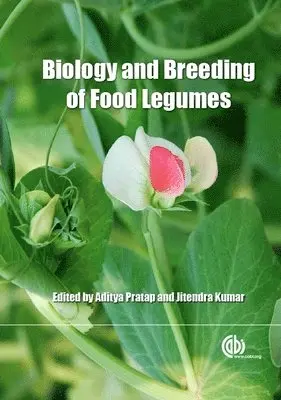
Food legumes are important constituents of human and animal nutrition, supplying high quality proteins crucial for a balanced diet. These crops also play an important role in low-input agricultural production systems by fixing atmospheric nitrogen. Despite systematic and continuous breeding efforts by legume researchers all over the world, substantial genetic gains have not been achieved. These issues require immediate attention, and overall, a paradigm shift is needed in breeding strategies to strengthen our traditional crop improvement programs. To this end, Biology and Breeding of Food Legumes provides extensive information on their history, origin, evolution and botany, as well as breeding objectives and procedures, nutritional improvement, industrial uses, post-harvest technology and recent developments made through biotechnological intervention.
2 625 kr
Skickas inom 7-10 vardagar
Grain legumes provide an excellent source of dietary protein, carbohydrates, iron and zinc. Their role in promoting human and soil health, and environmental sustainability, is appreciated by the global scientific communities. Impressive research progress has been made on the development of improved varieties, matching production and protection technologies, biofortification and post-harvest management of food legumes. The genetic improvement has been, due in large part, to the advent of modern molecular and genomic technologies which have supplemented the traditional methods and classical breeding. This book brings together a comprehensive knowledge resource on all such developments and provides information on next generations breeding approaches, improvement of quality traits, multiple stress resistance, seed quality enhancement and post-harvest processing and value addition in grain legumes.It is intended to be a comprehensive guide to legume crops improvement and cultivation.
1 064 kr
Skickas inom 10-15 vardagar
Identification of desirable genotypes with traits of interest is discernible for making genetic improvement of crop plants. In this direction, screening of a large number of germplasm for desirable traits and transfer of identified traits into agronomic backgrounds through recombination breeding is the common breeding approach.
1 064 kr
Skickas inom 10-15 vardagar
Identification of desirable genotypes with traits of interest is discernible for making genetic improvement of crop plants. In this direction, screening of a large number of germplasm for desirable traits and transfer of identified traits into agronomic backgrounds through recombination breeding is the common breeding approach. Although visual screening is easier for qualitative traits, its use is not much effective for quantitative traits and also for those, which are difficult to score visually. Therefore, it is imperative to phenotype the germplasm accessions and breeding materials precisely using high throughput phenomics tools for challenging and complex traits under natural, controlled and harsh environmental conditions. Realizing the importance of phenotyping data towards identification and utilization of a germplasm as donors, global scientific community has exerted increased focus on advancing phenomics in crop plants leading to development of a number of techniques and methodologies for screening of agronomic, physiological, and biochemical traits. These technologies have now become much advanced and entered the era of digital science. This book provides exhaustive information on various aspects related to phenotyping of crop plants and offers a most comprehensive reference on the developments made in traditional and high throughput phenotyping of agricultural crops.
182 kr
Skickas inom 5-8 vardagar