Ahmed Bounfour – författare
Visar alla böcker från författaren Ahmed Bounfour. Handla med fri frakt och snabb leverans.
20 produkter
Management of Intangibles
The Organisation's Most Valuable Assets
Inbunden, 2002
2585 kr
Lägg i varukorg
The subject of Intangibles and knowledge management is becoming increasingly significant, particularly in the realms of finance, marketing and strategy. Intangibles are the nebulous but vital aspects of companies, for example, R&D, knowledge creation, corporate identity and marketing and …
Organisational Capital
Modelling, Measuring and Contextualising
Inbunden, 2008
3904 kr
Lägg i varukorg
There is much debate as to how companies carry out their activities in the context of new information and communication technologies influencing organizations to decentralize and develop new managerial practises including outsourcing and networking. Recent theories have emphasized the importance of …
Management of Intangibles
The Organisation's Most Valuable Assets
Häftad, 2007
772 kr
Lägg i varukorg
The subject of Intangibles and knowledge management is becoming increasingly significant, particularly in the realms of finance, marketing and strategy. Intangibles are the nebulous but vital aspects of companies, for example, R&D, knowledge creation, corporate identity and marketing and …
Organisational Capital
Modelling, Measuring and Contextualising
Häftad, 2014
772 kr
Lägg i varukorg
There is much debate as to how companies carry out their activities in the context of new information and communication technologies influencing organizations to decentralize and develop new managerial practises including outsourcing and networking. Recent theories have emphasized the importance of …
Intellectual Capital for Communities
Av Ahmed Bounfour, Leif Edvinsson
Häftad, 2005
1701 kr
Lägg i varukorg
In the knowledge economy, the value of corporations is directly related to their knowledge and intellectual capital. But broaden the perspective a little wider and you begin to see the possibilities: Think of cities, regions, even entire nations, in addition to the public sector. If intangibles and …
Organisational Capital
Modelling, Measuring and Contextualising
E-bok, 2008
890 kr
Lägg i varukorg
There is much debate as to how companies carry out their activities in the context of new information and communication technologies influencing organizations to decentralize and develop new managerial practises including outsourcing and networking. Recent theories have emphasized the importance of …
Organisational Capital
Modelling, Measuring and Contextualising
E-bok, 2008
910 kr
Lägg i varukorg
There is much debate as to how companies carry out their activities in the context of new information and communication technologies influencing organizations to decentralize and develop new managerial practises including outsourcing and networking. Recent theories have emphasized the importance of …
Management of Intangibles
The Organisation's Most Valuable Assets
E-bok, 2002
890 kr
Lägg i varukorg
The subject of Intangibles and knowledge management is becoming increasingly significant, particularly in the realms of finance, marketing and strategy. Intangibles are the nebulous but vital aspects of companies, for example, R&D, knowledge creation, corporate identity and marketing and …
Intellectual Capital for Communities
Av Leif Edvinsson, Ahmed Bounfour
E-bok, 2012
1420 kr
Lägg i varukorg
In the knowledge economy, the value of corporations is directly related to their knowledge and intellectual capital. But broaden the perspective a little wider and you begin to see the possibilities: Think of cities, regions, even entire nations, in addition to the public sector. If intangibles and …
Intellectual Capital for Communities
Av Leif Edvinsson, Ahmed Bounfour
E-bok, 2012
1420 kr
Lägg i varukorg
In the knowledge economy, the value of corporations is directly related to their knowledge and intellectual capital. But broaden the perspective a little wider and you begin to see the possibilities: Think of cities, regions, even entire nations, in addition to the public sector. If intangibles and …
Intellectual Capital for Communities
Av Ahmed Bounfour, Leif Edvinsson
Inbunden, 2016
2510 kr
Lägg i varukorg
In the knowledge economy, the value of corporations is directly related to their knowledge and intellectual capital. But broaden the perspective a little wider and you begin to see the possibilities: Think of cities, regions, even entire nations, in addition to the public sector. If intangibles and …
Platforms and Artificial Intelligence
The Next Generation of Competences
Inbunden, 2022
1577 kr
Lägg i varukorg
Artificial intelligence (AI) and platforms are closely related. Most investments in AI, especially in critical technologies, are provided by large platforms. This book describes how platforms invest in AI and how AI will impact the next generation of competences, following a twofold approach to do …
Platforms and Artificial Intelligence
The Next Generation of Competences
E-bok, 2022
2006 kr
Lägg i varukorg
Artificial intelligence (AI) and platforms are closely related. Most investments in AI, especially in critical technologies, are provided by large platforms. This book describes how platforms invest in AI and how AI will impact the next generation of competences, following a twofold approach to do …
Platforms and Artificial Intelligence
The Next Generation of Competences
Häftad, 2023
1577 kr
Lägg i varukorg
Artificial intelligence (AI) and platforms are closely related. Most investments in AI, especially in critical technologies, are provided by large platforms. This book describes how platforms invest in AI and how AI will impact the next generation of competences, following a twofold approach to do …
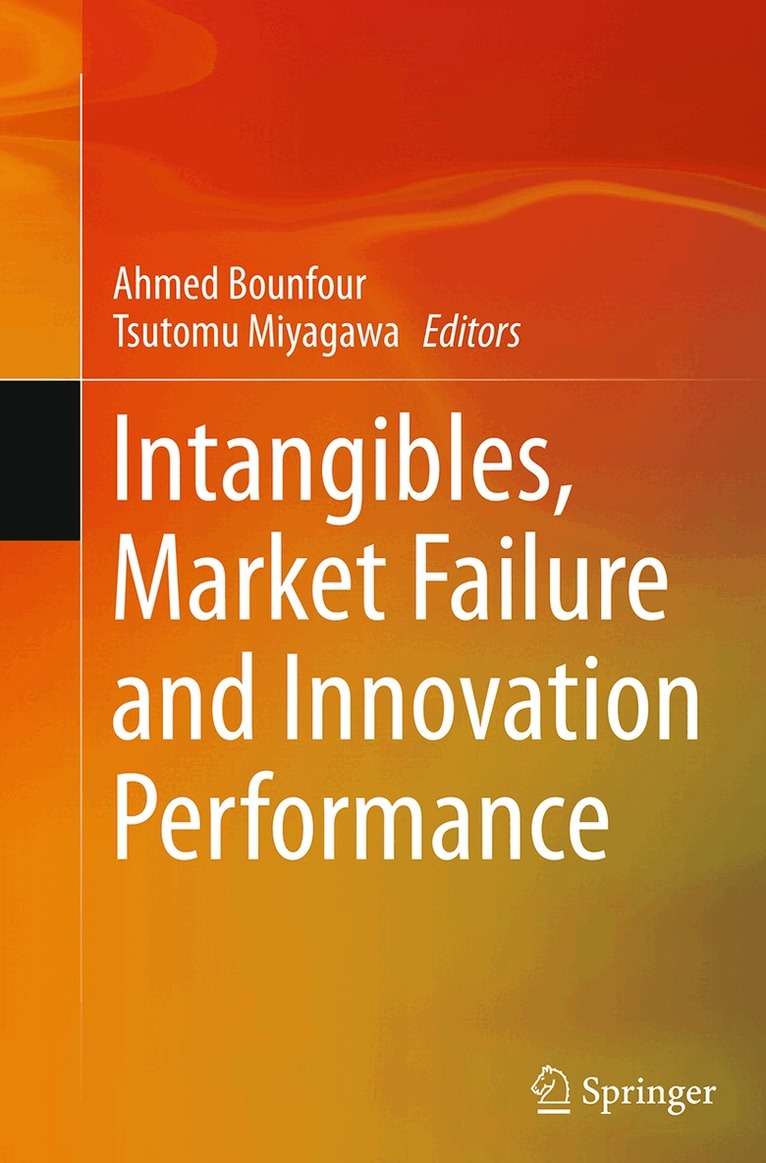
Intangibles, Market Failure and Innovation Performance
Av Ahmed Bounfour, Tsutomu Miyagawa
Inbunden, 2014
1129 kr
Lägg i varukorg
This book addresses the issue of intangibles' contribution to growth at macroeconomic and microeconomic levels. It provides a review of a set of new approaches to innovation growth. It also considers the issue of how to invest in intangibles, especially with regard to the market failure issue. The …
Intangibles, Market Failure and Innovation Performance
Av Tsutomu Miyagawa, Ahmed Bounfour
E-bok, 2014
1502 kr
Lägg i varukorg
This book addresses the issue of intangibles'' contribution to growth at macroeconomic and microeconomic levels. It provides a review of a set of new approaches to innovation growth. It also considers the issue of how to invest in intangibles, especially with regard to the market failure issue. …
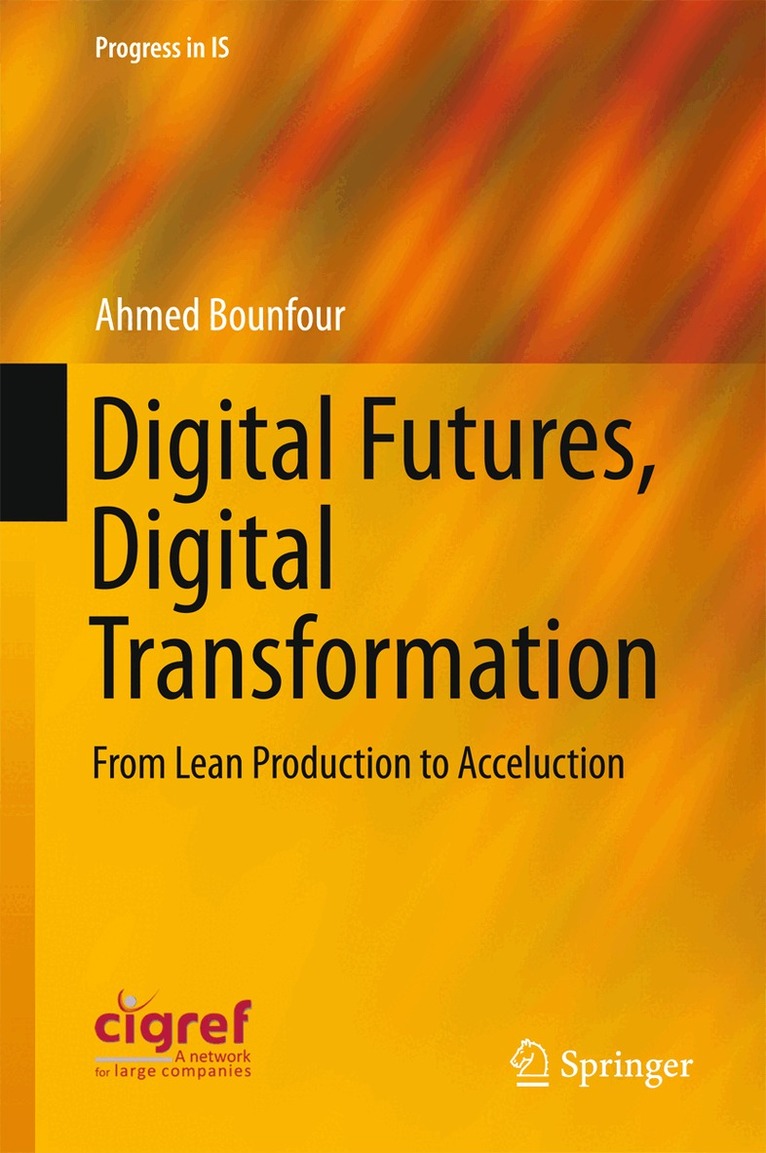
Digital Futures, Digital Transformation
From Lean Production to Acceluction
Inbunden, 2015
624 kr
Lägg i varukorg
This book provides an integrated overview of key trends in digital transformation, taking into consideration five interrelated dimensions: strategy and business models, society, organization, technology and regulation. As such, it provides a framework for the analysis of digital business …
Digital Futures, Digital Transformation
From Lean Production to Acceluction
E-bok, 2015
839 kr
Lägg i varukorg
This book provides an integrated overview of key trends in digital transformation, taking into consideration five interrelated dimensions: strategy and business models, society, organization, technology and regulation. As such, it provides a framework for the analysis of digital business …
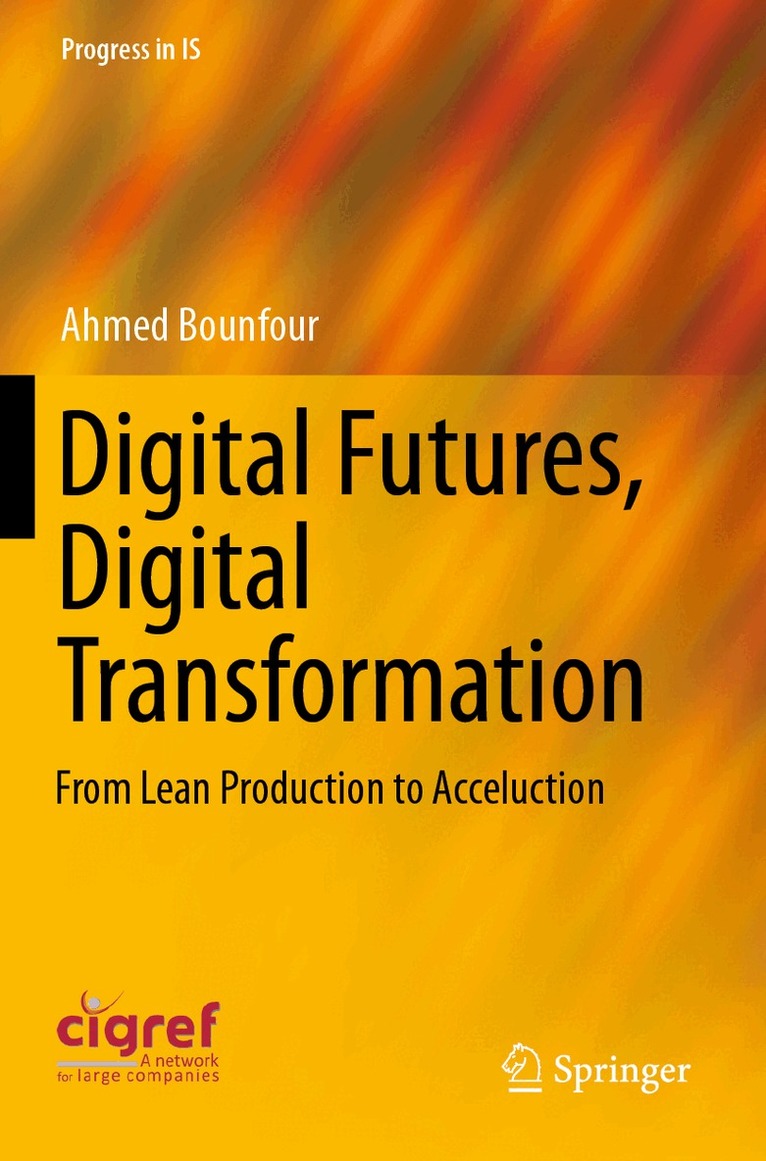
Digital Futures, Digital Transformation
From Lean Production to Acceluction
Häftad, 2016
606 kr
Lägg i varukorg
This book provides an integrated overview of key trends in digital transformation, taking into consideration five interrelated dimensions: strategy and business models, society, organization, technology and regulation. As such, it provides a framework for the analysis of digital business …
Intangibles, Market Failure and Innovation Performance
Av Ahmed Bounfour, Tsutomu Miyagawa
Häftad, 2016
1129 kr
Lägg i varukorg
This book addresses the issue of intangibles' contribution to growth at macroeconomic and microeconomic levels. It provides a review of a set of new approaches to innovation growth. It also considers the issue of how to invest in intangibles, especially with regard to the market failure issue. The …