Alan Stevens - Böcker
Visar alla böcker från författaren Alan Stevens. Handla med fri frakt och snabb leverans.
12 produkter
12 produkter
317 kr
Skickas inom 5-8 vardagar
1 697 kr
Skickas inom 10-15 vardagar
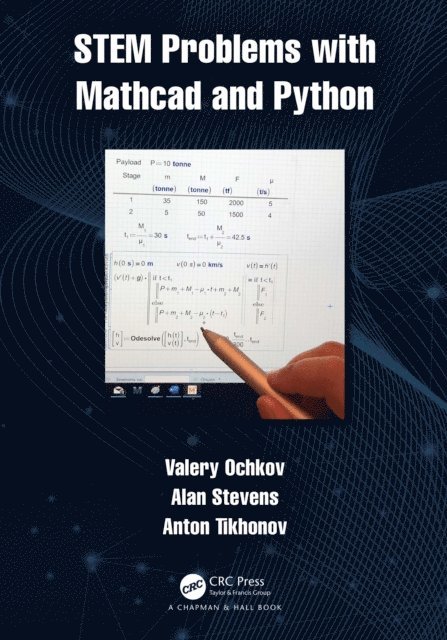
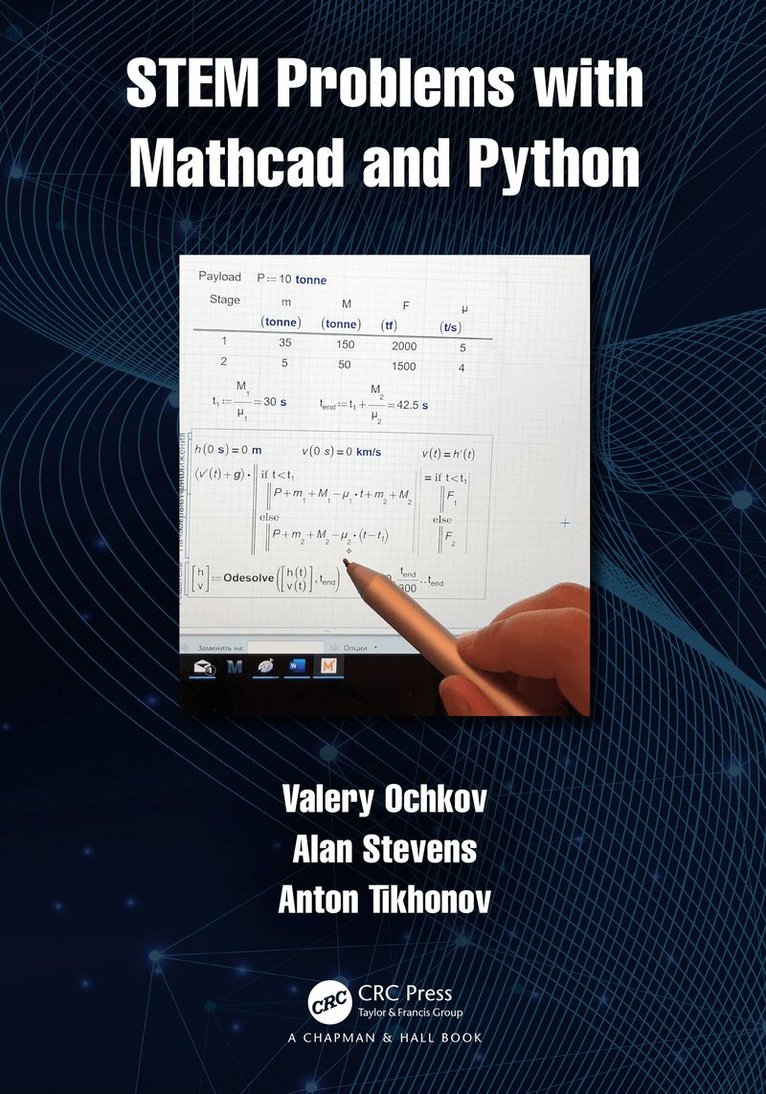
STEM Problems with Mathcad and Python seeks to remove the fear of tackling difficult scientific and technical calculations for future mathematicians, engineers, scientists, and other STEM researchers. The authors hope to show that such calculations can be not only useful, but that the process of learning how to do them can be enjoyable, especially with the help of Mathcad and Python programming skills. The book will also illustrate how the use of modern computer software allows one to significantly expand the range of problems considered beyond those conventionally taught. This includes computational experiments, multivariate calculations, inverse problems and optimization problems, with both static and animated visual feedback.FeaturesSuitable for undergraduates and early postgraduates who need simple and accessible guidance for solving practical interdisciplinary technical problemsCan be used as an additional textbook in a variety of topics, including Calculus, Linear Algebra, Analytical Geometry, Discrete Mathematics, Computer Science, Computational Mathematics, Scientific Visualization, Computer GraphicsGives computer users access to an exciting new hobby - solving complex problems described in fiction
1 333 kr
Skickas inom 10-15 vardagar
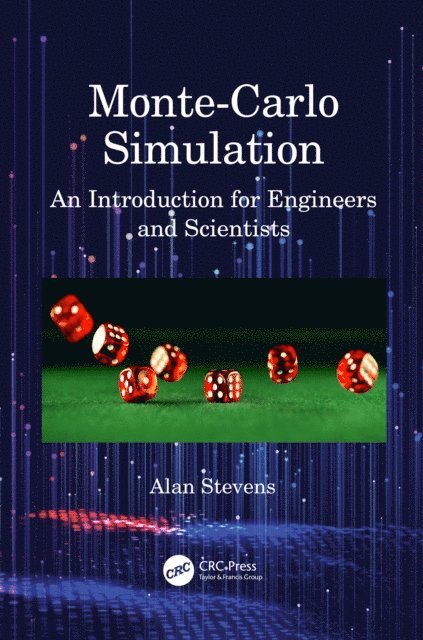
Monte-Carlo techniques have increasingly become a key method used in quantitative research. This book introduces engineers and scientists to the basics of using the Monte-Carlo simulation method which is used in Operations Research and other fields to understand the impact of risk and uncertainty in prediction and forecasting models.Monte-Carlo Simulation: An Introduction for Engineers and Scientists explores several specific applications in addition to illustrating the principles behind the methods. The question of accuracy and efficiency with using the method is addressed thoroughly within each chapter and all program listings are included in the discussion of each application to facilitate further research for the reader using Python programming language.Beginning engineers and scientists either already in or about to go into industry or commercial and government scientific laboratories will find this book essential. It could also be of interest to undergraduates in engineering science and mathematics, as well as instructors and lecturers who have no prior knowledge of Monte-Carlo simulations.
671 kr
Skickas inom 10-15 vardagar
Monte-Carlo techniques have increasingly become a key method used in quantitative research. This book introduces engineers and scientists to the basics of using the Monte-Carlo simulation method which is used in Operations Research and other fields to understand the impact of risk and uncertainty in prediction and forecasting models.Monte-Carlo Simulation: An Introduction for Engineers and Scientists explores several specific applications in addition to illustrating the principles behind the methods. The question of accuracy and efficiency with using the method is addressed thoroughly within each chapter and all program listings are included in the discussion of each application to facilitate further research for the reader using Python programming language.Beginning engineers and scientists either already in or about to go into industry or commercial and government scientific laboratories will find this book essential. It could also be of interest to undergraduates in engineering science and mathematics, as well as instructors and lecturers who have no prior knowledge of Monte-Carlo simulations.
840 kr
Skickas inom 10-15 vardagar
Acceptance of new technology and systems by drivers is an important area of concern to governments, automotive manufacturers and equipment suppliers, especially technology that has significant potential to enhance safety. To be acceptable, new technology must be useful and satisfying to use. If not, drivers will not want to have it, in which case it will never achieve the intended safety benefit. Even if they have the technology, drivers may not use it if it is deemed unacceptable, or may not use it in the manner intended by the designer. At worst, they may seek to disable it. This book brings into a single edited volume the accumulating body of thinking and research on driver and operator acceptance of new technology. Bringing together contributions from international experts from around the world, the editors have shaped a book that covers the theory behind acceptance, how it can be measured and how it can be improved. Case studies are presented that provide data on driver acceptance of a wide range of new and emerging vehicle technology. Although driver acceptance is the central focus of this book, acceptance of new technology by operators in other domains, and across cultures, is also investigated. Similarly, perspectives are derived from domains such as human computer interaction, where user acceptance has long been regarded as a key driver of product success. This book comes at a critical time in the history of the modern motor vehicle, as the number of new technologies entering the modern vehicle cockpit rapidly escalates. The goal of this book is to inspire further research and development of new vehicle technology to optimise user acceptance of it; and, in doing so, to maximise its potential to be useful, satisfying to use and able to save human life.
2 290 kr
Skickas inom 10-15 vardagar
Acceptance of new technology and systems by drivers is an important area of concern to governments, automotive manufacturers and equipment suppliers, especially technology that has significant potential to enhance safety. To be acceptable, new technology must be useful and satisfying to use. If not, drivers will not want to have it, in which case it will never achieve the intended safety benefit. Even if they have the technology, drivers may not use it if it is deemed unacceptable, or may not use it in the manner intended by the designer. At worst, they may seek to disable it. This book brings into a single edited volume the accumulating body of thinking and research on driver and operator acceptance of new technology. Bringing together contributions from international experts from around the world, the editors have shaped a book that covers the theory behind acceptance, how it can be measured and how it can be improved. Case studies are presented that provide data on driver acceptance of a wide range of new and emerging vehicle technology. Although driver acceptance is the central focus of this book, acceptance of new technology by operators in other domains, and across cultures, is also investigated. Similarly, perspectives are derived from domains such as human computer interaction, where user acceptance has long been regarded as a key driver of product success. This book comes at a critical time in the history of the modern motor vehicle, as the number of new technologies entering the modern vehicle cockpit rapidly escalates. The goal of this book is to inspire further research and development of new vehicle technology to optimise user acceptance of it; and, in doing so, to maximise its potential to be useful, satisfying to use and able to save human life.
1 718 kr
Skickas inom 3-6 vardagar
Technologies for traffic and travel information (TTI) have been evolving rapidly in recent years. This book offers an overview of three generations of TTI technology, beginning with the first generation of human to human information transmission. The second generation incorporated machine to human information exchange, with the development of classification and transmission protocols such as RDS-TMC and TPEG. A third generation of machine to machine communication is now emerging, disrupting TTI technology and creating the need for this new reference work, which covers gathering information from automated sensors, its digital processing and transmission, and its use by increasingly intelligent agents and vehicles.The book provides coverage of the following topics, written by a range of experts in their respective fields: road traffic data collection; road traffic news from the air; location referencing; digital coding, collation and exchange of traffic information; European developments in traffic and travel information; the role of the commercial sector in developing road traffic information in the UK and Europe; dynamic road traffic signage; smart motorway information development; contribution of cooperative ITS to road traffic and travel information; multi modal traffic and travel information; social media and traffic and travel information; social media services and business models; and finally traffic and travel information into the future.Providing essential information to researchers and industry professionals involved with or interested in technologies and organisations that provide or deliver travel information, this book could also be of interest to policymakers needing an overview of the evolution and recent developments of this field, and advanced students of subjects related to telecommunications with an interest in traffic information.
372 kr
Skickas inom 3-6 vardagar
260 kr
Skickas inom 5-8 vardagar
Unofficial and Unauthorised Guide to Battlestar Galactica: Original Series and Galactica 1980
Häftad, Engelska, 2015
423 kr
Skickas inom 3-6 vardagar
By Your Command Vol 2
The Unofficial and Unauthorised Guide to Battlestar Galactica: The Reimagined Series
Häftad, Engelska, 2015
493 kr
Skickas inom 3-6 vardagar
1 769 kr
Skickas inom 3-6 vardagar
Driver information and assistance systems have emerged as an integral part of modern road vehicles in order to support the driver while driving. They make use of the newest information technologies in order to enhance driver awareness, safety and comfort, and thereby avoiding driver errors and accidents. Driver Adaptation to Information and Assistance Systems brings together recent work by the Marie-Curie Initial Training Network ADAPTATION. The project has studied drivers' behavioural adaptation to these new technologies from an integrative perspective working under a joint conceptual theoretical framework of behavioural adaptation that can be used to generate research hypotheses about how drivers will adapt to information and assistance systems and to derive guidelines for the design and deployment of such systems.The book aims to provide the reader with a better understanding of drivers' adaptation processes over time in response to information and assistance system use at different levels (energetic, cognitive and motivational levels); an appreciation of the impact of specificities of drivers population on technology use and skill acquisition; insights on the effects of system functionality, design and reliability as important system characteristics influencing drivers' adaptation; and recommendations on research methods and appropriate tools to investigate adaptation processes.