Alex Mohubetswane Mashilo – författare
Visar alla böcker från författaren Alex Mohubetswane Mashilo. Handla med fri frakt och snabb leverans.
5 produkter
5 produkter
E-bok
PDF, Engelska, 2017384 kr
Läs direkt efter köp
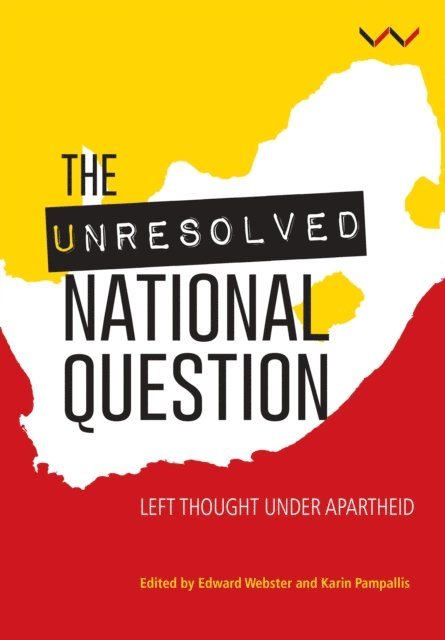
The re-emergence of debates on the decolonisation of knowledge has revived interest in the National Question, which began over a century ago and remains unresolved. Tensions that were suppressed and hidden in the past are now being openly debated. Despite this, the goal of one united nation living prosperously under a constitutional democracy remains elusive. This edited volume examines the way in which various strands of left thought have addressed the National Question, especially during the apartheid years, and goes on to discuss its relevance for South Africa today and in the future. Instead of imposing a particular understanding of the National Question, the editors identified a number of political traditions and allowed contributors the freedom to define the question as they believed appropriate – in other words, to explain what they thought was the Unresolved National Question. This has resulted in a rich tapestry of interweaving perceptions. The volume is structured in two parts. The first examines four foundational traditions: Marxism-Leninism (the Colonialism of a Special Type thesis); the Congress tradition; the Trotskyist tradition; and Africanism. The second part explores the various shifts in the debate from the 1960s onwards, and includes chapters on Afrikaner nationalism, ethnic issues, black consciousness, feminism, workerism and constitutionalism. The editors hope that by revisiting the debates not popularly known among the scholarly mainstream, this volume will become a catalyst for an enriched debate on our identity and our future.
E-bok
Engelska, 2017384 kr
Läs direkt efter köp
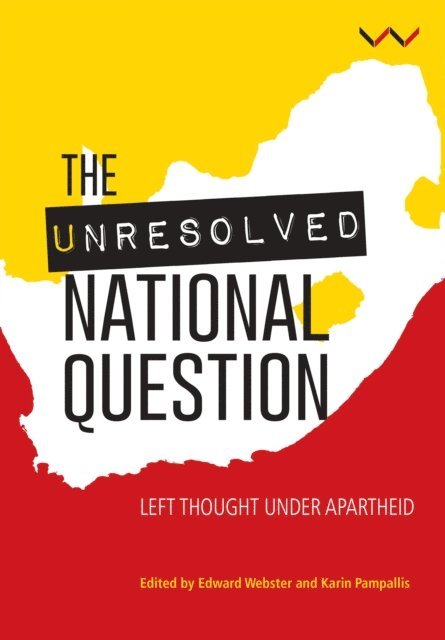
The re-emergence of debates on the decolonisation of knowledge has revived interest in the National Question, which began over a century ago and remains unresolved. Tensions that were suppressed and hidden in the past are now being openly debated. Despite this, the goal of one united nation living prosperously under a constitutional democracy remains elusive. This edited volume examines the way in which various strands of left thought have addressed the National Question, especially during the apartheid years, and goes on to discuss its relevance for South Africa today and in the future. Instead of imposing a particular understanding of the National Question, the editors identified a number of political traditions and allowed contributors the freedom to define the question as they believed appropriate – in other words, to explain what they thought was the Unresolved National Question. This has resulted in a rich tapestry of interweaving perceptions. The volume is structured in two parts. The first examines four foundational traditions: Marxism-Leninism (the Colonialism of a Special Type thesis); the Congress tradition; the Trotskyist tradition; and Africanism. The second part explores the various shifts in the debate from the 1960s onwards, and includes chapters on Afrikaner nationalism, ethnic issues, black consciousness, feminism, workerism and constitutionalism. The editors hope that by revisiting the debates not popularly known among the scholarly mainstream, this volume will become a catalyst for an enriched debate on our identity and our future.
E-bok
Engelska, 2025315 kr
Läs direkt efter köp
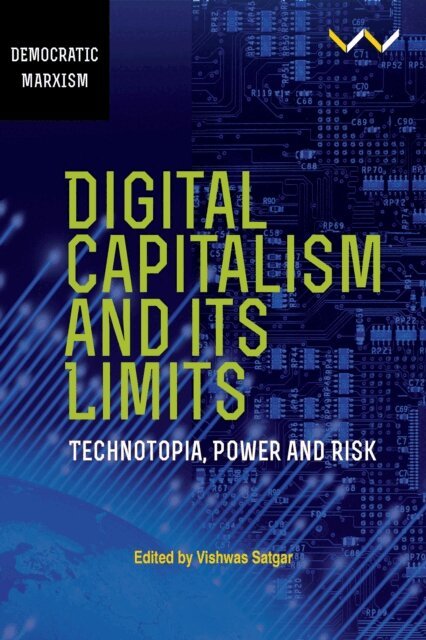
The Fourth Industrial Revolution (4IR) has been described as the next big leap in digital capitalism. Digital technologies such as artificial intelligence, quantum computing, 3D printing and robotisation, we are led to believe, will bring more progress, growth and development while also helping us to resolve the deep and multiple crises the world is in. Billions are being invested in these technologies, accompanied by sharp geopolitical rivalries to secure an edge in the control over them. Volume 8 in the Democratic Marxism series invites readers to think more deeply and critically about digital capitalism and its limits. While most governments in the world, including South Africa, have accepted a techno-nationalist narrative and have deliberated on the risks for the planet and humanity, the volume interrogates the effects and consequences of advances in artificial intelligence and heightened technological innovation and industrialisation on employment, democracy and the climate. Viewing the grand social engineering of 4IR through a Marxist lens, the volume contributors engage critically with the class project of digital monopoly capitalism and its powerful totalitarian tendencies. They question the dangerous technotopian imaginary shaping this digital techno-shift, the implications of algorithmic data extractivism, the securitisation of already weak market democracies, the social consequences of digital learning, lack of regulation, and the power dynamics in the labour process. Anchored in techno-realism, the interdisciplinary perspective captured in this volume puts forward alternatives for democratisation and a just transition to protect human and non-human life.
Häftad, Engelska, 2026
352 kr
Kommande
Analysis of South Africa's automotive industry within global production networks, critiquing inconsistent industrial policies and highlighting worker's agency in shaping equitable labor conditions, and a just transition to electric vehicles.
Inbunden, Engelska, 2026
1 479 kr
Kommande
Analysis of South Africa's automotive industry within global production networks, critiquing inconsistent industrial policies and highlighting worker's agency in shaping equitable labor conditions, and a just transition to electric vehicles.