Alfonso Barbarisi - Böcker
Visar alla böcker från författaren Alfonso Barbarisi. Handla med fri frakt och snabb leverans.
4 produkter
4 produkter
2 164 kr
Skickas inom 10-15 vardagar
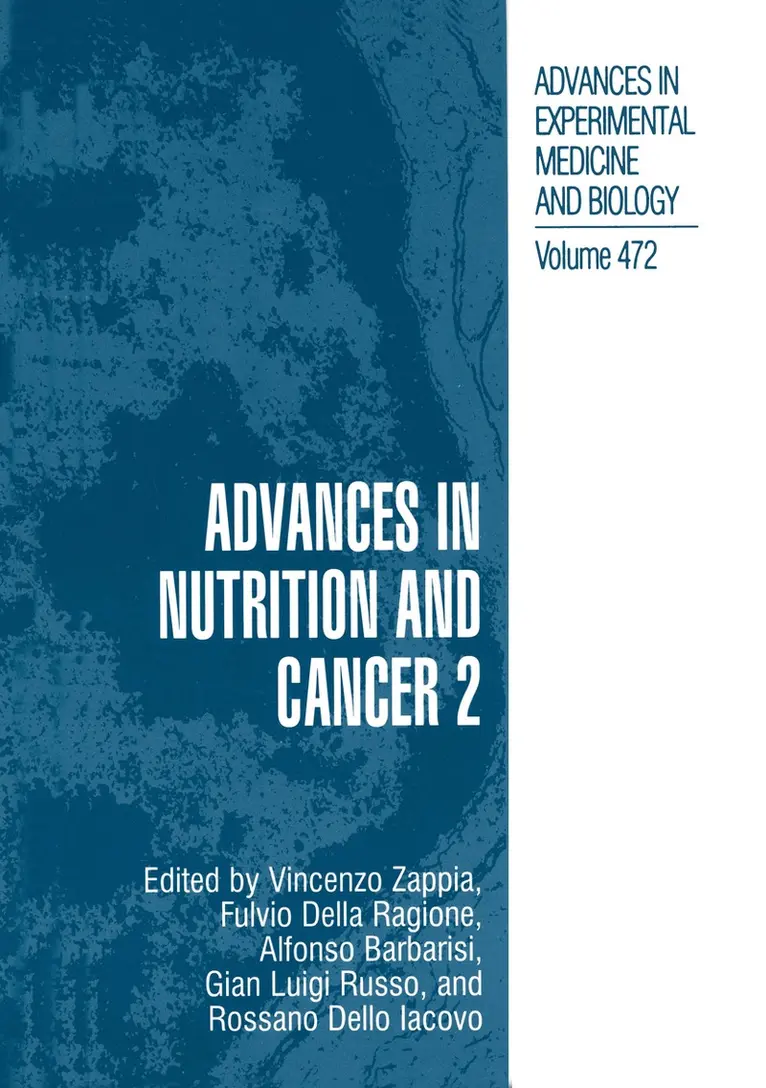
The advancements in the last six years derive from the extensive use of molecular approaches to perform research in the nutritional field. Moreover, the fundamental observation of R. Doll and R. Peto (1981), which suggested that at least 35% of all cancers (with large differences among different tumors) might be prevented by dietary regimens, has been confirmed by epidemiological studies. However, it is difficult to reduce them to simple terms - metabolic and hormonal factors, contaminants and biological agents, and deficiency of specific protective nutrients are all components of the same puzzle. In the 1990s a large number of compounds responsible for the biological activity of human foods have been identified and characterized. These molecules not only include important and well-known risk factors but, most promising, compounds, which might exert chemopreventive activity. Among them, antioxidants (such as vitamins, phenols, and lycopene) seem to play a critical role in reducing the risk of cancer at different anatomical sites, including colon, breast, and prostate malignancies.Other molecules, derived from fiber bacterial intestinal degradation (short fatty acids), are of interest, even if their importance has not been completely unravelled and is still the subject of debate. Data suggest that dietary-derived compounds, including radical scavengers, affect cell proliferation by acting on the cell division cycle engine and thus might control the process (and the rate) of malignant transformation.
2 164 kr
Skickas inom 10-15 vardagar
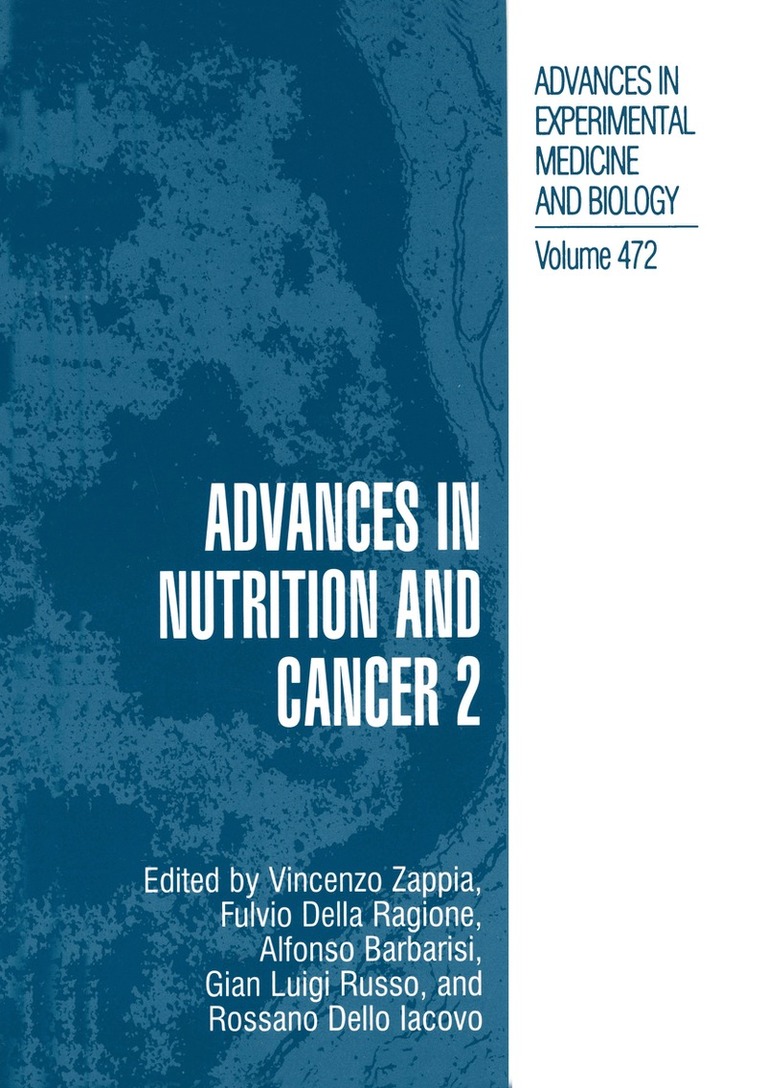
The major scientific advancements in the study of nutrition and cancer in the last six years derive from the extensive use of molecular approaches to perform research in the nutritional field. Moreover, the fundamental observation of R. Doll and R. Peto (1981), which suggested that at least 35% of all cancers (with large differences among different tumors) might be prevented by dietary regimens, has been definitively confirmed by epidemiological studies. The molecular studies reported in this volume include all of the major aspects of investigation on human nutrition and malignant transformation. In the last decade a large number of compounds responsible for the biological activity of human foods has been identified and characterized. These molecules not only include important and well-known risk factors but, most promising, compounds, which might exert chemopreventive activity. Among them, antioxidants (such as vitamins, phenols, and lycopene) seem to play a critical role in reducing the risk of cancer at different anatomical sites, including colon, breast, and prostate malignancies.Other molecules, derived from fiber bacterial intestinal degradation (short fatty acids), are of interest, even if their importance has not been completely unraveled and is still the subject of debate.
1 625 kr
Skickas inom 10-15 vardagar
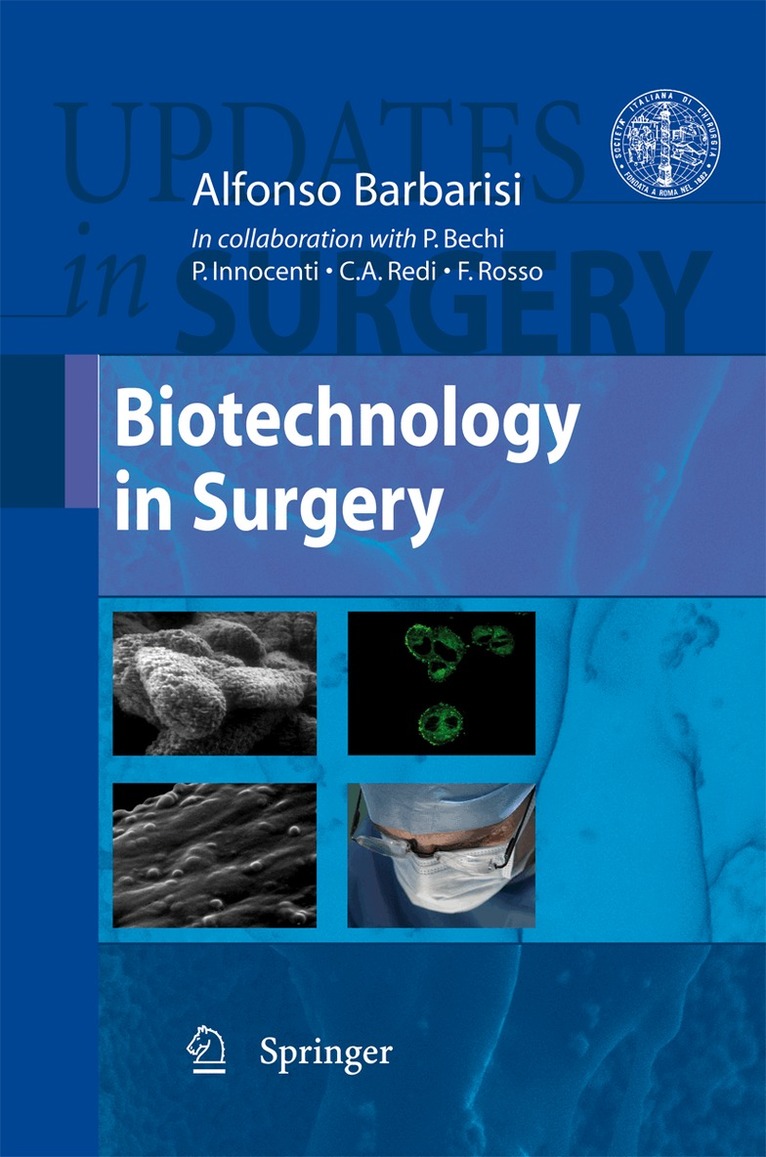
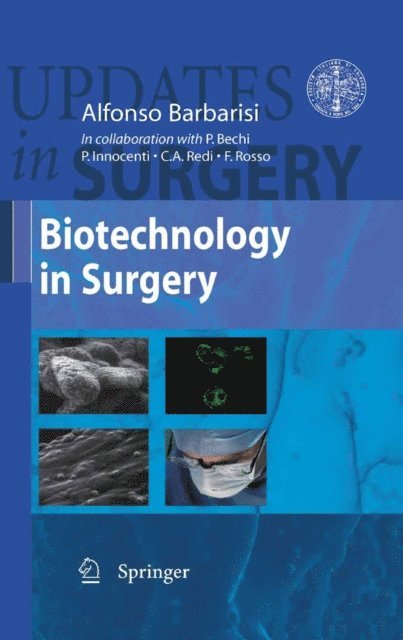
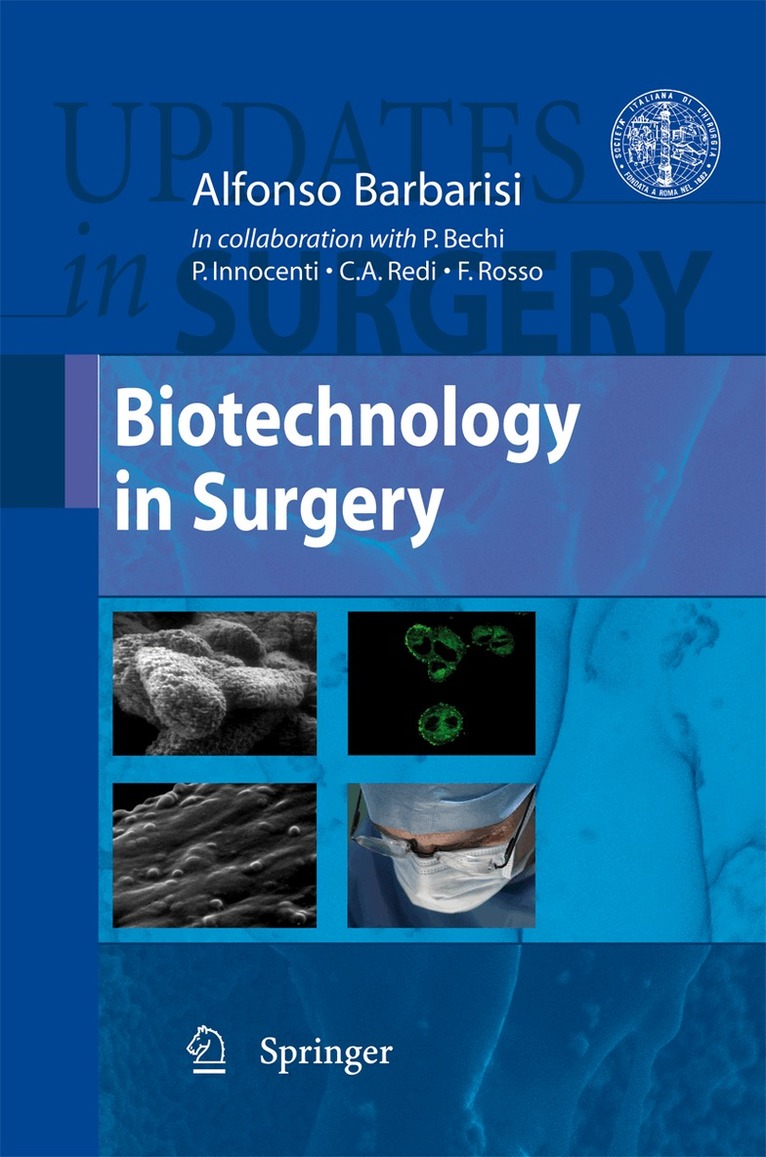
The 20th century has finished, the century when surgery took huge steps forward thanks to progress in technology. Now we have entered the "century of biotechnologies", which will not only generate progress in surgery, but also lead to a real "cultural revolution" that will completely change approaches to solving different problems in medicine. The aim of this book is to bring surgeons closer to biotechnologies and to overcome the cultural gap dividing them from these new approaches. Biotechnologies are already proposed and used at different levels in surgical practice: in diagnostic technique, enabling practitioners to identify diseases at an early stage and follow their molecular modification over time; and in tissue engineering, where the use of "smart scaffolds" offers a possible answer to increasing demand for biocompatible tissues and organs in transplantation surgery. This volume focuses on the emerging field of stem cells, analyzing both their role as possible players in originating and perpetuating cancer – "cancer stem cells" – and, conversely, their extraordinary therapeutical potential. An additional section is dedicated to the evaluation and application of derived molecular factors that can enhance the physiological processes that are fundamentally important in surgery, such as hemostasis and wound healing. Surgeons have always been technologists, in the sense that since surgery began they have always needed technology, beginning with a scalpel and surgical instruments. They have always cooperated with technologists. However, in the new century, the first one of the millennium, a rapid increase in knowledge that is outside the realm of the surgeon’s traditional technological training is imposing itself – hence the aim of this book. It is now urgent to encourage surgeons to embrace this knowledge (biotechnology) with confidence. By its very nature, biotechnology is completely different from the technologies used so far, because it escapesthe senses of sight and touch, which up to now have been the essence of the surgeon’s work. The cellular and molecular dimensions of biotechnologies are still far removed from most of the recent advances in modern surgical techniques. A common language between surgeons and biotechnologists will create further, revolutionary, progress in surgical sciences in the twenty-first century.
1 205 kr
Skickas inom 10-15 vardagar
The 20th century has finished, the century when surgery took huge steps forward thanks to progress in technology. Now we have entered the "century of biotechnologies", which will not only generate progress in surgery, but also lead to a real "cultural revolution" that will completely change approaches to solving different problems in medicine. The aim of this book is to bring surgeons closer to biotechnologies and to overcome the cultural gap dividing them from these new approaches. Biotechnologies are already proposed and used at different levels in surgical practice: in diagnostic technique, enabling practitioners to identify diseases at an early stage and follow their molecular modification over time; and in tissue engineering, where the use of "smart scaffolds" offers a possible answer to increasing demand for biocompatible tissues and organs in transplantation surgery. This volume focuses on the emerging field of stem cells, analyzing both their role as possible players in originating and perpetuating cancer – "cancer stem cells" – and, conversely, their extraordinary therapeutical potential. An additional section is dedicated to the evaluation and application of derived molecular factors that can enhance the physiological processes that are fundamentally important in surgery, such as hemostasis and wound healing. Surgeons have always been technologists, in the sense that since surgery began they have always needed technology, beginning with a scalpel and surgical instruments. They have always cooperated with technologists. However, in the new century, the first one of the millennium, a rapid increase in knowledge that is outside the realm of the surgeon’s traditional technological training is imposing itself – hence the aim of this book. It is now urgent to encourage surgeons to embrace this knowledge (biotechnology) with confidence. By its very nature, biotechnology is completely different from the technologies used so far, because it escapesthe senses of sight and touch, which up to now have been the essence of the surgeon’s work. The cellular and molecular dimensions of biotechnologies are still far removed from most of the recent advances in modern surgical techniques. A common language between surgeons and biotechnologists will create further, revolutionary, progress in surgical sciences in the twenty-first century.