Alfreda Murck - Böcker
Visar alla böcker från författaren Alfreda Murck. Handla med fri frakt och snabb leverans.
4 produkter
4 produkter
Del 50 - Harvard-Yenching Institute Monograph Series
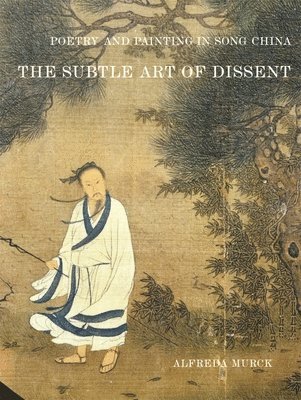
Poetry and Painting in Song China
The Subtle Art of Dissent
Häftad, Engelska, 2002
325 kr
Skickas inom 7-10 vardagar
Throughout the history of imperial China, the educated elite used various means to criticize government policies and actions. During the Song dynasty (960-1278), some members of this elite found an elegant and subtle means of dissent: landscape painting. By examining literary archetypes, the titles of paintings, contemporary inscriptions, and the historical context, Alfreda Murck shows that certain paintings expressed strong political opinions—some transparent, others deliberately concealed. She argues that the coding of messages in seemingly innocuous paintings was an important factor in the growing respect for painting among the educated elite and that the capacity of painting's systems of reference to allow scholars to express dissent with impunity contributed to the art's vitality and longevity.
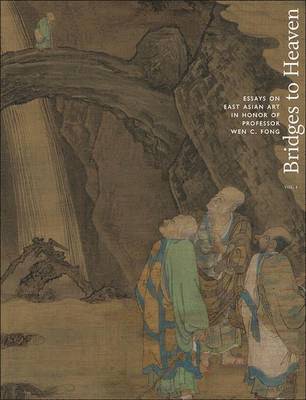
Bridges to Heaven
Essays on East Asian Art in Honor of Professor Wen C. Fong (Two-Volume Set)
Inbunden, Engelska, 2011
1 711 kr
Skickas inom 7-10 vardagar
Wen C. Fong established America's first program in East Asian art history at Princeton University, where he taught Chinese art from 1954 to 1999. During this time, he supervised more than thirty PhD students, most of whom have gone on to hold professorships or museum positions throughout the United States, East Asia, and Europe. This two-volume book honors Professor Fong's extraordinary half-century career at Princeton and the Metropolitan Museum of Art by gathering almost forty essays on Chinese, Japanese, and Korean art history, written by his students and by some of his lifelong colleagues in this field of study. These full-length essays address a wide range of subjects, building bridges in many directions, from early jades and bronzes through traditional painting and prints, to photography, cinema, and modern museum practice. The diversity, depth, and originality of these essays make this work a monumental contribution to the study of the arts of East Asia. The book includes an interview of Professor Fong, conducted by Jerome Silbergeld, and a bibliography of Fong's work.
910 kr
Kommande
557 kr
Tillfälligt slut
In August 1968, the Pakistani foreign minister visited Beijing and presented Chairman Mao with a crate of mangoes. Apparently, Mao immediately sent the mangoes, a fruit unkown so far in China, as a gift to the 'Worker-Peasant Mao Zedong Thought Propaganda Teams' deployed into Quinghua University to put down warring factions of Red Guards and occupy the campus, with the implicit political message that workers were now made managers of education. The exotic fruit were then distributed over the following weeks to various factories. Thus the mangoes, perceived as coming from Chairman Mao, transformed from mere fruit into near-divine symbol. They were celebrated by the workers as tokens of Mao's love and compassion and worshipped as a kind of religious relic. The Golden Mango powerfully symbolised the slogan "The working class must be the leaders in everything", and soon appeared on all kinds of household products. The new book Mao's Golden Mangoes and the Cultural Revolution illustrates how factory workers tried to preserve Chairman Mao's precious gift, how the mango transformed into a religious symbol, and how the political spectacle of the 1968 National Day Parade featured the mango.