Ali Khademhosseini - Böcker
Visar alla böcker från författaren Ali Khademhosseini. Handla med fri frakt och snabb leverans.
15 produkter
15 produkter
Del 39 - IEEE Press Series on Biomedical Engineering
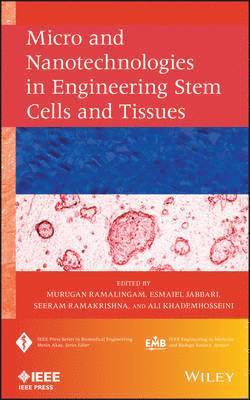
Micro and Nanotechnologies in Engineering Stem Cells and Tissues
Inbunden, Engelska, 2013
1 806 kr
Skickas inom 7-10 vardagar
A cutting-edge look at the application of micro and nanotechnologies in regenerative medicineThe area at the interface of micro/nanotechnology and stem cells/tissue engineering has seen an explosion of activity in recent years. This book provides a much-needed overview of these exciting developments, covering all aspects of micro and nanotechnologies, from the fundamental principles to the latest research to applications in regenerative medicine.Written and edited by the top researchers in the field, Micro and Nanotechnologies in Engineering Stem Cells and Tissues describes advances in material systems along with current techniques available for cell, tissue, and organ studies. Readers will gain tremendous insight into the state of the art of stem cells and tissue engineering, and learn how to use the technology in their own research or clinical trials. Coverage includes: Technologies for controlling or regulating stem cell and tissue growthVarious engineering approaches for stem cell, vascular tissue, and bone regenerationThe design and processing of biocompatible polymers and other biomaterialsCharacterization of the interactions between cells and biomaterialsUnrivaled among books of this kind, Micro and Nanotechnologies in Engineering Stem Cells and Tissues is the ultimate forward-looking reference for researchers in numerous disciplines, from engineering and materials science to biomedicine, and for anyone wishing to understand the trends in this transformative field.
2 783 kr
Skickas inom 10-15 vardagar
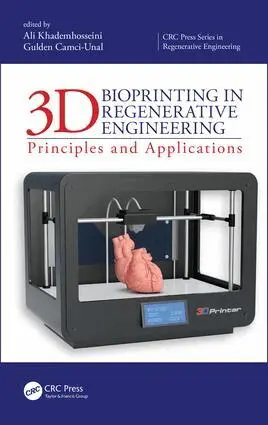
Regenerative engineering is the convergence of developmental biology, stem cell science and engineering, materials science, and clinical translation to provide tissue patches or constructs for diseased or damaged organs. Various methods have been introduced to create tissue constructs with clinically relevant dimensions. Among such methods, 3D bioprinting provides the versatility, speed and control over location and dimensions of the deposited structures. Three-dimensional bioprinting has leveraged the momentum in printing and tissue engineering technologies and has emerged as a versatile method of fabricating tissue blocks and patches. The flexibility of the system lies in the fact that numerous biomaterials encapsulated with living cells can be printed. This book contains an extensive collection of papers by world-renowned experts in 3D bioprinting. In addition to providing entry-level knowledge about bioprinting, the authors delve into the latest advances in this technology. Furthermore, details are included about the different technologies used in bioprinting. In addition to the equipment for bioprinting, the book also describes the different biomaterials and cells used in these approaches. This text: Presents the principles and applications of bioprinting Discusses bioinks for 3D printing Explores applications of extrusion bioprinting, including past, present, and future challenges Includes discussion on 4D Bioprinting in terms of mechanisms and applications
1 416 kr
Skickas inom 10-15 vardagar
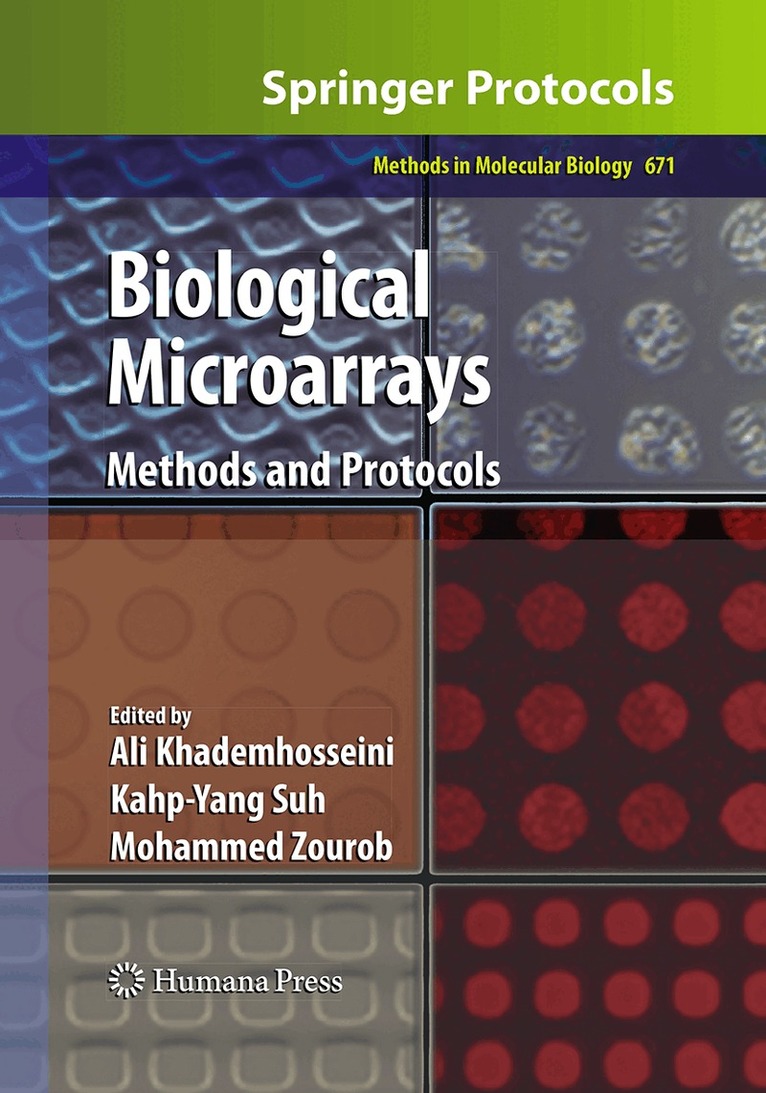
In Biological Microarrays: Methods and Protocols, expert researchers explore exciting new developments in the field, providing a comprehensive approach to biological microarrays that conveys not only the state-of-the-art fundamentals, but also includes applications of the most innovative methods.
1 091 kr
Skickas inom 10-15 vardagar
Recent developments in microarray technology have changed the landscape of biology and biomedical research, and they have revolutionized RNA and DNA research. In Biological Microarrays: Methods and Protocols, expert researchers explore exciting new developments in the field, providing a comprehensive approach to biological microarrays that conveys not only the state-of-the-art fundamentals, but also includes applications of the most innovative methods. Chapters address both the application of biological microarrays, including DNA/RNA, apatmer, proteins, tissues, oligonucleotides, carbohydrates, biomaterials, cells, bacteria, and virus microarrays, and also explore the different techniques used for generating microarray platforms. Composed in the highly successful Methods in Molecular Biology™ series format, each chapter contains a brief introduction, step-by-step methods, a list of necessary materials, and a Notes section which shares tips on troubleshooting and avoiding known pitfalls.Wide-ranging and revolutionary, Biological Microarrays: Methods and Protocols serves as a primary source for academics, practitioners, and professionals in related fields, including biologists, biotechnologists, biochemists, analytical chemists, and biomedical, physical, and microsystems engineers, to name a few, appealing to all of those interested in the present and future state of biological microarray research.
1 524 kr
Skickas inom 10-15 vardagar
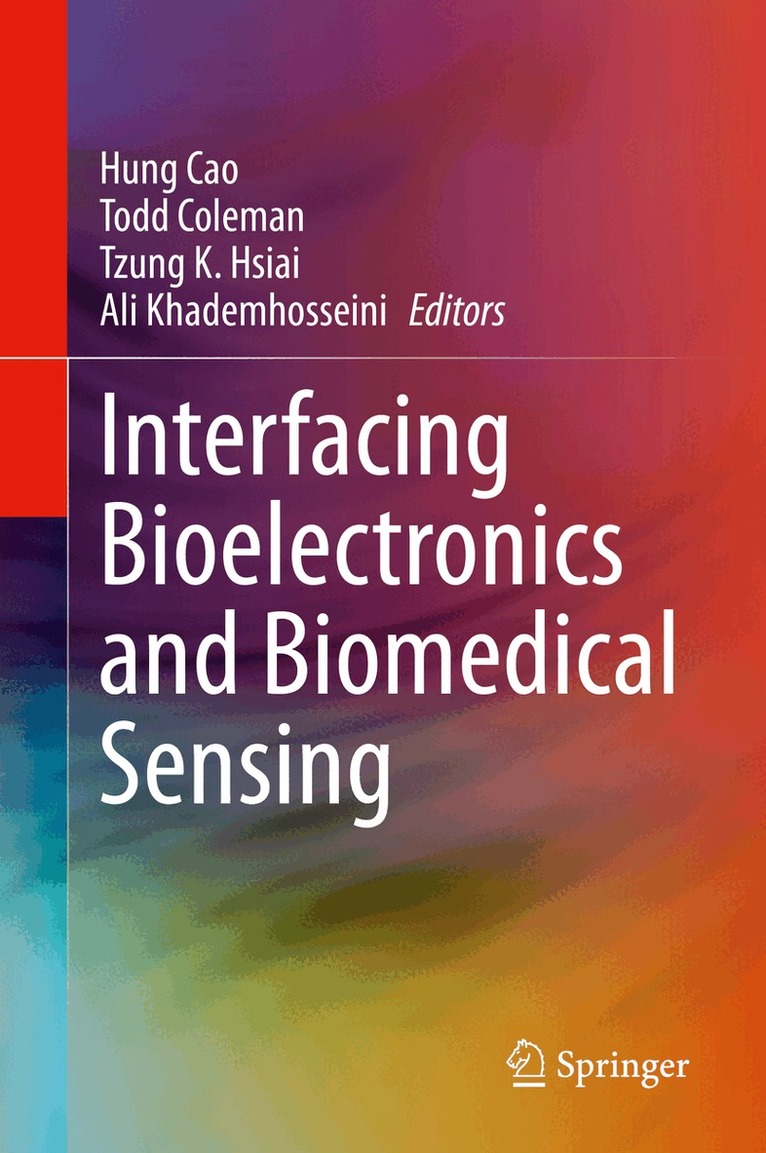
This book addresses the fundamental challenges underlying bioelectronics and tissue interface for clinical investigation. Appropriate for biomedical engineers and researchers, the authors cover topics ranging from retinal implants to restore vision, implantable circuits for neural implants, and intravascular electrochemical impedance to detect unstable plaques. In addition to these chapters, the authors also document the approaches and issues of multi-scale physiological assessment and monitoring in both humans and animal models for health monitoring and biological investigations; novel biomaterials such as conductive and biodegradable polymers to be used in biomedical devices; and the optimization of wireless power transfer via inductive coupling for batteryless and wireless implantable medical devices. In addition to engineers and researchers, this book is also an ideal supplementary or reference book for a number of courses in biomedical engineering programs, such as bioinstrumentation, MEMS/BioMEMS, bioelectronics and sensors, and more.Analyzes and discusses the electrode-tissue interfaces for optimization of biomedical devices.Introduces novel biomaterials to be used in next-generation biomedical devices.Discusses high-frequency transducers for biomedical applications.
1 091 kr
Skickas inom 10-15 vardagar
This book addresses the fundamental challenges underlying bioelectronics and tissue interface for clinical investigation. Appropriate for biomedical engineers and researchers, the authors cover topics ranging from retinal implants to restore vision, implantable circuits for neural implants, and intravascular electrochemical impedance to detect unstable plaques. In addition to these chapters, the authors also document the approaches and issues of multi-scale physiological assessment and monitoring in both humans and animal models for health monitoring and biological investigations; novel biomaterials such as conductive and biodegradable polymers to be used in biomedical devices; and the optimization of wireless power transfer via inductive coupling for batteryless and wireless implantable medical devices. In addition to engineers and researchers, this book is also an ideal supplementary or reference book for a number of courses in biomedical engineering programs, such as bioinstrumentation, MEMS/BioMEMS, bioelectronics and sensors, and more.Analyzes and discusses the electrode-tissue interfaces for optimization of biomedical devices.Introduces novel biomaterials to be used in next-generation biomedical devices.Discusses high-frequency transducers for biomedical applications.
494 kr
Skickas inom 5-8 vardagar
494 kr
Skickas inom 5-8 vardagar
477 kr
Skickas inom 5-8 vardagar
494 kr
Skickas inom 5-8 vardagar
494 kr
Skickas inom 5-8 vardagar
Biologically-responsive Hybrid Biomaterials: A Reference For Material Scientists And Bioengineers
Inbunden, Engelska, 2010
2 153 kr
Skickas inom 5-8 vardagar
Conjugation of synthetic materials with cell-responsive biologically-active molecules, in addition to providing structural support and release of biomolecules in the regenerating region, can provide the signaling factors required to initiate the cascade of cell migration, adhesion, differentiation, maturation, growth factor modulation, maintenance of matrix integrity, and tissue morphogenesis. Nanoparticles conjugated with ligands that preferentially interact with cell surface receptors in the tumor environment have the potential to drastically improve bioavailability, selectivity and residence time of the chemotherapeutic agent in the tumor microenvironment, while limiting their peripheral toxicity. Multivalent presentation of tumor-associated antigens on a targeted delivery system containing T and B cell epitopes can result in strong, long-lasting, self-adjuvant immunity against cancer and other diseases in vaccination. These examples demonstrate that cell-responsive conjugate biomaterials have profoundly impacted the medical field.This book is divided into three sections. In the first section, synthesis and characterization, conformation, structure-activity, self-assembly, and host response of conjugate hybrid biomaterials are covered. The second section is dedicated to the applications of conjugate biomaterials in drug delivery and vaccination while the last section is devoted to tissue engineering applications including cell adhesion, control of the stem cell niche, cartilage regeneration, neural and vascular tissue engineering, and dynamic cell culture systems for functionalized biomaterials.There is no doubt that biologically-responsive conjugate biomaterials play a key role in the design of biologics and medical devices, and this pioneering reference book provides a comprehensive review on synthesis, characterization, structure-activity, 3D assembly/fabrication, host response and the emerging applications of conjugate hybrid biomaterials.
Del 9 - World Scientific Series in Nanoscience and Nanotechnology
Handbook Of Biomimetics And Bioinspiration: Biologically-driven Engineering Of Materials, Processes, Devices, And Systems (In 3 Volumes)
Inbunden, Engelska, 2014
12 543 kr
Skickas inom 5-8 vardagar
Global warming, pollution, food and water shortage, cyberspace insecurity, over-population, land erosion, and an overburdened health care system are major issues facing the human race and our planet. These challenges have presented a mandate to develop “natural” or “green” technologies using nature and the living system as a guide to rationally design processes, devices, and systems. This approach has given rise to a new paradigm, one in which innovation goes hand-in-hand with less waste, less pollution, and less invasiveness to life on earth. Bioinspiration has also led to the development of technologies that mimic the hierarchical complexity of biological systems, leading to novel highly efficient, more reliable multifunctional materials, devices, and systems that can perform multiple tasks at one time. This multi-volume handbook focuses on the application of biomimetics and bioinspiration in medicine and engineering to produce miniaturized multi-functional materials, devices, and systems to perform complex tasks. Our understanding of complex biological systems at different length scales has increased dramatically as our ability to observe nature has expanded from macro to molecular scale, leading to the rational biologically-driven design to find solution to technological problems in medicine and engineering.The following three-volume set covers the fields of bioinspired materials, electromechanical systems developed from concepts inspired by nature, and tissue models respectively.The first volume focuses on the rational design of nano- and micro-structured hierarchical materials inspired by the relevant characteristics in living systems, such as the self-cleaning ability of lotus leaves and cicadas' wings; the superior walking ability of water striders; the anti-fogging function of mosquitoes' eyes; the water-collecting ability of Namib Desert Beetles and spider silk; the high adhesivity of geckos' feet and rose petals; the high adhesivity of mussels in wet aquatic environments; the anisotropic wetting of butterflies' wings; the anti-reflection capabilities of cicadas' wings; the self-cleaning functionality of fish scales; shape anisotropy of intracellular particles; the dielectric properties of muscles; the light spectral characteristics of plant leaves; the regeneration and self-healing ability of earthworms; the self-repairing ability of lotus leaves; the broadband reflectivity of moths' eyes; the multivalent binding, self-assembly and responsiveness of cellular systems; the biomineral formation in bacteria, plants, invertebrates, and vertebrates; the multi-layer structure of skin; the organization of tissue fibers; DNA structures with metal-mediated artificial base pairs; and the anisotropic microstructure of jellyfish mesogloea. In this volume, sensor and microfluidic technologies combined with surface patterning are explored for the diagnosis and monitoring of diseases. The high throughput combinatorial testing of biomaterials in regenerative medicine is also covered.The second volume presents nature-oriented studies and developments in the field of electromechanical devices and systems. These include actuators and robots based on the movement of muscles, algal antenna and photoreception; the non-imaging light sensing system of sea stars; the optical system of insect ocellus; smart nanochannels and pumps in cell membranes; neuromuscular and sensory devices that mimic the architecture of peripheral nervous system; olfaction-based odor sensing; cilia-mimetic microfluidic systems; the infrared sensory system of pyrophilous insects; ecologically inspired multizone temperature control systems; cochlea and surface acoustic wave resonators; crickets' cercal system and flow sensing abilities; locusts' wings and flapping micro air vehicles; the visual motion sensing of flying insects; hearing aid devices based on the human cochlea; the geometric perception of tortoises and pigeons; the organic matter sensing capability of cats and dogs; and the silent flight of rats. The third volume features engineered models of biological tissues. These include engineered matrices to mimic cancer stem cell niches; in vitro models for bone regeneration; models of muscle tissue that enable the study of cardiac infarction and myopathy; 3D models for the differentiation of embryonic stem cells; bioreactors for in vitro cultivation of mammalian cells; human lung, liver and heart tissue models; topographically-defined cell culture models; ECM mimetic tissue printing; biomimetic constructs for regeneration of soft tissues; and engineered constructs for the regeneration of musculoskeletal and corneal tissue.This three-volume set is a must-have for anyone keen to understand the complexity of biological systems and how that complexity can be mimicked to engineer novel materials, devices and systems to solve pressing technological challenges of the twenty-first century.Key Features:The only handbook that covers all aspects of biomimetics and bioinspiration, including materials, mechanics, signaling and informaticsContains 248 colored figures
2 164 kr
Tillfälligt slut
The field of microfluidics has in the last decade permeated many disciplines, from physics to biology and chemistry, and from bioengineering to medical research. One of the most important applications of lab-on-a-chip devices in medicine and related disciplines is disease diagnostics, which involves steps from biological sample/analyte loading to storage, detection, and analysis. The chapters collected in this book detail recent advances in these processes using microfluidic devices and systems. The reviews of portable devices for diagnostic purposes are likely to evoke interest and raise new research questions in interdisciplinary fields (e.g., efficient MEMS/microfluidic engineering driven by biological and medical applications).The variety of the selected topics (general relevance of microfluidics in medical and bioengineering research, fabrication, advances in on-chip sample detection and analysis, and specific disease models) ensures that each of them can be viewed in the larger context of microfluidic-mediated diagnostics.
1 812 kr
Skickas inom 10-15 vardagar
Tissue engineering aims to develop biological substitutes that restore, maintain, or improve damaged tissue and organ functionality. To date, numerous stem cells and biomaterials have been explored for a variety of tissue and organ regeneration. The challenge for existing stem cell–based techniques is that current therapies lack controlled environments that are crucial for regulating stem cell engraftment and differentiation in vivo, because stem cells are rather sensitive to even minute changes in their environment. Micro- and nanotechnology hold great potential to fabricate biomimetic spatiotemporally controlled scaffolds as well as control stem cell behavior and fate by micro- and nanoscale cues.This book presents the latest micro- and nanotechnologies used to manipulate stem cell behaviors, which is a critical area for regenerative medicine. Moreover, it covers and details cutting-edge research in nano- and microfabrication techniques and biomaterials for the regeneration of various tissues and organs, such as bone, cartilage, craniofacial, osteochondral, muscle, bladder, cardiac, and vascular tissues.